Optoma · Projectors
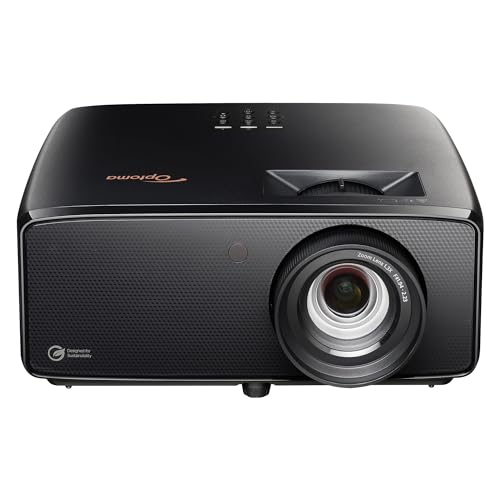
Optoma UHZ36
Quick answer
Optoma's current 4K UHD laser home theater projector and the successor to the UHZ35 in our lineup, with HDR and Filmmaker Mode in a lower price band; check the lumen rating on Optoma's spec sheet.
Optoma UHZ36 Specs
| Resolution | 4K UHD (DLP with XPR pixel shifting) |
|---|---|
| Light source | Laser |
| HDR | HDR10 |
| Picture modes | Filmmaker Mode |
BHTR Score: 79/100
Our score weighs the spec sheet, the price band and what owners report over time. See how we score.
Our Verdict
The Optoma UHZ36 replaces the UHZ35 on our list and keeps the recipe simple: a 4K UHD DLP image, a laser light source with no lamps to replace, HDR, and Filmmaker Mode, which switches off motion smoothing and extra processing so films look as graded. It sits in a lower price band than the UHZ35 did, which makes it one of the more affordable laser 4K projectors from a major brand.
Amazon's listing is thin, with no lumen, throw or input-lag figures, so here is the maths that tells you whether 4K matters in your room. A 120" 16:9 screen is 104.6" wide. Spread 3,840 pixels across it and each is about 0.027" wide, against 0.054" at 1080p. Normal vision resolves about one arcminute, so 1080p pixels merge beyond roughly 15.6 ft from a 120" screen, while 4K holds detail down to about 7.8 ft. If you sit 9–12 ft back, as most theaters do, the step to 4K is visible. Check your seats with our viewing distance calculator.
For brightness, divide Optoma's rated lumens by your screen area: 42.7 sq ft at 120", 29.7 at 100". A result above about 50 on a 1.0-gain screen gives comfortable dark-room headroom. Then confirm placement with the projector throw calculator.
Compared with the lamp-based Optoma UHD38x, you trade its published 4,000-lumen, low-lag spec for laser longevity. Compared with the BenQ TK710, it costs less, but the BenQ documents 3,200 lumens and lens shift. More picks in our best budget projector guide.
Pros
- Laser light source: no lamp replacements
- 4K UHD with HDR
- Filmmaker Mode for accurate film playback
- Lower price band than the UHZ35 it replaces
Cons
- Amazon listing omits lumens, throw ratio and input lag
- Pixel-shifting 4K, not native
- No lens shift listed
Alternatives to the Optoma UHZ36
Cheaper options


Higher-scoring options


Optoma UHZ36 FAQ
Is the Optoma UHZ36 a laser projector?
Yes. It uses a laser light source, so there is no lamp to replace, and brightness stays more stable over its life than a lamp projector's.
Is 4K worth it on a 120-inch projector screen?
Usually, yes. On a 120-inch screen, 1080p pixels blur together beyond about 15.6 feet, while 4K holds detail to about 7.8 feet. At typical 9–12 foot seating, the extra sharpness of a 4K UHD projector like the UHZ36 is visible.
What is Filmmaker Mode on the Optoma UHZ36?
It is a picture preset that turns off motion smoothing and extra sharpening so movies display as the director intended. It is the quickest route to an accurate image without a calibration.
Is the Optoma UHZ36 worth it?
Optoma's current 4K UHD laser home theater projector and the successor to the UHZ35 in our lineup, with HDR and Filmmaker Mode in a lower price band; check the lumen rating on Optoma's spec sheet. It scores 79/100 on our BHTR Score, ranking #22 of the 29 projectors we track. It is best for dark home theaters that want an affordable, lamp-free 4K laser projector from a major brand; skip it if you need verified brightness, lens shift or gaming-lag figures before buying.
What is a cheaper alternative to the Optoma UHZ36?
The BenQ TH575 ($550–$700) scores 75/100. A very bright, low-lag 1080p DLP projector for sports and gaming in rooms with lights on, with basic contrast and a short zoom range.
Featured In
- Best 4K Projector for Home Theater (Best Affordable 4K Laser)
- Best Laser Projector for Home Theater (Best Budget Laser)
