AV Receivers
Best Home Theater Receiver
We research every product against its spec sheet and independent measurements. When you buy through our links we may earn a commission, at no cost to you. How we score · Disclosure
The best home theater receiver for most people in 2026 is the Denon AVR-X3800H: nine amplified channels, 11.4-channel processing, Audyssey MultEQ XT32 and an optional Dirac Live upgrade mean it can start as a 5.1.2 system and grow into a full 7.1.4 Dolby Atmos room. This guide is for anyone choosing an AV receiver (AVR) to power passive speakers, from a first 5.1 setup to a dedicated theater.
Every pick is ranked on the spec sheet, not the box: how many speakers it can actually power, what its watts-per-channel figure means at the stated test conditions, which HDMI inputs pass 4K/120 for gaming, and how good its room correction is. If your budget is tighter, the Denon AVR-X1800H covers 5.1.2 for much less, and the Yamaha RX-V4A is the pick for a simple 5.1 system.
Our top picks at a glance



Quick answer
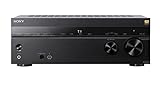
The Denon AVR-X3800H is the best home theater receiver for most people: 9 amplified channels, 11.4 processing, Audyssey MultEQ XT32 and Dirac Live support, so it can run a 5.1.4 Atmos system out of the box. The Denon AVR-X1800H is the best value 7.2 receiver, and the Yamaha RX-V4A is the best budget 5.2 receiver if you don't need height speakers.
On this page
- 1. What to Look For in a Home Theater Receiver
- 2. Watts Per Channel: How to Read the Rating
- 3. The best home theater receivers right now
- 4. Home Theater Receiver Side by Side
- 5. How We Ranked These Receivers
- 6. HDMI Inputs and High-Frame-Rate Gaming
- 7. Room Correction: Audyssey vs Dirac vs YPAO vs ARC Genesis
- 8. Who Makes the Best Home Theater Receivers?
- 9. How Much Should You Spend on an AV Receiver?
- 10. Is a Seven-Channel Receiver Worth It Over Five?
- 11. Who Should Buy an AV Receiver, and Who Can Skip It
- 12. Common Mistakes to Avoid
- 13. Frequently Asked Questions
1. What to Look For in a Home Theater Receiver
Four specs decide whether a receiver fits your room. Everything else (DAC chips, app design, number of radio presets) is secondary.
- Amplified channels vs processed channels. The first number in "7.2" is the count of built-in amplifiers; the ".2" is subwoofer outputs. Processing can exceed amplification: the Denon AVR-X3800H amplifies 9 channels but processes 11, so you can add an external amp for two more.
- Rated power at stated conditions. A figure only means something with its load (8 or 6 ohms), bandwidth (20 Hz–20 kHz or 1 kHz) and number of channels driven.
- HDMI 2.1 inputs. For a PS5, Xbox Series X or gaming PC at 4K/120, you need inputs that pass 40 Gbps signals. See our HDMI 2.1 glossary entry.
- Room correction. The difference between Audyssey MultEQ, MultEQ XT, XT32, YPAO and Dirac Live is often audible, especially in the bass.
How many channels does each layout need?
| Amplified channels | Common layouts | Height speakers |
|---|---|---|
| 5 | 5.1 | 0 |
| 7 | 7.1 or 5.1.2 | 0 or 2 |
| 9 | 7.1.2 or 5.1.4 | 2 or 4 |
| 9 + external 2-ch amp (11-ch processing) | 7.1.4 | 4 |
The third number in an Atmos layout (the ".2" in 5.1.2) is the count of height or overhead speakers. Two heights give a clear sense of overhead sound; four let effects move front-to-back above you. For most living rooms, 5.1.2 is the sweet spot, which is why a 7-channel receiver covers the majority of buyers. Read our Dolby Atmos explainer for how object-based audio maps onto speakers.
2. Watts Per Channel: How to Read the Rating
Receiver power ratings are the most abused number in home audio. The honest format looks like this: "100 W per channel, 8 ohms, 20 Hz–20 kHz, 0.08% THD, two channels driven." That's the FTC-style rating used by Denon, Marantz, Yamaha, Onkyo and Pioneer in the US.
The flattering format looks like this: "210 W per channel, 6 ohms, 1 kHz, 10% THD, one channel driven." Both describe the same Onkyo TX-NR6100. A single frequency, a lower impedance, ten times more distortion and only one channel working all inflate the number.
Why the difference matters less than you think. Loudness rises with the logarithm of power. Doubling power adds just 3 dB. So 100 W versus 80 W is about 1 dB, barely audible. What matters more is speaker sensitivity: a 90 dB speaker needs half the power of an 87 dB speaker for the same volume.
Do the maths for your seat. Take an 87 dB/1 W/1 m speaker and a seat 3 meters away:
- 1 W gives 87 dB at 1 m, minus about 9.5 dB at 3 m = 77.5 dB
- 100 W adds 20 dB = 97.5 dB per speaker at your seat
With five or seven speakers playing and a subwoofer taking the bass, that's plenty for a living room. Dolby's reference level (105 dB peaks per channel at the seat) would need around 500 W from that same speaker, which is why serious dedicated rooms add a power amplifier or choose more efficient speakers rather than chasing receiver watts. Also check impedance: most AVRs are happiest with 6–8 ohm speakers.
3. The best home theater receivers right now

1. Denon AVR-X3800H
$1,600–$2,000 · Best for: Dedicated rooms building 5.1.4 now with a path to 7.1.4
- Channels
- 9.4 (11.4 processing)
- Power (rated)
- 105 W/ch (8 Ω, 20 Hz–20 kHz, 0.05% THD, 2 ch driven)
- Room correction
- Audyssey MultEQ XT32; Dirac Live (paid upgrade)
- Pre-outs
- 11.4-channel (4 independent subwoofer)
The AVR-X3800H is the receiver that stops you outgrowing your receiver. It has nine amplifier channels, rated by Denon at 105 W per channel (8 ohms, 20 Hz–20 kHz, 0.05% THD, two channels driven), and it processes 11.4 channels. That means it powers a 5.1.4 or 7.1.2 Atmos layout on its own, and a 7.1.4 layout if you add a two-channel power amp to its pre-outs.
It also has four independent subwoofer outputs, which is rare at this price and matters more than most buyers realize: two or four subs smooth out room modes far better than one bigger sub. Calibration is Audyssey MultEQ XT32, the top Audyssey tier, with a paid Dirac Live upgrade available if you want finer control. You get HEOS multiroom, AirPlay 2 and 8K/4K120-capable HDMI inputs for current consoles.
Who it suits: anyone building a 5.1.2 system now who expects to add height speakers or a second sub within a few years. The trade-off is cost; the Dirac licence is extra, and the menus are dense. Compared with the Marantz Cinema 50, you get the same core platform and channel count for less money; compared with the Denon AVR-X1800H, you pay more for two extra amp channels, 11.4 processing, XT32 and quad sub outs.
Pros
- Nine amplified channels for 5.1.4 or 7.1.2
- 11.4-channel processing and pre-outs for 7.1.4 with an external amp
- Four independent subwoofer outputs
- Audyssey MultEQ XT32 plus optional Dirac Live
- Decodes Atmos, DTS:X, Auro-3D and IMAX Enhanced
Cons
- 7.1.4 requires buying a separate two-channel amp
- Dirac Live is a paid extra
- Big, heavy chassis needs a deep, ventilated shelf

2. Denon AVR-X1800H
$700–$900 · Best for: Most living rooms building a 5.1.2 Atmos system
- Channels
- 7.2
- Power (rated)
- 80 W/ch (8 Ω, 20 Hz–20 kHz, 0.08% THD, 2 ch driven)
- Room correction
- Audyssey MultEQ XT
- 8K/4K120 HDMI
- Yes (8K/60, 4K/120 pass-through)
If you know your system will stay at 5.1.2 or 7.1, the AVR-X1800H gives you most of what makes Denon receivers easy to live with for far less than the X3800H. It has seven amplified channels at 80 W each (8 ohms, 20 Hz–20 kHz, 0.08% THD, two channels driven), two subwoofer outputs, Dolby Atmos and DTS:X decoding, and HDMI inputs that pass 8K/60 and 4K/120 for a PS5 or Xbox Series X.
The step up over Denon's cheaper S-series is Audyssey MultEQ XT rather than basic MultEQ. XT uses higher-resolution filters, which shows up as a cleaner correction in the bass and midrange where most room problems live. HEOS streaming, AirPlay 2 and a second zone round it out.
The trade-off that matters: it is a 7.2-channel processor, so 5.1.4 is impossible even with an external amp. If height speakers are a real possibility, buy the X3800H once. On power, 80 W versus the X3800H's 105 W is only 1.2 dB of difference (10 × log10 of 105/80), which you won't hear in a living room with speakers of normal sensitivity. For a typical 5.1.2 room with bookshelf or tower speakers, this is the best home theater receiver for the money.
Pros
- Audyssey MultEQ XT is a clear step up from basic MultEQ
- Full 5.1.2 Dolby Atmos or 7.1 from seven amplified channels
- 8K/60 and 4K/120 HDMI pass-through
- HEOS, AirPlay 2 and Bluetooth streaming
Cons
- Only one HDMI output
- No path to 5.1.4 or 7.1.4
- Power gain over the S770H is negligible

3. Onkyo TX-RZ50
$1,200–$1,500 · Best for: 5.1.4 rooms around 2,000 cubic feet that want Dirac Live included
- Channels
- 9.2
- Power (rated)
- 120 W/ch (8 Ω, 20 Hz–20 kHz, 0.08% THD, 2 ch driven)
- Room correction
- Dirac Live (included)
- Atmos/DTS:X
- Dolby Atmos and DTS:X, up to 5.1.4 or 7.1.2
The Onkyo TX-RZ50 is the least expensive route on this list to nine amplified channels with Dirac Live room correction included in the box. Onkyo rates it at 120 W per channel (8 ohms, 20 Hz–20 kHz, 0.08% THD, two channels driven). Against the X3800H's 105 W, that is 10 × log10(120 ÷ 105) ≈ 0.6 dB on paper, which you won't hear; with nine speakers playing at once, every receiver delivers less than its two-channel rating anyway.
Nine amp channels let it power a 5.1.4 or 7.1.2 layout directly, which is the Atmos configuration most dedicated rooms aim for. Dirac Live measures your room with a mic at several seats and lets you shape the target curve yourself; it is widely regarded as one of the most capable systems for bass and timing, and on the Denon it is a paid extra. THX Certified Select means Onkyo targets rooms of around 2,000 cubic feet (a 15 x 17 ft room with an 8 ft ceiling is 2,040). Chromecast built-in, AirPlay 2 and 8K/60 and 4K/120 HDMI pass-through round it out.
The trade-off: it processes nine channels, not 11, so there's no 7.1.4 upgrade path, and it has two subwoofer outputs rather than four. Dirac setup also takes more effort than one-click calibration. Against the Denon AVR-X3800H, you give up expandability and quad sub outs but get Dirac included for less money. Pick it if room correction is your priority and 5.1.4 is your ceiling.
Pros
- Nine amplified channels for 5.1.4 or 7.1.2
- Dirac Live room correction included
- THX Certified Select
- 120 W/ch rating
- Chromecast built-in and AirPlay 2
Cons
- Only two subwoofer outputs
- No 11-channel processing for 7.1.4
- Dirac setup takes more effort than one-click calibration

4. Yamaha RX-V4A
$450–$600 · Best for: Small living rooms that will stay 5.1
- Channels
- 5.2
- Power (rated)
- 80 W/ch (6 Ω, 20 Hz–20 kHz, 2 ch driven)
- Room correction
- YPAO
- Atmos/DTS:X
- Decodes Dolby Atmos and DTS:X; virtual height only
The RX-V4A is for the buyer who wants a proper 5.1 system with a TV and a console, not an Atmos project. It has five amplified channels, two subwoofer outputs and four HDMI inputs that support 8K/60 and 4K/120, so a PS5 or Xbox Series X at 120 Hz goes through the receiver rather than around it.
Yamaha rates it at 80 W per channel, measured into 6 ohms (20 Hz–20 kHz, 0.06% THD, two channels driven). Because the test load is 6 ohms rather than 8, expect a little less into typical 8-ohm speakers, so pair it with speakers of average or better sensitivity (87 dB and up). YPAO calibration handles levels, distances and EQ, and MusicCast, AirPlay 2 and Bluetooth cover streaming.
The trade-off: with only five channels it can decode Dolby Atmos and DTS:X but has no outputs for height speakers, so you won't get overhead effects. If you think you'll want height channels, the Denon AVR-X1800H is the minimum. Compared with the older Sony STR-DH590, the RX-V4A adds HDMI 2.1, Wi-Fi streaming and much better room EQ. See our budget receiver guide for more cheap options.
Pros
- MusicCast, AirPlay 2 and Spotify Connect built in
- YPAO auto calibration
- 8K/60 and 4K/120 HDMI pass-through
- Simple setup for first-time buyers
Cons
- Only five channels: no physical height speakers
- Only four HDMI inputs
- Early 2020 units had a 4K/120 HDMI chipset issue that Yamaha addressed with a free upgrade

5. Sony STR-AN1000
$800–$1,000 · Best for: Sony TV owners who want Chromecast and spatial processing in a 5.1.2 system
- Channels
- 7.2
- Power (rated)
- 165 W/ch (6 Ω, 1 kHz, 10% THD, 1 ch driven)
- Room correction
- D.C.A.C. IX with 360 Spatial Sound Mapping
- Streaming
- Chromecast built-in, AirPlay 2, Spotify Connect, Bluetooth
The Sony STR-AN1000 is a 7.2-channel receiver with Dolby Atmos, DTS:X and 8K/4K120 HDMI, but its real hook is software. 360 Spatial Sound Mapping uses the speakers you have to create phantom speakers, so a 5.1 or 5.1.2 layout sounds wider and taller than the box count suggests. Sound Field Optimization calibrates the system with the included mic.
It also slots neatly into a Sony ecosystem. Chromecast built-in, AirPlay 2 and Spotify Connect are on board, and it integrates with recent Bravia TVs for menu control. If you're buying a Sony Bravia 8 II or Bravia 9, it's the most seamless pairing.
The trade-off: Sony's room correction is simpler than Audyssey MultEQ XT or Dirac Live, and with seven amp channels the ceiling is 5.1.2. Sony doesn't publish its power rating in the same full-bandwidth, two-channel format as Denon, Yamaha and Onkyo in every market, which makes direct comparisons harder; treat it as a mainstream living-room receiver rather than a big-room powerhouse. Compared with the Denon AVR-X1800H, you get cleverer virtual processing and Chromecast but weaker calibration.
Pros
- 360 Spatial Sound Mapping widens a 5.1.2 layout
- Chromecast built-in, AirPlay 2 and Spotify Connect
- D.C.A.C. IX auto calibration
- 8K/60 and 4K/120 HDMI pass-through
Cons
- Headline power is rated at 1 kHz, 10% THD, one channel driven
- Seven channels only: no 5.1.4
- Fewer setup controls than Denon's Audyssey app

6. Marantz Cinema 50
$2,200–$2,600 · Best for: Design-conscious buyers building a 5.1.4 or 7.1.4 room
- Channels
- 9.4 (11.4 processing)
- Power (rated)
- 110 W/ch (8 Ω, 20 Hz–20 kHz, 0.05% THD, 2 ch driven)
- Room correction
- Audyssey MultEQ XT32; Dirac Live (paid upgrade)
- Pre-outs
- 11.4-channel (4 independent subwoofer)
The Marantz Cinema 50 shares its core capabilities with the Denon AVR-X3800H: nine amp channels, 11.4 processing, four independent subwoofer outputs, Audyssey MultEQ XT32 and Dirac Live upgrade support. Marantz rates it at 110 W per channel (8 ohms, 20 Hz–20 kHz, 0.05% THD, two channels driven).
What the extra money buys is mostly build, finish and voicing. Marantz uses its own HDAM circuitry and a cleaner front panel with a porthole display. Owners with revealing speakers often describe it as smoother and less forward than the Denon, which is a matter of taste rather than a spec-sheet win. It also has full 11.4 pre-outs, so adding a two-channel power amp for the top front heights gets you to 7.1.4.
The trade-off is plain: on paper it does what the X3800H does for noticeably more money. Buy it if the receiver sits on display, if you prefer Marantz's sound, or if you're pairing it with premium speakers like the KEF R7 Meta. If you need even more power on the same Denon platform, the Denon AVR-X4800H is rated at 125 W per channel under the same conditions.
Pros
- Nine amplified channels and 11.4 processing
- Four independent subwoofer outputs
- Audyssey MultEQ XT32 plus optional Dirac Live
- Decodes Atmos, DTS:X, Auro-3D and IMAX Enhanced
Cons
- Costs much more than the similar Denon AVR-X3800H
- 7.1.4 needs an external two-channel amp
- Dirac Live is a paid extra
4. Home Theater Receiver Side by Side
| Product | Score | Price | Channels | Power (rated) | 8K/4K120 HDMI | Room correction | Atmos/DTS:X | Buy |
|---|---|---|---|---|---|---|---|---|
| Denon AVR-X3800H Best Overall | 89 | $1,600–$2,000 | 9.4 (11.4 processing) | 105 W/ch (8 Ω, 20 Hz–20 kHz, 0.05% THD, 2 ch driven) | Yes (8K/60, 4K/120 pass-through) | Audyssey MultEQ XT32; Dirac Live (paid upgrade) | Dolby Atmos, DTS:X, Auro-3D, IMAX Enhanced; up to 7.1.4 with external amp | Amazon → |
| Denon AVR-X1800H Best Value 7.2 Receiver | 84 | $700–$900 | 7.2 | 80 W/ch (8 Ω, 20 Hz–20 kHz, 0.08% THD, 2 ch driven) | Yes (8K/60, 4K/120 pass-through) | Audyssey MultEQ XT | Dolby Atmos and DTS:X, up to 5.1.2 | Amazon → |
| Onkyo TX-RZ50 Best for Dirac Live Room Correction | 86 | $1,200–$1,500 | 9.2 | 120 W/ch (8 Ω, 20 Hz–20 kHz, 0.08% THD, 2 ch driven) | Yes (8K/60, 4K/120 pass-through) | Dirac Live (included) | Dolby Atmos and DTS:X, up to 5.1.4 or 7.1.2 | Amazon → |
| Yamaha RX-V4A Best Budget 5.2 Receiver | 73 | $450–$600 | 5.2 | 80 W/ch (6 Ω, 20 Hz–20 kHz, 2 ch driven) | Yes (8K/60, 4K/120 pass-through) | YPAO | Decodes Dolby Atmos and DTS:X; virtual height only | Amazon → |
| Sony STR-AN1000 Best for Sony TV Owners | 80 | $800–$1,000 | 7.2 | 165 W/ch (6 Ω, 1 kHz, 10% THD, 1 ch driven) | Yes (8K/60, 4K/120 pass-through) | D.C.A.C. IX with 360 Spatial Sound Mapping | Dolby Atmos and DTS:X, up to 5.1.2 | Amazon → |
| Marantz Cinema 50 Best Premium Receiver | 87 | $2,200–$2,600 | 9.4 (11.4 processing) | 110 W/ch (8 Ω, 20 Hz–20 kHz, 0.05% THD, 2 ch driven) | Yes (8K/60, 4K/120 pass-through) | Audyssey MultEQ XT32; Dirac Live (paid upgrade) | Dolby Atmos, DTS:X, Auro-3D, IMAX Enhanced; up to 7.1.4 with external amp | Amazon → |
5. How We Ranked These Receivers
We haven't put these receivers on a lab bench. Each one is ranked on spec research, room maths and what owners report over months of use, using the same framework for every model:
- Usable channel count. How many speakers it can drive alone, and whether processing allows an external amp to add more. Expandability earned the Denon AVR-X3800H its top spot.
- Honest power. Only full-bandwidth, two-channel-driven ratings at 8 ohms were compared directly. Where a brand quotes 6-ohm or 1 kHz figures, we flag it.
- Room correction tier. Dirac Live and Audyssey MultEQ XT32 scored highest, then MultEQ XT and YPAO, then basic MultEQ and simpler systems.
- HDMI and gaming. 4K/120 and VRR passthrough, eARC, and how many inputs support 40 Gbps.
- Owner-reported reliability and usability. Firmware support, setup apps, HDMI handshake complaints and how long a model line has been supported.
Price was judged against capability, not on its own. A receiver that costs more but saves you buying a second one in three years ranks higher than a cheaper model you'll outgrow.
6. HDMI Inputs and High-Frame-Rate Gaming
If you game on a PS5, Xbox Series X or PC, the receiver sits in the video chain and can either pass through 4K/120, VRR and ALLM or quietly block them. Every pick here supports 8K/60 and 4K/120 on at least some inputs; older budget models such as the Sony STR-DH590 stop at 4K/60.
Three things to check before you buy:
- Which inputs are 40 Gbps. On many receivers only some HDMI inputs carry 4K/120. Plug the console into one of those.
- eARC on the output. eARC lets the TV send lossless Atmos from its own apps back to the receiver. All current models here support it.
- Early-run HDMI chip issues. Several brands' first 2020–2021 HDMI 2.1 receivers had a chipset bug with 4K/120 from the Xbox Series X; manufacturers issued fixes. Buy current stock and update firmware on day one.
Alternative: if your receiver lacks 4K/120, connect the console straight to the TV and send audio back over eARC. You lose nothing in picture quality and keep full surround. That trick also makes an older receiver usable for a few more years.
7. Room Correction: Audyssey vs Dirac vs YPAO vs ARC Genesis
Room correction measures your speakers in the room with a microphone and applies EQ to fix peaks and nulls, especially below 300 Hz. It's the single biggest audible difference between a cheap and a mid-range AVR.
| System | Found on | What it does well | Limits |
|---|---|---|---|
| Audyssey MultEQ | Denon S-series | Levels, distances, basic EQ | Low filter resolution |
| Audyssey MultEQ XT | Denon AVR-X1800H/X2800H, Marantz Cinema 60 | Better filters, up to 8 mic positions | Fixed target curve unless you buy the MultEQ-X app |
| Audyssey MultEQ XT32 | Denon AVR-X3800H/X4800H, Marantz Cinema 50 | Highest-resolution Audyssey, strong sub EQ | Same target-curve limits |
| Dirac Live | Onkyo TX-RZ50 (included); paid upgrade on Denon X3800H and Marantz Cinema 50 | Custom target curves, impulse correction, excellent imaging | Licence cost, PC/app setup |
| YPAO | Yamaha RX-V and AVENTAGE | Simple, reliable, multipoint on higher models | Less control than Dirac |
| Anthem ARC Genesis | Anthem receivers | Highly regarded, PC-based, detailed control | Anthem models cost more |
The practical take: in a typical living room, MultEQ XT or YPAO done carefully (mic at ear height, on a tripod, all positions within the seating area) gets you most of the benefit. Dirac and XT32 pull ahead when you have two or more subwoofers, a dedicated room, or speakers with strong room interaction.
8. Who Makes the Best Home Theater Receivers?
There are really four platforms behind most AVRs sold in the US:
- Denon and Marantz share a parent company and much of their electronics. Denon is the value-for-features leader; Marantz charges more for build and voicing. Both use Audyssey and HEOS, with Dirac on higher models.
- Yamaha makes intuitive receivers with YPAO calibration, MusicCast multiroom and some of the best on-screen setup in the category. See our Yamaha home theater review.
- Onkyo and Pioneer now share a platform. Their pitch is Dirac Live at lower prices than Denon charges for it, plus THX certification on several models.
- Sony focuses on simpler, software-driven receivers with strong Bravia TV integration.
There's no single best brand; the best home theater receiver brand is the one whose strengths match your priority. Want expandability? Denon. Want Dirac included? Onkyo, with the TX-RZ50. Want easy setup and multiroom music? Yamaha.
9. How Much Should You Spend on an AV Receiver?
Receiver pricing falls into clear tiers, and each tier buys a specific capability:
- Entry tier: 5.1 or 5.2 channels, basic room EQ, sometimes no Atmos heights. The Yamaha RX-V4A and Denon AVR-S770H live here.
- Mainstream tier: 7.2 channels, 5.1.2 Atmos, better room correction (MultEQ XT, YPAO), full HDMI 2.1. The Denon AVR-X1800H, Onkyo TX-NR6100 and Denon AVR-X2800H.
- Enthusiast tier: 9 amps, 11-channel processing or Dirac, four sub outputs. The Denon AVR-X3800H and Onkyo TX-RZ50.
- Premium tier: more power per channel, better build, full pre-outs. The Marantz Cinema 50 and Denon AVR-X4800H.
A useful rule: spend roughly as much on the receiver as on your front left/right pair of speakers. A premium receiver driving budget speakers is wasted money; the speakers and room matter more than amplifier quality.
10. Is a Seven-Channel Receiver Worth It Over Five?
For most buyers, yes. The jump from 5 to 7 amp channels is usually small in price and gives you two options: 7.1 (adding rear surrounds in a deep room) or 5.1.2 (adding two height speakers for Atmos). Height speakers make a bigger difference than rear surrounds in most living rooms because the effect is easier to hear from every seat.
A 5.1 receiver still makes sense if your room is small, your seating is against the back wall (so rear surrounds wouldn't fit anyway), or you're on a strict budget. In that case, put the savings into a better subwoofer.
A 9-channel receiver is worth it if you have a dedicated room and plan on 5.1.4, or if you want the option to run 7.1.2 without buying an external amp. Our home theater setup guide walks through speaker placement for each layout.
11. Who Should Buy an AV Receiver, and Who Can Skip It
Buy a receiver if: you want separate speakers you can upgrade one at a time, you care about music as well as movies, you plan to add Atmos heights, or you want room correction and real bass management for a proper subwoofer. A receiver plus speakers almost always outperforms a soundbar at the same total budget once you're past entry level.
Skip it if: your room can't take wired surround speakers, you want one remote and no setup, or your budget is very tight. A good soundbar or wireless home theater system is simpler. Our soundbar vs home theater guide lays out the trade-offs.
12. Common Mistakes to Avoid
Comparing power ratings measured differently
A 1 kHz, 6-ohm, one-channel figure can be double a full-bandwidth, 8-ohm, two-channel figure for the same receiver. Only compare like with like, and remember 20% more watts is about 1 dB.
Buying a 7-channel processor for a 5.1.4 plan
A 7.2 receiver can't run four height speakers even with an external amp. If you want 5.1.4 or 7.1.4, buy 9 amp channels or 11-channel processing up front.
Skipping or rushing room calibration
Running Audyssey or YPAO from one spot on the sofa cushion undoes much of its value. Use a tripod at ear height, measure every listed position within the seating area, and keep the room quiet.
Plugging the console into a non-4K/120 input
Many receivers only carry 40 Gbps signals on certain inputs. Check the back-panel labels, or route the console to the TV and use eARC.
Overspending on the receiver and underspending on speakers
Speakers and the room shape the sound far more than amplifiers do. Balance the budget, and leave room for a capable subwoofer.
13. Frequently Asked Questions
How many watts do I need for a home theater receiver?
For most living rooms, 50–100 W per channel (8 ohms, 20 Hz–20 kHz, two channels driven) is enough. With 87 dB-sensitive speakers at a 3 m seat, 100 W gives about 97 dB per speaker, which is very loud with a subwoofer handling bass. Larger rooms, inefficient speakers or reference-level listening call for an external amp.
Is Denon or Yamaha better for home theater?
Denon is better for expandability and room correction: its X-series offers Audyssey MultEQ XT and XT32, more channels at each price, and Dirac on higher models. Yamaha is better for ease of use and multiroom music with MusicCast, and its YPAO calibration is simple and reliable. For a growing Atmos system, pick Denon; for a straightforward 5.1 or 7.1 room, Yamaha is excellent.
What is the best receiver for home theater on a budget?
The Yamaha RX-V4A is the best budget pick for a 5.1 system with 4K/120 gaming, and the Denon AVR-S770H is the cheapest sensible route into 5.1.2 Dolby Atmos. Both have HDMI 2.1, room calibration and Wi-Fi streaming. Our budget receiver guide compares more options by price tier.
Do I need an 8K receiver?
You don't need 8K video, but you do want the HDMI 2.1 hardware that comes with "8K" receivers, because it also carries 4K/120 and VRR for current consoles. If you don't game at 120 Hz, an older 4K/60 receiver works fine with the console connected to the TV and audio returned over eARC.
Can a 7.2 receiver do Dolby Atmos?
Yes. A 7.2 receiver can run a 5.1.2 Dolby Atmos layout: five ear-level speakers, two height or ceiling speakers and up to two subwoofers. It cannot run four height speakers, which needs at least nine amplified channels or 11-channel processing with an external amp.
Who makes the best home theater receivers?
Denon, Marantz, Yamaha, Onkyo and Pioneer make most of the best home theater receivers. Denon leads for features per dollar and expandability, Marantz for build and voicing, Yamaha for usability and multiroom music, and Onkyo and Pioneer for Dirac Live at lower prices. Anthem is a premium alternative known for ARC Genesis room correction.
What is the difference between a receiver and an amplifier?
A receiver combines a surround processor, multichannel amplifiers, HDMI switching, room correction and streaming in one box. An amplifier only amplifies; it has no decoding or video switching. Home theaters use power amps to add channels or power to a receiver through its pre-outs.
How long do AV receivers last?
A well-ventilated AV receiver typically lasts many years; the amplifier section rarely fails. What ages first is HDMI support and streaming features. That's why 4K/120 HDMI and eARC matter now: they keep a receiver relevant for several TV and console upgrades. Leave several inches of open space above it to manage heat.
Related Guides
AV Receivers
Best Budget Home Theater Receiver
The best budget home theater receiver picks for 5.1 and 5.1.2 Atmos, ranked by what each tier gets you: 4K/120 HDMI, room EQ and honest watts.
Amplifiers
Best Home Theater Amplifier
The best home theater amplifier for your AV receiver: 2, 5 and 7-channel power amps plus integrated amps, with the watts maths for your speakers.
Bookshelf Speakers
Best Home Theater Speakers
The best home theater speakers for 2026: 8 packages, towers, bookshelf and center picks, plus the sensitivity and amp-power maths to build a matched 5.1.
The Bottom Line
The Denon AVR-X3800H is the best home theater receiver for most people because it runs 5.1.4 Atmos today and 7.1.4 tomorrow, with XT32 and four sub outs. The Denon AVR-X1800H is the value pick for 5.1.2 rooms, the Onkyo TX-RZ50 brings nine channels with Dirac Live included for less, and the Yamaha RX-V4A is the budget choice for a simple 5.1 system. Choose the Sony STR-AN1000 if you're in a Bravia household, and the Marantz Cinema 50 if you want the X3800H's capabilities in a better-built, premium package.