Soundbars
Best Soundbar for Home Theater
We research every product against its spec sheet and independent measurements. When you buy through our links we may earn a commission, at no cost to you. How we score · Disclosure
The best soundbar for home theater has to do more than fix muffled TV dialogue: it should decode Dolby Atmos, produce real bass and, ideally, grow into a full surround system. Our top pick is the Sonos Arc Ultra, the most capable single bar available, which expands wirelessly with a Sonos sub and rear speakers whenever you are ready.
This guide is for anyone who wants home theater sound from a soundbar rather than a receiver and separate speakers. We ranked eight bars and soundbar systems on what they do out of the box, how far they expand, what formats they decode and how they connect to your TV, using spec sheets, room maths and owner-reported reliability. If you want everything in one box from day one, the Samsung HW-Q990F is the complete-system pick.
Our top picks at a glance




Quick answer
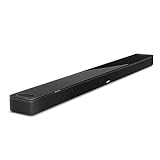
The best soundbar for home theater is the Sonos Arc Ultra: a 9.1.4-rated Dolby Atmos bar with Trueplay room tuning that expands with a Sonos Sub 4 and rear speakers. If you want a complete soundbar home theater system in one box, buy the Samsung HW-Q990F (11.1.4, wireless sub and rears included). On a budget, the VIZIO 5.1.2 Elevate SE adds a wireless sub and rotating Atmos height speakers.
On this page
- 1. What Makes a Soundbar Good Enough for a Home Theater
- 2. Soundbar Channel Counts and What They Hide
- 3. The Best Soundbars for Home Theater
- 4. Soundbar for Home Theater Side by Side
- 5. How We Chose the Best Soundbar for Home Theater
- 6. Does a Soundbar With a Wireless Subwoofer Matter?
- 7. All-in-One Kit or Expandable Bar?
- 8. HDMI eARC, Passthrough and Your TV
- 9. Matching Soundbar Size to Your TV and Room
- 10. When a Soundbar Is Not Enough
- 11. Common Mistakes to Avoid
- 12. Frequently Asked Questions
1. What Makes a Soundbar Good Enough for a Home Theater
Any soundbar improves TV speakers. A home theater soundbar has to do more. These are the specs that separate the two:
- A dedicated center channel. Dialogue lives in the center. Bars with three or more front channels keep voices anchored to the screen.
- Real bass. Bars without a subwoofer roll off well above the frequencies that give films their weight. A separate sub, or a clear path to adding one, is essential.
- Atmos with real height drivers. Up-firing drivers bounce sound off the ceiling for a genuine overhead layer. Bars that only decode Dolby Atmos virtually sound wider but rarely taller.
- DTS:X support if you play 4K Blu-ray. See DTS:X.
- HDMI eARC. Required for lossless Atmos from your TV's apps or a disc player connected to the TV.
- Room calibration. Microphone-based tuning (Trueplay, SpaceFit, ADAPTiQ, Sound Field Optimization) corrects for your room automatically.
- A path to real surrounds. Rear speakers are what turn a soundbar into a surround system.
Every pick on this list ticks most of these boxes. Where one misses, we say so.
2. Soundbar Channel Counts and What They Hide
Soundbar channel counts are marketing numbers. They tell you how many channels the bar renders, not how many physical speakers are in the right place.
A 9.1.4-rated single bar has no speakers behind you. Its "surround" channels are side-firing drivers that bounce sound off your walls, and its heights bounce off the ceiling. In a narrow, symmetrical room with hard walls, that can work surprisingly well. In an open-plan room with a wall missing on one side, side reflections have nothing to bounce off.
An 11.1.4 system like the Samsung Q990F includes rear speakers, so surround effects come from actual drivers behind you.
Read channel counts like this:
| Rating | What is usually physical | What is usually reflected or virtual |
|---|---|---|
| 3.0 or 3.1 | Left, center, right (plus sub) | Everything else |
| 5.1.2 single bar | Front three, ceiling bounce | Side surrounds |
| 5.1.2 with rears | Front three, rears, ceiling bounce | Nothing |
| 9.1.4 single bar | Front stage, side and up-firing drivers | Surrounds and heights via reflections |
| 11.1.4 with rears | Bar and rears with up-firing drivers | Some side effects |
The rule: physical rear speakers beat any channel number on a single bar. If surround matters most, prioritize a system with rears or one you can expand.
3. The Best Soundbars for Home Theater

1. Sonos Arc Ultra
$900–$1,000 · Best for: Living rooms that want a premium single-bar Atmos setup with room to grow
- Channels
- 9.1.4 (14 drivers)
- Atmos/DTS:X
- Dolby Atmos (no DTS:X)
- Subwoofer
- Built-in Sound Motion woofer; optional Sonos Sub 4
- Inputs
- HDMI eARC (optical via adapter), Bluetooth
The Arc Ultra is the best home theater soundbar because it is the strongest bar on its own and the easiest to grow. Sonos rates it 9.1.4 from 14 drivers, including up-firing and side-firing units for Dolby Atmos and the Sound Motion woofer, a compact design that gives a single bar more low-end weight than its size suggests. Trueplay uses the built-in microphone to tune the bar to your room.
Out of the box it beats every other single bar here on balance: dialogue is clear without sounding thin, and music sounds natural rather than hyped. AirPlay 2, Wi-Fi streaming and Bluetooth are built in, and it connects to your TV over HDMI eARC.
Then it scales. Add a Sonos Sub 4 for the bottom octave and a pair of Era 100 or Era 300 speakers as rears. The Era 300s carry their own up-firing drivers, adding rear height. The sub and rears link to the bar directly, not through your router.
The trade-offs: no DTS:X, so 4K Blu-ray DTS:X tracks play without height, and no HDMI inputs. A full kit also costs well above the Samsung Q990F, which includes everything.
Against the Q990F, the Arc Ultra is the better bar and the better long-term platform; the Samsung is the better value if you want a full system today. See our Sonos home theater review and the Sonos brand page.
Pros
- Deeper bass than any slim bar of its size, thanks to Sound Motion
- Clear dialogue and strong Atmos height for a single bar
- Trueplay room tuning, including a mic-based quick tune
- Best-in-class multiroom app; adds Sub 4 and rears wirelessly
Cons
- No DTS:X decoding
- Single HDMI eARC port, no passthrough inputs
- Full Sonos surround system gets expensive

2. Samsung HW-Q990F 11.1.4 Soundbar
$1,500–$2,000 · Best for: Living rooms that want the fullest all-in-one Atmos system, especially with a Samsung TV
- Channels
- 11.1.4
- Atmos/DTS:X
- Dolby Atmos and DTS:X
- Subwoofer
- Wireless subwoofer included
- Inputs
- HDMI in, HDMI eARC, Wi-Fi, Bluetooth
If you want the best soundbar home theater system in one box, the Q990F is it. Samsung includes the bar, a wireless subwoofer and two wireless rear speakers, all rated together at 11.1.4. The rears have their own up-firing drivers, so Dolby Atmos height effects come from behind you as well as in front, which no single bar can do.
It decodes both Dolby Atmos and DTS:X, connects over HDMI eARC, and calibrates itself with SpaceFit Sound Pro. Owners of recent Samsung TVs get Q-Symphony, which blends the TV's speakers into the soundstage, and the option to send Atmos from the TV to the bar wirelessly.
Value is the strongest argument. To match its layout with the Sonos Arc Ultra, you would add a sub and two rears bought separately, at a much higher total. The Samsung gets you a complete surround system in the $1,500–$2,000 band.
The trade-off is flexibility. You cannot swap in a better sub or larger rears later, and the bar on its own is less refined for music than the Arc Ultra. The rears and sub still need power outlets.
Against the Sony Bar 9 below, the Samsung includes the sub and rears that Sony sells separately, so it is the better buy unless you own a Sony TV and value its integration. It is also our top pick in the best home theater systems roundup. More in our Samsung home theater review.
Pros
- Full 11.1.4 layout with rear height drivers in the box
- Decodes Dolby Atmos and DTS:X
- SpaceFit Sound Pro room calibration
- HDMI input plus eARC, and wireless Atmos with Samsung TVs
Cons
- Expensive for a soundbar system
- Best features need a Samsung TV
- Rear levels often need manual tweaking

3. Sony Bravia Theater Bar 9
$1,000–$1,400 · Best for: Larger living rooms and 4K Blu-ray fans who want Atmos and DTS:X from one bar
- Channels
- 13 drivers (incl. up-firing)
- Atmos/DTS:X
- Dolby Atmos, DTS:X and IMAX Enhanced
- Subwoofer
- Built-in woofers; optional SA-SW3 or SA-SW5
- Inputs
- HDMI eARC, Bluetooth
The Bravia Theater Bar 9 is Sony's flagship single bar and the best soundbar for home theater if you own a recent Sony Bravia TV. It packs 13 drivers, including up-firing units, and decodes Dolby Atmos and DTS:X. Sony's 360 Spatial Sound Mapping creates virtual speakers around the room from those drivers, and Sound Field Optimization measures the room to place them.
The Sony TV integration is the reason to choose it. Acoustic Center Sync turns the TV's own speakers into part of the center channel, so dialogue appears to come from the screen rather than from below it. Settings appear in the TV's menu, and the TV remote controls everything.
On its own, the Bar 9 delivers a wide, tall soundstage for a single bar. For full home theater, Sony sells matching wireless subwoofers and rear speakers that pair with it. Adding them brings it close to a complete system, at a total similar to or above the Samsung.
The trade-offs: the bar alone lacks deep bass, so a sub is strongly recommended for films, and there is no HDMI input; it connects over eARC. Without a Sony TV, Acoustic Center Sync is unavailable and the case for the Bar 9 over the Arc Ultra weakens.
Against the Arc Ultra, the Sony adds DTS:X and Bravia integration; the Sonos is better for music and multi-room. Sony's smaller Bravia Theater Bar 8 is the step down. More in our Sony home theater review.
Pros
- 13 drivers with up-firing units for strong height
- Decodes Dolby Atmos, DTS:X and IMAX Enhanced
- Wide, spacious presentation for a single bar
- Good Wi-Fi streaming support
Cons
- No HDMI input; relies on the TV's eARC
- Sub and rears are expensive extras
- Long cabinet needs a wide stand

4. JBL Bar 1000
$800–$1,000 · Best for: Living rooms that want real rear surround without permanent rear speakers
- Channels
- 7.1.4
- Atmos/DTS:X
- Dolby Atmos and DTS:X
- Subwoofer
- 10-inch wireless subwoofer included
- Inputs
- 3x HDMI in (4K Dolby Vision pass-through), HDMI eARC, optical, Bluetooth
The JBL Bar 1000 is the best soundbar for surround home theater on a mid-range budget because it includes everything (bar, wireless subwoofer and rear speakers) for less than flagship bars cost on their own. JBL rates it 7.1.4.
Its signature feature is the surrounds: they detach from the ends of the bar and run on batteries, so you place them behind your seats for a film and dock them back on the bar to recharge. JBL quotes around 10 hours per charge. In living rooms with no outlets behind the sofa, this solves the biggest problem with rear speakers.
The spec sheet is generous. Up-firing drivers handle Atmos height, a 10-inch wireless sub handles bass, and it decodes Dolby Atmos and DTS:X. It is also one of the few bars here with three HDMI inputs plus eARC, so a console, streaming box and disc player can connect directly, a real advantage if your TV is short on HDMI ports or lacks eARC. Chromecast and AirPlay 2 cover music.
The trade-offs: battery surrounds go quiet if you forget to dock them, and their small drivers limit rear output. Tuning favors impact over subtlety, so it is less natural with music than the Sonos.
Against the Samsung Q990F, the JBL has fewer channels and less refinement but more HDMI inputs and often a lower price. JBL has released newer models since, but the Bar 1000 remains widely sold and well documented. See the JBL brand page.
Pros
- Detachable battery rears give real surround on demand
- 10-inch wireless sub included
- Three HDMI inputs plus eARC
- Decodes Dolby Atmos and DTS:X
Cons
- Rear speakers need regular recharging
- 880 W figure is a system total, not per channel
- Bulky bar when the rears are docked

5. Bose Smart Ultra Soundbar
$700–$900 · Best for: Viewers who struggle with dialogue and want a premium, easy-to-use Atmos bar
- Channels
- 9 drivers (incl. 2 up-firing dipole)
- Atmos/DTS:X
- Dolby Atmos (no DTS:X)
- Subwoofer
- Optional Bose Bass Module 500 or 700
- Inputs
- HDMI eARC, optical, Bluetooth
If the main reason you want a soundbar is to hear what people are saying, the Bose Smart Ultra is the pick. Its A.I. Dialogue Mode uses processing to identify voices and balance them against music and effects, keeping speech clear without making everything else quieter. For late-night viewing, hearing difficulties or films with heavily mixed dialogue, it is the most effective feature of its kind.
As a home theater bar, it decodes Dolby Atmos using up-firing dipole transducers, and ADAPTiQ calibration tunes it for your room with a supplied headset microphone. Wi-Fi streaming, AirPlay 2 and Chromecast built-in cover music, and it connects over HDMI eARC.
It expands into a full system with the Bose Bass Module 700 and Bose Surround Speakers 700. The rears connect by short wires to wireless receiver modules, which need outlets.
The trade-offs: no DTS:X decoding, no HDMI input, and a full Bose system costs more than all-in-one rivals like the Samsung or JBL. Bass from the bar alone is lighter than the Arc Ultra's.
Against the Sonos, Bose is the clearer choice for speech, while Sonos is the better music and multi-room platform. Against the Sony Bar 9, Bose offers better dialogue processing but loses DTS:X. Our Bose home theater review covers the full lineup, including the smaller Bose Smart Soundbar.
Pros
- A.I. Dialogue Mode makes voices clearer
- ADAPTiQ room tuning
- Up-firing dipole drivers for Atmos height
- Wide streaming support including Chromecast and AirPlay 2
Cons
- No DTS:X
- Bass module and rears are costly add-ons
- No HDMI inputs for sources

6. Klipsch Flexus Core 300 Soundbar
$900–$1,200 · Best for: Buyers who want an Atmos bar now and plan to add wireless sub and surrounds later
- Channels
- 5.1.2
- Atmos/DTS:X
- Dolby Atmos
- Room correction
- Dirac Live
- Subwoofer
- Optional Flexus wireless sub
The Klipsch Flexus Core 300 is the bar to choose if you want a Sonos-style upgrade path at a lower starting price. It is a 5.1.2 Dolby Atmos bar with up-firing drivers, and it pairs wirelessly with Klipsch's Flexus subwoofers and surround speakers when you are ready to expand.
Klipsch positions the Flexus range around its speaker-building heritage, and owner reports tend to praise the Core 300's midrange and music playback rather than just its movie punch. It connects over HDMI eARC, supports Bluetooth, and adds Wi-Fi streaming.
The appeal is staged spending. Buy the bar now, add a Flexus sub when the budget allows, and add surrounds after that. Each step is a real improvement, and you never throw away the bar.
The trade-offs: as a newer product line, the Flexus range has a shorter owner track record than Sonos or Bose. Its expansion options are limited to Klipsch's own Flexus speakers, and the app is less polished than Sonos's. Without a sub, bass is decent for a bar but no substitute for a dedicated woofer.
Against the Arc Ultra, the Core 300 starts lower and is easier on the budget at each step, but the Sonos is the more capable bar with a deeper ecosystem. Against the Bose, the Klipsch is the better music bar; the Bose is better for dialogue. See our Klipsch home theater review.
Pros
- Dirac Live room correction tames room bass problems
- Up-firing drivers for real Atmos height
- Modular: add Flexus wireless sub and surrounds
- Lively, dynamic Klipsch sound
Cons
- Sub and surrounds cost extra
- Streaming ecosystem less mature than Sonos
- Single-input design means sources go through the TV

7. Sonos Beam (Gen 2)
$400–$500 · Best for: Small living rooms and bedrooms with 40–55-inch TVs
- Channels
- 5 drivers (virtual surround and height)
- Atmos/DTS:X
- Dolby Atmos (virtualized; no DTS:X)
- Subwoofer
- Optional Sonos Sub 4 or Sub Mini
- Inputs
- HDMI eARC (optical via adapter)
The Sonos Beam (Gen 2) is the best soundbar for small home theaters, bedrooms and TVs under about 55 inches. It is compact, at roughly two feet wide, so it fits under smaller screens and on narrow stands where a flagship bar would overhang.
It is a five-channel bar that decodes Dolby Atmos, but it has no up-firing drivers: height is created with processing. In a small room with close seating, that virtual effect adds some sense of space; in a large room it is subtle. Speech clarity, which is what most people need in a bedroom or den, is excellent for the size.
The Beam shares the Sonos platform with the Arc Ultra, so it connects over HDMI eARC, supports AirPlay 2 and Wi-Fi streaming, uses Trueplay tuning, and expands the same way. Add Era 100 rears and a Sonos sub and it becomes a compact 5.1 system. That expansion path is what sets it apart from cheaper small bars.
The trade-offs: no real height drivers, no DTS:X, no HDMI input and no Bluetooth. Bass from the bar alone is modest, as you would expect from its size.
Against the Arc Ultra, the Beam gives up real Atmos height and much of the low end for a far lower price and a much smaller footprint. Against the VIZIO Elevate SE below, it is a better-connected bar with Wi-Fi streaming and a better ecosystem, but it includes no sub and no real height drivers.
Pros
- Compact size suits smaller TVs
- HDMI eARC with Dolby Atmos decoding
- Excellent app and Trueplay tuning
- Expands to 5.1 with Sonos sub and rears
Cons
- Virtual height only, no up-firing drivers
- No Bluetooth
- Limited output in larger rooms

8. VIZIO 5.1.2 Elevate SE Soundbar (SL512X-08)
$350–$450 · Best for: Budget buyers who want Atmos and DTS:X with real height drivers in a small to mid-size room
- Channels
- 5.1.2
- Atmos/DTS:X
- Dolby Atmos and DTS:X; height speakers rotate up automatically
- Subwoofer
- Wireless subwoofer included
- Inputs
- HDMI eARC, Bluetooth
The VIZIO 5.1.2 Elevate SE (SL512X-08), the successor to the M-Series 5.1.2 in this slot, is the best budget soundbar for home theater because it includes the piece most cheap bars leave out: a wireless subwoofer, in the $350–$450 band. It is rated 5.1.2 and decodes both Dolby Atmos and DTS:X, which many single bars at this price cannot match.
Its headline feature is a pair of height speakers that rotate upward automatically when Atmos or DTS:X content is detected, so they bounce sound off the ceiling only when a soundtrack carries height information. It connects over HDMI eARC, so your TV remote controls volume, and adds Bluetooth for phones. QuickFit thumbscrews attach it to select Vizio TVs, and rotating aluminum elements give it a distinctive look.
Do the maths on the ceiling: with an 8 ft ceiling and a seat 10 ft away, the reflected height path is about 14.3 ft; under a 12 ft ceiling it stretches to about 21 ft and arrives roughly 3 dB quieter. That is why it suits rooms with flat, normal-height ceilings.
The trade-offs are real. The soundbar remote is sold separately, Wi-Fi streaming is not listed, there is no automatic room calibration, and the Amazon listing does not detail the surround speakers, so check what is in the box if physical rears matter. Against the Sonos Beam, the Vizio adds a sub and real height drivers for a similar band; the Beam is the better bar for streaming and expansion. Our budget home theater system guide covers other affordable options.
Pros
- Height speakers rotate up automatically for Atmos and DTS:X
- Wireless subwoofer included
- HDMI eARC lets your TV remote control it
- QuickFit mounting for select Vizio TVs and a distinctive Elevate design
Cons
- Soundbar remote sold separately
- Surround speakers not detailed on the listing
- No Wi-Fi streaming listed
4. Soundbar for Home Theater Side by Side
| Product | Score | Price | Channels | Atmos/DTS:X | Subwoofer | Surrounds | Inputs | Buy |
|---|---|---|---|---|---|---|---|---|
| Sonos Arc Ultra Best Overall | 88 | $900–$1,000 | 9.1.4 (14 drivers) | Dolby Atmos (no DTS:X) | Built-in Sound Motion woofer; optional Sonos Sub 4 | Optional (pair of Era 100 or Era 300) | HDMI eARC (optical via adapter), Bluetooth | Amazon → |
| Samsung HW-Q990F 11.1.4 Soundbar Best Complete Soundbar System | 87 | $1,500–$2,000 | 11.1.4 | Dolby Atmos and DTS:X | Wireless subwoofer included | Included, with up-firing drivers | HDMI in, HDMI eARC, Wi-Fi, Bluetooth | Amazon → |
| Sony Bravia Theater Bar 9 Best for Sony TV Owners | 85 | $1,000–$1,400 | 13 drivers (incl. up-firing) | Dolby Atmos, DTS:X and IMAX Enhanced | Built-in woofers; optional SA-SW3 or SA-SW5 | Optional Sony wireless rears | HDMI eARC, Bluetooth | Amazon → |
| JBL Bar 1000 Best Value Surround Soundbar | 85 | $800–$1,000 | 7.1.4 | Dolby Atmos and DTS:X | 10-inch wireless subwoofer included | Detachable battery-powered rears | 3x HDMI in (4K Dolby Vision pass-through), HDMI eARC, optical, Bluetooth | Amazon → |
| Bose Smart Ultra Soundbar Best for Dialogue | 83 | $700–$900 | 9 drivers (incl. 2 up-firing dipole) | Dolby Atmos (no DTS:X) | Optional Bose Bass Module 500 or 700 | Optional Bose Surround Speakers or Surround Speakers 700 | HDMI eARC, optical, Bluetooth | Amazon → |
| Klipsch Flexus Core 300 Soundbar Best Expandable Mid-Range Bar | 81 | $900–$1,200 | 5.1.2 | Dolby Atmos | Optional Flexus wireless sub | Optional Flexus wireless surrounds | HDMI eARC, Bluetooth | Amazon → |
| Sonos Beam (Gen 2) Best for Small Rooms | 79 | $400–$500 | 5 drivers (virtual surround and height) | Dolby Atmos (virtualized; no DTS:X) | Optional Sonos Sub 4 or Sub Mini | Optional (pair of Era 100 or Era 300) | HDMI eARC (optical via adapter) | Amazon → |
| VIZIO 5.1.2 Elevate SE Soundbar (SL512X-08) Best Budget Soundbar System | 76 | $350–$450 | 5.1.2 | Dolby Atmos and DTS:X; height speakers rotate up automatically | Wireless subwoofer included | Not detailed on the Amazon listing | HDMI eARC, Bluetooth | Amazon → |
5. How We Chose the Best Soundbar for Home Theater
We have not lab-tested these soundbars. We ranked them on spec sheets, room maths and owner-reported reliability, using five criteria:
- The bar on its own. Drivers, center channel, real height, bass and calibration before any add-ons.
- Expansion. Can it add a sub and rears, and how good are they?
- Formats. Dolby Atmos, DTS:X and eARC.
- Connections. HDMI inputs, streaming and TV integration.
- Value. What a complete home theater setup costs with each bar.
The Arc Ultra ranks first because it scores highest on the bar alone and on expansion. The Q990F ranks second as the best value complete system; on our best home theater systems list, where completeness weighs more, it takes first place. The Beam and Vizio win their categories on room size and price.
6. Does a Soundbar With a Wireless Subwoofer Matter?
Yes, and "wireless" is the less important word. What matters is having a subwoofer at all.
Movie soundtracks carry a dedicated LFE channel for effects down to 20 Hz, plus deep bass in the main channels. The small drivers inside a soundbar cannot move enough air to reproduce much below roughly 60–80 Hz at film volumes. A subwoofer takes over below that point, freeing the bar to play voices and effects cleanly.
"Wireless" means the sub receives audio by radio from the bar, so you can put it anywhere with a power outlet. That is useful, because sub placement changes bass dramatically. Try the subwoofer crawl: place the sub at your seat, play a bass-heavy scene, and crawl around the front of the room. The spot where bass sounds smoothest is where the sub belongs.
Bars with built-in woofers, like the Arc Ultra's Sound Motion design, extend lower than most single bars, but a dedicated sub still adds the bottom octave. Our best subwoofer for home theater guide explains sizing, though soundbar systems require the matching brand's sub.
7. All-in-One Kit or Expandable Bar?
There are two ways to buy a soundbar home theater system.
All-in-one kits (Samsung Q990F, JBL Bar 1000) include the bar, sub and rears in one box, and budget kits like the VIZIO Elevate SE bundle at least the bar and a wireless sub. They cost less than buying the same pieces separately and work perfectly together from day one. The catch: you cannot upgrade one part.
Expandable bars (Sonos Arc Ultra, Sony Bar 9, Bose Smart Ultra, Klipsch Flexus Core 300, Sonos Beam) start as a single bar. You add a sub and rears from the same brand when you choose. Total cost is higher, but you spread spending over time and can stop when it sounds good enough.
A simple test: if you know you want full surround now, buy a kit. If you are not sure you need rears, or you want to spread the cost, buy an expandable bar and add the sub first; that addition changes the sound more than rears do.
8. HDMI eARC, Passthrough and Your TV
How the bar connects to your TV affects what you hear.
- HDMI eARC carries every format, including lossless Dolby TrueHD Atmos from disc players plugged into the TV. Every bar on this list supports it. Check that your TV does too: look for "eARC" on the HDMI port label. See eARC.
- HDMI ARC (older TVs) carries compressed Dolby Digital Plus Atmos from streaming apps, but not lossless TrueHD.
- HDMI inputs on the bar let you plug sources straight into the bar, bypassing the TV's audio limits. The JBL Bar 1000 has three. Check that the bar passes the video formats you need, especially for gaming at 4K/120.
- Optical carries only basic 5.1 and is a last resort.
Gamers: if your TV's 4K/120 HDMI 2.1 ports are limited, connect the console to the TV and use eARC to the bar, rather than routing video through a bar that may not pass 4K/120.
Finally, set the TV's audio output to bitstream or passthrough, not PCM, so the bar receives the original Atmos stream.
9. Matching Soundbar Size to Your TV and Room
A soundbar looks best at roughly the width of the TV or a little narrower. A 16:9 TV is about 0.87 times its diagonal in width:
| TV size | Approximate screen width | Bar size that suits it |
|---|---|---|
| 50 inches | 44 inches | Compact to mid-size |
| 55 inches | 48 inches | Mid-size |
| 65 inches | 57 inches | Full-size flagship |
| 77 inches and up | 67 inches and up | Full-size flagship, or Sony Theater Quad |
Room size matters more than TV size for sound. In a room under about 1,500 cubic feet, a compact bar like the Sonos Beam with a sub is plenty. From 1,500 to 3,000 cubic feet, a flagship bar or a kit with rears. Above that, consider a separates system, which scales better. Our viewing distance calculator helps match screen size to seating.
10. When a Soundbar Is Not Enough
Soundbars have closed much of the gap with separate speakers, but not all of it. Consider a receiver and speakers instead if:
- Your room is large or open-plan, beyond about 3,000 cubic feet.
- You want in-ceiling Atmos speakers or a 7.1.4 layout with the flexibility to place each speaker.
- Music matters as much as movies, and you want a real stereo pair spread six to eight feet apart.
- You want to upgrade one component at a time over many years.
Our soundbar vs home theater guide compares the two paths in detail, and the best home theater systems roundup includes speaker packages alongside soundbar kits.
11. Common Mistakes to Avoid
Judging a soundbar by its channel number
A high rating on a single bar usually means reflected or virtual channels. Physical rear speakers beat any number printed on the box.
Skipping the subwoofer
Soundbar drivers cannot reproduce deep film bass. If you buy an expandable bar, add the sub before rears; it makes the bigger difference.
Connecting with optical when eARC is available
Optical carries only basic 5.1 and no Atmos. Use the HDMI eARC port on your TV for full format support.
Leaving TV audio set to PCM
Many TVs default to PCM, which can strip Atmos and surround. Set audio output to bitstream or passthrough.
Placing an Atmos bar under a shelf
Up-firing drivers need a clear path to the ceiling. Keep the bar out of enclosed cabinets and away from overhanging shelves.
12. Frequently Asked Questions
What is the best soundbar for home theater?
The best soundbar for home theater is the Sonos Arc Ultra, a 9.1.4-rated Dolby Atmos bar with Trueplay room tuning that expands with a Sonos Sub 4 and rear speakers. If you want a complete soundbar system in one box, the Samsung HW-Q990F includes a wireless sub and rears and is better value.
What is the best soundbar home theater system?
The Samsung HW-Q990F is the best soundbar home theater system in one box: an 11.1.4 bar, wireless subwoofer and wireless rear speakers with up-firing drivers, decoding Dolby Atmos and DTS:X. The JBL Bar 1000 is a strong lower-cost alternative with detachable battery surrounds and three HDMI inputs.
Soundbar vs home theater: which is best?
A home theater with a receiver and separate speakers sounds better, especially in large rooms and for music, and can be upgraded piece by piece. A soundbar is best for simplicity, space and appearance. A soundbar system with a sub and rears closes most of the gap in a typical living room.
Can a soundbar replace a home theater system?
For most living rooms, yes. A soundbar with a subwoofer and real rear speakers delivers convincing surround and Atmos height in rooms up to about 3,000 cubic feet. It falls short in large rooms, for listeners who prioritize music, and for anyone wanting in-ceiling speakers or a 7.1.4 layout with precise placement.
Do I need a subwoofer with my soundbar?
For home theater, yes. Soundbar drivers cannot reproduce the deep bass and LFE effects in film soundtracks. Bars with built-in woofers, like the Sonos Arc Ultra, go lower than most, but a dedicated subwoofer still adds the bottom octave and lets the bar play dialogue more cleanly at high volume.
Is a soundbar with a wireless subwoofer better?
A wireless subwoofer is more convenient, not inherently better sounding. It receives audio from the bar by radio, so you can place it anywhere with an outlet, which helps you find the spot with the smoothest bass. Having a subwoofer at all matters far more than whether it connects wirelessly.
Is the Sonos Arc Ultra worth it for home theater?
Yes, if you want the best single bar and a clear upgrade path. The Arc Ultra is excellent for Dolby Atmos, dialogue and music, and expands with a Sonos sub and rears. Skip it if you collect 4K Blu-rays with DTS:X tracks, need HDMI inputs, or want a full system in one box for less.
What size soundbar do I need for a 65-inch TV?
A full-size soundbar suits a 65-inch TV, which is about 57 inches wide. A bar a little narrower than the screen looks balanced. Flagships like the Sonos Arc Ultra, Samsung HW-Q990F and Sony Bravia Theater Bar 9 fit that size well. Room size matters more for sound than TV size.
Related Guides
Guides
Soundbar vs Home Theater
Soundbar vs home theater: which is best? We compare sound, cost, space and setup, explain 5.1 vs 7.1 and amplifier vs receiver, and match each path to a room.
Home Theater Systems
Best Home Theater Systems
The best home theater systems for 2026, from all-in-one Atmos soundbar kits to 5.1 speaker packages. Eight picks ranked on spec-sheet maths and room size.
Home Theater Systems
Best Wireless Home Theater System
The best wireless home theater system for 2026: six picks ranked on placement, latency and wireless link, and why wireless speakers still need power.
The Bottom Line
The best soundbar for home theater is the Sonos Arc Ultra: the strongest single bar and the easiest to grow into a full system. For everything in one box, the Samsung HW-Q990F is the best complete soundbar system. Sony TV owners should look at the Bravia Theater Bar 9, surround on a mid-range budget comes from the JBL Bar 1000, dialogue is clearest on the Bose Smart Ultra, the Klipsch Flexus Core 300 is the expandable mid-range bar, the Sonos Beam (Gen 2) suits small rooms, and the VIZIO 5.1.2 Elevate SE is the budget system with a wireless sub and rotating height speakers.