Center Channel Speakers
Best Center Channel Speaker for Home Theater
We research every product against its spec sheet and independent measurements. When you buy through our links we may earn a commission, at no cost to you. How we score · Disclosure
The best center channel speaker for home theater is the one that keeps dialogue clear for every seat on the sofa and sounds like a perfect match for your front left and right speakers. Our top pick is the SVS Prime Center, a 3-way design with a dedicated midrange stacked above the tweeter, which avoids the off-axis dialogue dropouts that plague many conventional centers.
This guide is for anyone whose movie dialogue sounds muffled, buried or uneven across seats, and for anyone building a new system who wants the most important speaker right. We explain why layout matters as much as brand, show the maths behind center-channel lobing, and match each pick to the front speakers it pairs with best.
Our top picks at a glance


Quick answer
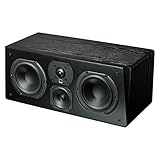
The best center channel speaker for home theater for most people is the SVS Prime Center, because its 3-way layout with a vertical midrange and tweeter keeps dialogue consistent across a wide sofa. For the widest, most even coverage, the KEF Q6 Meta uses a coaxial Uni-Q driver. On a budget, the 3-way ELAC Debut 2.0 C5.2 offers the same layout advantage for much less.
On this page
- 1. What Makes Dialogue Clear
- 2. Horizontal Versus Vertical Center Speaker Layouts
- 3. The Best Center Channel Speakers
- 4. Center Channel Speaker for Home Theater Side by Side
- 5. How We Chose the Best Center Channel Speaker for Home Theater
- 6. Matching Your Center to Your Front Speakers
- 7. Center Speaker Placement
- 8. Settings That Improve Dialogue
- 9. Who Needs a Center Speaker and Who Can Skip It
- 10. Common Mistakes to Avoid
- 11. Frequently Asked Questions
1. What Makes Dialogue Clear
The center channel carries almost all dialogue and much of the on-screen action, so it is the most important speaker in your system. Three things decide how clear it sounds.
- Layout. How the drivers are arranged decides how consistent dialogue sounds across seats. This is the biggest factor and is explained below.
- Timbre matching. The center should share the tweeter type of your front left and right speakers, so voices do not change character as they pan.
- Placement. The center's tweeter should be close to ear height and aimed at the listeners, with the front of the speaker flush with the front of the shelf.
Two specs to check:
- Sensitivity: should be close to your front speakers' rating so the receiver does not need large level adjustments.
- Impedance: 6 or 8 ohms is easiest for most receivers.
Size matters less than layout. A big two-way center with a tweeter between two woofers can sound worse off-axis than a smaller 3-way design.
2. Horizontal Versus Vertical Center Speaker Layouts
Most center speakers lay a tweeter between two woofers horizontally, a layout called MTM (midrange-tweeter-midrange). It looks neat under a TV, but it has an acoustic problem: lobing.
When two woofers side by side play the same frequency, a listener off to one side is slightly closer to one woofer than the other. At certain frequencies, the sound from the two woofers arrives out of phase and partially cancels.
The maths. Say the woofer centers are 8 inches (about 0.2 meters) apart and you sit 30 degrees off-axis. The path difference is 0.2 × sin(30°) = 0.1 meters. Cancellation happens where that equals half a wavelength, so at 343 ÷ (2 × 0.1) ≈ 1,700 Hz. That is right in the vocal intelligibility band, where consonants live, and near where many two-way centers cross over to the tweeter.
That is why voices can sound hollow or dull from the ends of the sofa with a horizontal MTM center.
Two solutions:
- 3-way centers like the SVS Prime Center and ELAC Debut 2.0 C5.2 stack a midrange and tweeter vertically in the middle. The midrange handles voices from one point, and the woofers only handle frequencies low enough that their spacing does not matter.
- Coaxial centers like the KEF Q6 Meta place the tweeter in the middle of the midrange, so they radiate from one point.
If your seating is wide, a 3-way or coaxial center is the single biggest upgrade you can make to dialogue clarity.
3. The Best Center Channel Speakers

1. SVS Prime Center Speaker
$350–$500 each · Best for: Wide seating rows and SVS Prime systems
- Type
- 3-way center channel
- Drivers
- 1-inch aluminum dome tweeter; 4.5-inch polypropylene midrange; dual 5.25-inch polypropylene woofers
- Impedance
- 8 ohms
- Sold as
- Each
The SVS Prime Center wins because its layout is built around dialogue. It is a 3-way center with dual 5.25-inch woofers, a 4.5-inch midrange and a 1-inch aluminum dome tweeter, with the midrange and tweeter stacked vertically in the middle of the cabinet.
That vertical stack is the key. Voices live mostly between about 300 Hz and 3 kHz, and here that band is handled by the midrange, a single driver at the center of the cabinet. The woofers only handle the lower frequencies, where their side-by-side spacing causes no audible cancellation. The result is that dialogue sounds the same from the middle seat and from the ends of the couch, which is exactly where conventional centers struggle.
The Prime Center shares its tweeter with the Prime Tower, Prime Bookshelf and Prime Satellite, so timbre matching is solved if you build an SVS front stage. Its neutral voicing also pairs reasonably well with other aluminum-tweeter speakers.
The trade-off is size and sensitivity. A 3-way center is bigger than a slim two-way, so check your TV stand depth, and SVS's moderate sensitivity means it needs more power than horn-loaded Klipsch centers. Compared with the KEF Q6 Meta below, the SVS is more affordable; the KEF disperses even more evenly.
Pros
- Dedicated 4.5-inch midrange avoids the dual-woofer dialogue dip
- Matches Prime Bookshelf and Tower tweeters
- Neutral, clear voices
- Easy 8-ohm load
Cons
- Pricier than 2-way centers
- Needs decent power for loud peaks
- Lean balance in bright rooms

2. KEF Q6 Meta Center Channel Speaker
$500–$700 each · Best for: KEF Q Meta systems and wide seating rows
- Type
- Center channel, coaxial
- Drivers
- Uni-Q with MAT (1-inch vented aluminum dome tweeter in aluminum midrange); aluminum bass drivers
- Impedance
- 8 ohms
- Sold as
- Each
If your seating spans a wide sofa or two rows, the KEF Q6 Meta delivers the most even dialogue coverage here. Its Uni-Q driver places the tweeter at the acoustic center of the midrange cone, so treble and midrange radiate from a single point. That eliminates the horizontal cancellation between tweeter and woofers that conventional centers suffer from when the speaker is laid on its side.
This generation adds Metamaterial Absorption Technology (MAT), a disc behind the tweeter designed to absorb rear-radiated sound that would otherwise color the treble. The practical result: voices keep the same tonal balance whether you sit in the middle or at the far end of the row.
The Q6 Meta matches KEF's Q3 Meta bookshelf and Q7 Meta tower, and it blends well with the compact KEF Q1 Meta used as surrounds, since all three share Uni-Q drivers.
The trade-off is size and power. It is a large center, so measure your shelf, and it needs reasonable amplifier power to play loud. It is also one of the pricier centers here. Compared with the SVS Prime Center, the KEF offers wider, more even coverage; the SVS costs less and plays with more midrange weight.
Pros
- Uni-Q point source avoids the dual-woofer off-axis dip
- Identical tonal balance with Q Meta fronts
- MAT absorber for clean treble
- Easy 8-ohm load
Cons
- Costs more than most budget fronts
- Less efficient than horn-loaded centers
- Wide cabinet for some stands

3. ELAC Debut 2.0 C5.2 Center Channel Speaker
$180–$280 each · Best for: ELAC Debut 2.0 systems and neutral-sounding budget setups
- Type
- 2-way center channel
- Drivers
- 1-inch cloth dome tweeter; dual 5.25-inch aramid-fiber woofers
- Impedance
- 6 ohms
- Sold as
- Each
The ELAC Debut 2.0 C5.2 brings the 3-way center layout to a budget price. Designed by Andrew Jones, it uses dual 5.25-inch aramid-fiber woofers, a 4-inch aramid midrange and a 1-inch cloth dome tweeter, with the midrange and tweeter in the center of the cabinet.
That makes it the best value center for dialogue clarity. Most centers at this price are simple two-way designs with a tweeter between two woofers, which suffer from horizontal cancellation off-axis. The C5.2's dedicated midrange keeps voices on one driver, so off-axis seats hear clear, consistent dialogue.
Pair it with the ELAC Debut 2.0 B6.2 bookshelf or the F6.2 tower for a fully matched ELAC front stage with cloth tweeters throughout. The soft, smooth treble also makes the C5.2 a reasonable match for other cloth or silk dome front speakers.
The trade-off is efficiency and finish. With a 6-ohm nominal impedance and moderate sensitivity, it needs more power than Klipsch centers, and the vinyl-wrap cabinet looks plainer than pricier options. Compared with the SVS Prime Center, the ELAC costs less but sounds a little less refined; compared with budget two-way centers, it is clearly better for dialogue.
Pros
- Matches Debut 2.0 B6.2 and F6.2 drivers
- Neutral, clear dialogue
- Compact for a dual 5.25-inch center
- Good value
Cons
- Off-axis dip typical of dual-woofer centers
- 6-ohm load draws more current
- Plain finish

4. Klipsch RP-504C II Center Channel Speaker
$450–$650 each · Best for: Klipsch RP-series systems where dialogue needs to stay clear at high volume
- Type
- Center channel, horn-loaded
- Drivers
- 1-inch titanium LTS tweeter on Hybrid Tractrix horn; 5.25-inch Cerametallic woofers
- Impedance
- 8 ohms
- Sold as
- Each
The Klipsch RP-504C II is the center for large rooms and anyone who listens loud. It is a big center with dual 5.25-inch cerametallic woofers and a 1-inch titanium tweeter loaded by Klipsch's Hybrid Tractrix horn, and like the rest of the Reference Premiere series it is very efficient.
Efficiency is the point here. Klipsch's horn-loaded speakers are rated far above the 86 to 88 dB typical of dome-tweeter rivals, so the RP-504C II reaches loud levels with modest receiver power, and dialogue stays clear during the loudest action scenes. The horn also controls dispersion, sending more sound toward the seats and less toward the ceiling and floor, which reduces reflections.
It matches the RP-600M II bookshelf and RP-8000F II tower, giving you a fully horn-loaded front stage with consistent timbre.
The trade-off is size and character. This is one of the largest centers here, so it needs a deep, wide shelf, and the horn's lively presentation can sound bright in hard-surfaced rooms. Compared with the SVS and KEF, it is louder and more dynamic but less smooth. If you own RP-series fronts, this is the center to buy.
Pros
- Titanium horn tweeter matches RP II fronts
- Very easy to drive with lots of headroom
- Big, clear dialogue at reference volume
- Solid build
Cons
- Large and heavy; check your stand
- Bright in hard-surfaced rooms
- Costs more than many fronts

5. Polk Signature Elite ES35 Center Channel Speaker
$250–$400 each · Best for: Polk Signature Elite systems where natural dialogue matters most
- Type
- 2-way center channel
- Drivers
- 1-inch Terylene dome tweeter; dual Dynamic Balance woofers
- Impedance
- 8 ohms
- Bass loading
- Power Port
Many TV stands leave very little room under the screen, and the Polk Signature Elite ES35 is designed for exactly that. It is a slim, low-profile center with dual woofers flanking a 1-inch Terylene tweeter that is Hi-Res Audio certified, plus Polk's Power Port to strengthen bass from a shallow cabinet.
The low height means it can sit beneath a TV on a stand without blocking the bottom of the screen or the IR receiver, a common problem with larger centers. Polk's warm, smooth voicing suits dialogue, and it matches the Signature Elite ES20 bookshelf and ES60 tower, so you can build a fully matched Polk front stage.
The trade-off is the layout. As a two-way horizontal design with the tweeter between the woofers, it is more prone to off-axis cancellation than the 3-way SVS and ELAC or the coaxial KEF. If your seating is narrow and centered, that matters little; if you have a wide sofa, angle the center slightly up toward ear height and consider a 3-way model instead. Compared with the Monitor XT35 below, it is better finished and more refined.
Pros
- Smooth, natural dialogue
- Matches ES20 and ES60 tweeters
- Power Port for cleaner low end
- Solid build
Cons
- Needs real power for loud peaks
- Large for some stands
- Off-axis dip typical of dual-woofer centers

6. Klipsch R-50C Center Channel Speaker
$200–$350 each · Best for: Budget Klipsch Reference systems that need clear, loud dialogue
- Type
- 2-way center channel, horn-loaded
- Drivers
- 1-inch aluminum LTS tweeter on Tractrix horn; dual 5.25-inch spun-copper IMG woofers
- Impedance
- 8 ohms
- Sold as
- Each
The Klipsch R-50C is the center to buy for a budget Klipsch Reference system, such as one built around the R-50M bookshelf or R-600F towers. It pairs dual 5.25-inch spun-copper woofers with a 1-inch aluminum tweeter in Klipsch's Tractrix horn.
Like other Klipsch Reference speakers, it is highly efficient, which makes it a great match for entry-level receivers. Dialogue stays clear and present even at lower volumes, and the horn keeps voices focused toward the listening area.
Timbre matching is the main reason to choose it. If your fronts are Klipsch Reference speakers with horn-loaded aluminum tweeters, pairing them with a center from another brand would change the character of voices panning across the screen. The R-50C keeps everything consistent.
The trade-off is the same horizontal two-way layout as the Polk ES35, so off-axis dialogue clarity is not as consistent as the 3-way picks. The horn's lively treble can also sound bright in hard rooms. Compared with the RP-504C II, it is smaller and less powerful, but it costs much less and suits smaller rooms.
Pros
- Horn tweeter matches Klipsch Reference fronts
- Crisp, forward dialogue at low power
- Horn's ~90-degree coverage suits wide rows
- Easy 8-ohm load
Cons
- Dual-woofer layout can thin voices far off-axis
- Bright character in hard-surfaced rooms
- Less refined than the RP-504C II

7. Polk Monitor XT35 Center Channel Speaker
$120–$200 each · Best for: Budget Polk Monitor XT systems
- Type
- 2-way center channel
- Drivers
- 1-inch Terylene dome tweeter; dual woofers
- Impedance
- 8 ohms
- Sold as
- Each
The Polk Monitor XT35 is a budget center that gets the basics right: clear dialogue, a Hi-Res certified 1-inch Terylene tweeter and a compact, horizontal cabinet that fits under most TVs. It matches the Monitor XT20 bookshelf and XT60 tower, so you can build a Monitor XT front stage one piece at a time.
For a first surround system, that matching is its main strength. Building a front stage from one series keeps timbre consistent, and the Monitor XT family covers everything from bookshelf and towers to Atmos modules.
Polk's smooth, warm voicing suits dialogue and works well with entry-level receivers. In small to medium rooms at moderate volume, the XT35 is a big step up from TV speakers or a basic soundbar.
The trade-off is refinement and layout. As a budget two-way horizontal design, it has limited output and less consistent off-axis clarity than the 3-way picks. Compared with the Signature Elite ES35, it is less refined but cheaper. If you need a center to complete a Monitor XT system, it is the obvious choice.
Pros
- Matches Monitor XT fronts' Terylene tweeter
- Easy 8-ohm load
- Hi-Res certified
- Low price
Cons
- Dual-woofer layout thins voices far off-axis
- Basic cabinet build
- Less refined than Signature Elite

8. Sony SS-CS8 Center Channel Speaker
$80–$130 each · Best for: Budget Sony SS-CS systems
- Type
- 3-way center channel
- Drivers
- 0.75-inch super tweeter; 1-inch polyester tweeter; dual 5.12-inch mica-reinforced cellular woofers
- Impedance
- 6 ohms
- Sold as
- Each
The Sony SS-CS8 is the cheapest way to get a matched center, specifically for systems built around Sony's SS-CS5 bookshelf and SS-CS3 tower. It shares their driver family, including a super tweeter that extends treble beyond the main tweeter's range.
That matching matters more than price suggests. If you build a budget system from Sony's SS-CS series, using a center from another brand would break timbre matching across the front stage. The SS-CS8 keeps voices consistent as they pan between speakers, which is the most important thing a center does.
For budget builds in small and medium rooms, it delivers clear, present dialogue. Owners report that it benefits from the receiver's room correction, because the treble can be lively out of the box.
The trade-off is refinement and output. It is a budget speaker with a horizontal layout, so off-axis clarity and dynamics fall short of the more expensive picks here. Compared with the Polk Monitor XT35, it suits Sony systems; the Polk suits Polk systems. If you have Sony CS fronts, buy this center; otherwise, choose the center that matches your front speakers. See our budget home theater speakers guide.
Pros
- Matches SS-CS5 and SS-CS3 drivers
- Super tweeter widens treble dispersion
- Easy 6-ohm load
- Very low price
Cons
- Off-axis dip typical of dual-woofer centers
- Basic build
- Dialogue less refined than pricier centers
4. Center Channel Speaker for Home Theater Side by Side
| Product | Score | Price | Type | Drivers | Impedance | Sold as | Buy |
|---|---|---|---|---|---|---|---|
| SVS Prime Center Speaker Best Overall | 85 | $350–$500 each | 3-way center channel | 1-inch aluminum dome tweeter; 4.5-inch polypropylene midrange; dual 5.25-inch polypropylene woofers | 8 ohms | Each | Amazon → |
| KEF Q6 Meta Center Channel Speaker Best for Wide Seating | 88 | $500–$700 each | Center channel, coaxial | Uni-Q with MAT (1-inch vented aluminum dome tweeter in aluminum midrange); aluminum bass drivers | 8 ohms | Each | Amazon → |
| ELAC Debut 2.0 C5.2 Center Channel Speaker Best Value Three-Way Center | 79 | $180–$280 each | 2-way center channel | 1-inch cloth dome tweeter; dual 5.25-inch aramid-fiber woofers | 6 ohms | Each | Amazon → |
| Klipsch RP-504C II Center Channel Speaker Best for Big Rooms and Loud Playback | 85 | $450–$650 each | Center channel, horn-loaded | 1-inch titanium LTS tweeter on Hybrid Tractrix horn; 5.25-inch Cerametallic woofers | 8 ohms | Each | Amazon → |
| Polk Signature Elite ES35 Center Channel Speaker Best Slim Center Under a TV | 82 | $250–$400 each | 2-way center channel | 1-inch Terylene dome tweeter; dual Dynamic Balance woofers | 8 ohms | Each | Amazon → |
| Klipsch R-50C Center Channel Speaker Best Budget Center for Klipsch Systems | 77 | $200–$350 each | 2-way center channel, horn-loaded | 1-inch aluminum LTS tweeter on Tractrix horn; dual 5.25-inch spun-copper IMG woofers | 8 ohms | Each | Amazon → |
| Polk Monitor XT35 Center Channel Speaker Best Budget Center | 76 | $120–$200 each | 2-way center channel | 1-inch Terylene dome tweeter; dual woofers | 8 ohms | Each | Amazon → |
| Sony SS-CS8 Center Channel Speaker Cheapest Matched Center | 73 | $80–$130 each | 3-way center channel | 0.75-inch super tweeter; 1-inch polyester tweeter; dual 5.12-inch mica-reinforced cellular woofers | 6 ohms | Each | Amazon → |
5. How We Chose the Best Center Channel Speaker for Home Theater
These rankings come from manufacturer specs, acoustic principles and owner feedback, not lab measurements. We weighted:
- Layout: 3-way and coaxial designs score higher for off-axis dialogue clarity.
- Family matching: whether the center matches widely available front speakers.
- Sensitivity and power needs relative to typical receivers.
- Size and fit under TVs and on typical stands.
- Owner-reported reliability and satisfaction.
The SVS Prime Center wins because it combines a 3-way layout, a complete matching family and a reasonable price.
6. Matching Your Center to Your Front Speakers
Timbre matching means your center should sound like your front left and right speakers. The most important factor is the tweeter type: aluminum dome, silk or cloth dome, titanium horn or coaxial.
| Your front speakers | Best center match |
|---|---|
| SVS Prime | SVS Prime Center |
| KEF Q Meta (Q1, Q3 or Q7) | KEF Q6 Meta |
| ELAC Debut 2.0 | ELAC Debut 2.0 C5.2 |
| Klipsch Reference Premiere | Klipsch RP-504C II |
| Klipsch Reference | Klipsch R-50C |
| Polk Signature Elite | Polk Signature Elite ES35 |
| Polk Monitor XT | Polk Monitor XT35 |
| Sony SS-CS | Sony SS-CS8 |
If your front speakers are discontinued, choose a center from the closest current series with the same tweeter material, and use the receiver's room correction to balance levels. For complete system picks, see our best home theater speakers guide.
7. Center Speaker Placement
Good placement matters as much as the speaker itself.
- Height: place the center as close to ear height as possible, ideally with its tweeter within a foot or so of the front speakers' tweeters.
- Aim: if the center sits below or above ear height, tilt it toward the listeners using an angled stand or wedge.
- Shelf position: pull the center to the front edge of the shelf. Pushing it back into a cabinet causes reflections and boomy, muffled dialogue.
- Above or below the screen: both work; choose the position closer to ear height.
- Behind the screen: with an acoustically transparent projection screen, the center can sit directly behind the image, which is ideal.
For in-wall centers, use the same model as your in-wall fronts; see our in-wall speakers guide.
8. Settings That Improve Dialogue
Before buying a new center, check these settings:
- Crossover: set the center to Small with an 80 Hz crossover so the subwoofer handles bass.
- Level: run the receiver's auto-calibration, then try raising the center by 1 to 3 dB if dialogue is still hard to hear.
- Dialogue enhancement: many receivers have dialogue lift or dialogue enhancement modes that boost the center's level or vocal range.
- Dynamic range compression: night modes reduce the gap between quiet dialogue and loud effects, useful for late-night viewing.
If you still struggle with dialogue, the center's layout may be the problem, especially with a wide seating area. A 3-way or coaxial center is the fix. Our home theater setup guide covers calibration in detail.
9. Who Needs a Center Speaker and Who Can Skip It
Buy a dedicated center if:
- You have a surround system with an AV receiver.
- More than one person watches at a time, because a phantom center only works in the middle seat.
- Dialogue clarity matters to you, which it does for almost everyone.
You can skip a center if:
- You only sit in the middle seat and your front speakers are close together. A phantom center can work well.
- There is no space under or above the TV, and an acoustically transparent screen is not an option.
- You are using a soundbar, which has its own center channel. See our soundbar guide.
10. Common Mistakes to Avoid
Pushing the center back into a cabinet
A center recessed in a TV cabinet causes reflections that muffle dialogue and boost boomy bass. Pull it to the front edge of the shelf so the baffle is flush or slightly proud.
Mixing brands across the front stage
A center from a different brand or series than your front speakers changes the character of voices as they pan. Match the tweeter type and ideally the series.
Ignoring off-axis seats
A horizontal two-way center can sound fine from the middle seat and hollow from the ends of the sofa. With wide seating, choose a 3-way or coaxial center.
Placing the center far below ear height without tilting it
A center on the floor or a low shelf fires at your chest. Tilt it toward ear height with an angled stand or wedge, or move it closer to ear level.
Skipping calibration
If the center is too quiet relative to the fronts, dialogue gets buried. Run the receiver's auto-calibration, then fine-tune the center level by ear.
11. Frequently Asked Questions
What is the best center speaker for home theater?
The best center speaker for home theater for most people is the SVS Prime Center, a 3-way design with a vertical midrange and tweeter that keeps dialogue clear across wide seating. The KEF Q6 Meta offers even wider coverage with its coaxial driver, and the ELAC Debut 2.0 C5.2 is the best value 3-way center.
Does the center channel speaker need to match the front speakers?
Yes. The center should share the tweeter type and ideally the series of your front left and right speakers. Voices and effects pan between these three speakers, and a mismatch makes them change character as they move. The subwoofer is the only speaker that does not need to match.
Is a bigger center channel speaker better?
Not necessarily. Layout matters more than size. A large two-way center with a tweeter between two woofers can sound worse off-axis than a smaller 3-way design with a vertical midrange. Bigger centers do offer more output for large rooms, but choose a 3-way or coaxial design for dialogue clarity.
Should the center speaker be above or below the TV?
Place the center wherever it ends up closer to ear height, then tilt it toward the listeners. Below the TV is most common and usually works well on a stand. Above the TV works too, angled down. Behind an acoustically transparent screen is ideal if you use a projector.
Why is dialogue hard to hear in my home theater?
Dialogue is usually hard to hear because the center level is too low, the center is recessed in a cabinet, or a horizontal two-way center is causing off-axis cancellation. Run calibration, pull the center forward, raise its level 1 to 3 dB, and consider a 3-way center if your seating is wide.
Can I use a bookshelf speaker as a center channel?
Yes. A bookshelf speaker identical to your front left and right speakers makes an excellent center, often better than a horizontal center, because it has no woofer-spacing problem. Stand it vertically if space allows. The challenge is fitting it under the TV without blocking the screen.
Do I need a center channel speaker?
For most home theaters, yes. A dedicated center anchors dialogue to the screen for every seat. Without one, the receiver creates a phantom center from the front left and right speakers, which only works well in the middle seat. If more than one person watches, a center is worth it.
Related Guides
Bookshelf Speakers
Best Home Theater Speakers
The best home theater speakers for 2026: 8 packages, towers, bookshelf and center picks, plus the sensitivity and amp-power maths to build a matched 5.1.
Bookshelf Speakers
Best Bookshelf Speakers for Home Theater
The best bookshelf speakers for home theater in 2026: 8 picks for front, surround and rear duty, with Dolby placement angles and crossover settings explained.
Tower Speakers
Best Tower Speakers for Home Theater
The best tower speakers for home theater in 2026: 8 floorstanding front speakers ranked by room size and amp power, with placement and crossover advice.
The Bottom Line
The best center channel speaker for home theater for most people is the SVS Prime Center: a 3-way design that keeps dialogue clear from every seat and matches a complete SVS family. For the widest coverage, choose the coaxial KEF Q6 Meta; for budget 3-way performance, the ELAC Debut 2.0 C5.2. The Klipsch RP-504C II suits big rooms and loud playback, the Polk Signature Elite ES35 fits under low TVs, the Klipsch R-50C completes a budget Klipsch Reference system, the Polk Monitor XT35 completes a Monitor XT system, and the Sony SS-CS8 matches Sony CS fronts. Match the tweeter, place it at ear height and calibrate.