Bookshelf Speakers
Best Bookshelf Speakers for Home Theater
We research every product against its spec sheet and independent measurements. When you buy through our links we may earn a commission, at no cost to you. How we score · Disclosure
The best bookshelf speakers for home theater can do two jobs: anchor the front of a small or medium room with a subwoofer, and serve as matched surround and rear speakers behind larger towers. Our top pick is the KEF Q3 Meta, a 6.5-inch Uni-Q bookshelf whose coaxial driver keeps sound consistent from every angle, which is exactly what both front and surround speakers need.
This guide is for anyone choosing compact speakers for a surround system, whether as front left and right, as side and rear surrounds, or as satellites in a compact 5.1. We cover where surrounds should go, what crossover to use, and which picks match the most popular front speaker families.
Our top picks at a glance
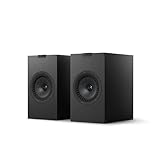


Quick answer
The best bookshelf speakers for home theater for most rooms are the KEF Q3 Meta, thanks to a coaxial Uni-Q driver that sounds consistent from any seat. For surrounds on a budget, the KEF Q1 Meta offers the same coaxial advantage for less. If your receiver has modest power, the 96 dB Klipsch RP-600M II plays loudest per watt.
On this page
- 1. How to Choose the Best Bookshelf Speakers for Home Theater
- 2. The Best Bookshelf Speakers for Home Theater
- 3. Bookshelf Speakers for Home Theater Side by Side
- 4. How We Chose These Bookshelf Speakers
- 5. Where to Put Surround and Rear Speakers
- 6. Satellite Speakers and the Subwoofer Crossover
- 7. Bookshelf Speakers Versus Towers for the Front
- 8. Stands, Walls and Ports
- 9. Wireless Rear Speakers
- 10. Who Should Buy Bookshelf Speakers and Who Should Skip Them
- 11. Common Mistakes to Avoid
- 12. Frequently Asked Questions
1. How to Choose the Best Bookshelf Speakers for Home Theater
Bookshelf speakers play three different roles in a home theater, and the best choice depends on which one you need.
- Front left and right. In small and medium rooms, a good pair of bookshelf speakers with a subwoofer can match towers. Choose 5.25- to 6.5-inch woofers, and match them to your center.
- Surround and rear speakers. Surrounds sit beside or behind you, so you hear them off-axis. Consistent off-axis sound and timbre matching with the fronts matter most here.
- Satellites. In compact 5.1 systems, small bookshelf speakers handle everything above 80 to 120 Hz, and the subwoofer does the rest.
Key specs:
- Sensitivity: efficient speakers suit modest receivers. Every 3 dB extra halves the power needed.
- Impedance: 6 or 8 ohms is easiest for most receivers.
- Frequency response: with a subwoofer, a lower limit of 50 to 60 Hz is fine.
- Port position: sealed or front-ported speakers are easier to place near walls.
Most importantly, match the tweeter type to your front speakers, especially if the bookshelf speakers will be surrounds.
2. The Best Bookshelf Speakers for Home Theater

1. KEF Q3 Meta Bookshelf Speakers
$600–$800 per pair · Best for: Wide sofas and mixed movie/music rooms where every seat matters
- Drivers
- Uni-Q with MAT: 1-inch vented aluminum dome tweeter in 6.5-inch aluminum cone
- Sensitivity
- 87 dB
- Impedance
- 8 ohms
- Sold as
- Pair
The KEF Q3 Meta wins because it excels in every bookshelf role. Its 6.5-inch Uni-Q driver places the tweeter at the acoustic center of the midrange and bass cone, so the whole frequency range radiates from one point. This generation adds Metamaterial Absorption Technology (MAT), a disc behind the tweeter designed to absorb rear-radiated sound that would otherwise color the treble.
As front speakers, that coaxial design gives precise imaging and a wide sweet spot, so effects stay anchored to the screen for everyone on the sofa. As surrounds, it is even more valuable, because surround speakers are almost always heard off-axis, and the Q3 Meta's tonal balance changes very little with angle.
The Q3 Meta matches the KEF Q6 Meta center and Q7 Meta tower, so you can build a fully matched KEF system with Uni-Q drivers throughout. With a subwoofer and an 80 Hz crossover, a pair makes a complete front stage in small and medium rooms.
The trade-off is power and price. KEF's speakers need reasonable amplifier power to play loud, and the Q3 Meta costs more than many bookshelf speakers. Compared with the Q1 Meta below, it offers a larger 6.5-inch driver and more output; the Q1 Meta shares the Uni-Q and MAT design in a smaller, cheaper box and still delivers most of the coaxial advantage as a surround.
Pros
- Uni-Q coaxial driver gives very even off-axis sound
- MAT absorber cleans up treble
- 6.5-inch cone has about 1.5x the area of the Q1 Meta
- Matches the Q6 Meta center for seamless pans
Cons
- 87 dB sensitivity needs about 8x the power of a 96 dB Klipsch
- Rear port wants space from the wall
- Costs noticeably more than the Q1 Meta

2. KEF Q1 Meta Bookshelf Speakers
$350–$450 per pair · Best for: Small and medium rooms that want even, coaxial sound from a compact speaker
- Drivers
- Uni-Q with MAT: tweeter at the center of a 5.25-inch bass/midrange driver
- Impedance
- 8 ohms
- Bass loading
- Bass reflex
- Sold as
- Pair
The KEF Q1 Meta is the best surround speaker for the money and the successor to the Q150. It uses KEF's Uni-Q driver, with the tweeter at the center of a 5.25-inch bass/midrange cone, plus the same Metamaterial Absorption Technology (MAT) behind the tweeter as the Q3 Meta. The 2-way bass reflex cabinet is just 302 mm (11.9 in) tall and rated at 8 ohms.
Surround and rear speakers sit beside or behind you, so you hear them off-axis. Conventional speakers with a tweeter above a woofer change tone as the angle changes. The Q1 Meta's coaxial driver keeps the tone consistent, so surround effects sound the same wherever you sit, and because it disperses the same way in any orientation, it can lie on its side on a short shelf.
The maths on size: the 5.25-inch cone has 5.25² ÷ 6.5² ≈ 0.65× the area of the Q3 Meta's 6.5-inch, about 3.7 dB less output at the same excursion. Surrounds rarely play at full level, so that hardly matters, and an 80 to 100 Hz crossover hands deep bass to the subwoofer.
It blends naturally behind Q Meta fronts and the Q6 Meta center, since they share Uni-Q drivers. The trade-off: our spec sheet lists no sensitivity figure, so don't assume Klipsch-like efficiency on a modest receiver. Compared with the Q3 Meta, it is smaller and less capable as a front speaker but almost as good as a surround, in a lower price band.
Pros
- Uni-Q coaxial driver gives even off-axis sound
- Metamaterial Absorption Technology behind the tweeter
- Compact 302 mm tall cabinet
- Matches the Q Meta center and towers
Cons
- 5.25-inch woofer needs a subwoofer for movie bass
- Passive, so you need an amplifier or receiver
- About 3.7 dB less output than the Q3 Meta

3. ELAC Debut 2.0 B6.2
$250–$400 per pair · Best for: Shelves and near-wall placement where rear-ported speakers sound boomy
- Drivers
- 1-inch cloth dome tweeter; 6.5-inch aramid-fiber woofer
- Sensitivity
- 87 dB (2.83 V / 1 m)
- Impedance
- 6 ohms
- Bass loading
- Front port
The ELAC Debut 2.0 B6.2 is the best value bookshelf speaker for a system that plays as much music as movies. Designed by Andrew Jones, it uses a 6.5-inch aramid-fiber woofer and a 1-inch cloth dome tweeter, with ELAC quoting 44 Hz to 35 kHz, 87 dB sensitivity and 6 ohms.
That 44 Hz lower limit is unusually deep for an affordable bookshelf speaker. For music, it gives real midbass weight without a subwoofer; for movies, it means a smooth handoff to the sub at 60 to 80 Hz. The cloth tweeter is smoother and less forward than metal domes or horns, which suits long listening sessions.
As front speakers, pair it with the ELAC Debut 2.0 C5.2 center, a 3-way design that keeps dialogue clear across wide seating. As surrounds, it works well behind ELAC F6.2 towers or other soft-dome speakers.
The trade-off is size and efficiency. It is a large bookshelf speaker that needs sturdy stands, and at 87 dB and 6 ohms it needs more power than the Klipsch below. Compared with the KEF Q1 Meta, it offers a larger woofer and a published 44 Hz bass limit but less consistent off-axis sound for surround duty.
Pros
- Front-firing port tolerates near-wall and shelf placement
- Neutral, smooth voicing that suits dialogue
- 6.5-inch aramid woofer rated to 44 Hz
- Matching center and Atmos modules in the same range
Cons
- 6-ohm load means 2.83 V sensitivity flatters it by about 1.2 dB
- Less punchy than horn-loaded rivals
- Plain cabinet finish

4. Klipsch RP-600M II Bookshelf Speakers
$500–$650 per pair · Best for: Medium rooms where you want loud, dynamic movie sound from a mid-priced receiver
- Drivers
- 1-inch titanium LTS tweeter on 90x90 Hybrid Tractrix horn; 6.5-inch Cerametallic woofer
- Sensitivity
- 96 dB (2.83 V / 1 m)
- Frequency response
- 45 Hz–25 kHz ±3 dB
- Impedance
- 8 ohms
The Klipsch RP-600M II is the bookshelf speaker for entry-level receivers, large rooms and anyone who wants dynamic, punchy sound. Klipsch rates it at 96 dB sensitivity, 8 ohms and 45 Hz to 25 kHz (±3 dB), from a 6.5-inch cerametallic woofer and a 1-inch titanium tweeter in a 90 x 90 degree Hybrid Tractrix horn.
Here is what 96 dB means. Compared with the 87 dB ELAC B6.2 above, it is 9 dB more sensitive, so it needs about one-eighth of the power for the same volume. On a modest receiver, that is the difference between effortless peaks and strain.
The horn also controls dispersion, directing sound toward the seats and away from the ceiling and floor, which reduces reflections in untreated rooms.
As fronts, pair it with the RP-504C II center; as surrounds, use it behind RP-8000F II towers for a fully horn-loaded system with consistent timbre. The trade-off is character: the horn's lively, forward treble can sound bright in hard-surfaced rooms, and the rear port needs a few inches of space from the wall. Compared with the ELAC B6.2, the Klipsch is louder and more dynamic but less smooth.
Pros
- 96 dB sensitivity: about 22 W reaches 100 dB peaks at 10 ft
- 6.5-inch woofer rated to 45 Hz (±3 dB)
- Dynamic, punchy delivery that suits action films
- Matches the RP-504C II center and RP towers
Cons
- Treble can sound bright in hard-surfaced rooms
- Large for a bookshelf; needs deep shelves or stands
- Horn dispersion rewards careful toe-in

5. SVS Prime Bookshelf Speakers
$450–$600 per pair · Best for: Balanced 5.1 and 7.1 systems built around a quality subwoofer
- Drivers
- 1-inch aluminum dome tweeter; 6.5-inch polypropylene woofer
- Sensitivity
- 87 dB
- Frequency response
- 45 Hz–25 kHz ±3 dB
- Impedance
- 8 ohms
The SVS Prime Bookshelf is the pick if you are building around SVS Prime towers and the Prime Center, or want a neutral, balanced speaker for any system. It uses a 6.5-inch polypropylene woofer and a 1-inch aluminum dome tweeter, with SVS rating it at 45 Hz to 25 kHz (±3 dB), 87 dB and 8 ohms.
Its biggest strength is family matching. The Prime Bookshelf shares its tweeter with the Prime Tower, Prime Center and Prime Satellite, so you can build a complete system with identical treble character in every channel. That is ideal for surround duty behind Prime Towers.
As front speakers in a small or medium room, it pairs naturally with an SVS subwoofer such as the SB-1000 Pro, and SVS's neutral voicing makes it a reasonable match for other aluminum-tweeter speakers as well.
The trade-off is its rear port and size. It needs some space from the wall for best bass, and it is large for a surround speaker. Compared with the KEF Q3 Meta, the SVS is a more conventional design with less consistent off-axis sound, but it costs less and matches the SVS family perfectly.
Pros
- Low-frequency rating has a real ±3 dB tolerance
- Neutral, detailed voicing that suits dialogue
- Solid cabinet build for the price
- Easy 8-ohm load
Cons
- Rear port needs space from the wall
- 87 dB sensitivity wants real power for reference peaks
- Neutral balance can sound lean in bright rooms

6. Polk Signature Elite ES20
$350–$500 per pair · Best for: Movie-and-music rooms where you want a smooth, non-fatiguing sound
- Drivers
- 1-inch Terylene dome tweeter; 6.5-inch Dynamic Balance woofer
- Sensitivity
- 86 dB
- Impedance
- 8 ohms
- Frequency response
- 38 Hz–40 kHz (no tolerance stated)
The Polk Signature Elite ES20 is the bookshelf speaker for anyone who prefers a warm, smooth, easygoing sound. It uses a 6.5-inch woofer and a 1-inch Terylene dome tweeter that is Hi-Res Audio certified, plus Polk's Power Port, which is designed to give deeper, cleaner bass from the cabinet's port.
Polk's voicing suits long movie sessions and bright rooms. The soft-dome tweeter is less forward than the Klipsch horns or metal domes, so dialogue sounds natural, and the ES20 is easy to drive with typical receivers.
It is part of a complete family: the Signature Elite ES35 center, ES60 tower and Polk's matching height modules let you build a fully matched Polk system, including Dolby Atmos. Used as surrounds behind ES towers, the ES20 keeps timbre consistent around the room.
The trade-off is detail. The warm voicing gives up some of the crisp detail of the KEF and Klipsch picks, and the conventional tweeter-above-woofer layout is less consistent off-axis than KEF's coaxial driver. Compared with the ELAC B6.2, the Polk is warmer and easier to drive; the ELAC is more neutral. See our Polk Audio review for the wider range.
Pros
- Smooth, balanced voicing that's easy to listen to for hours
- 6.5-inch woofer and Power Port give solid midbass
- Hi-Res certified tweeter extends to 40 kHz on paper
- Matches the ES35 center and ES60 towers
Cons
- 86 dB sensitivity needs roughly 10x the power of a 96 dB Klipsch
- Low-frequency rating has no stated tolerance
- Rear port wants space from the wall

7. Wharfedale Diamond 12.1
$250–$400 per pair · Best for: Small rooms and listeners who prefer a warm, smooth sound
- Drivers
- 1-inch soft dome tweeter; 5-inch woofer
- Sensitivity
- 86 dB
- Frequency response
- 60 Hz–20 kHz ±3 dB
- Impedance
- 8 ohms
The Wharfedale Diamond 12.1 is a compact bookshelf speaker for small rooms, bedrooms and apartments, and as a discreet surround speaker. It uses a 4-inch woofer and a 1-inch soft dome tweeter in a small, well-finished cabinet.
Its small size is its strength. In a small room, compact speakers are easier to position properly, on stands or shelves, without dominating the space. With a subwoofer and an 80 to 100 Hz crossover, a pair of Diamond 12.1s plus a matched center makes a convincing small-room system.
As surrounds, the small cabinet fits on wall brackets or high shelves, making it easy to reach the recommended height of 1 to 2 feet above seated ear level. Wharfedale's voicing is smooth and natural, so it pairs well with other soft-dome front speakers.
The trade-off is output and bass. A 4-inch woofer cannot match the output of the 6.5-inch picks, so in medium and large rooms, or at high volume, it runs out of headroom. Use a higher crossover (90 to 100 Hz) so the subwoofer handles more of the bass. Compared with the Micca MB42X below, the Wharfedale is more refined and better finished; the Micca costs less.
Pros
- Warm, refined voicing that's easy to listen to
- Natural-sounding dialogue
- Compact cabinet suits small rooms
- Easy 8-ohm load
Cons
- 86 dB sensitivity needs real power for loud peaks
- 5-inch woofer rated only to 60 Hz
- Less punchy than horn-loaded rivals

8. Micca MB42X Bookshelf Speakers
$80–$120 per pair · Best for: Budget surround speakers and very small rooms
- Drivers
- 0.75-inch silk dome tweeter; 4-inch woven carbon fiber woofer
- Frequency response
- 60 Hz–20 kHz
- Bass loading
- Rear port
- Sold as
- Pair
The Micca MB42X is the cheapest bookshelf speaker we would use as a home theater surround or satellite. It pairs a 4-inch woofer with a 0.75-inch silk dome tweeter in a small cabinet, and owners have recommended it as a budget surround speaker for years.
Surround channels carry ambience, rain and crowd noise rather than dialogue, and with an 80 to 100 Hz crossover the subwoofer handles the bass. That makes surrounds the best place to save money, and the MB42X delivers clear, smooth sound at a very low price.
The compact cabinet suits wall brackets, high shelves and tight spaces, and the soft-dome tweeter blends reasonably with other soft-dome front speakers.
The trade-off is output and refinement. A 4-inch woofer has limited output, so the MB42X is not a front speaker for medium or large rooms, and it is less refined than the Wharfedale above. Use it for surrounds and rears in budget systems, where it does the job well. Compared with the KEF Q1 Meta, it costs a fraction of the price but lacks the coaxial driver's consistent off-axis sound. See our budget home theater speakers guide for more low-cost picks.
Pros
- Very compact and easy to mount or place
- Smooth enough treble for surround duty
- Very low cost per pair
- Good starter speaker for small 5.1 systems
Cons
- 4-inch woofer compresses at high volume
- Needs a 100–120 Hz crossover and a subwoofer
- Basic build and finish
3. Bookshelf Speakers for Home Theater Side by Side
| Product | Score | Price | Drivers | Frequency response | Sensitivity | Impedance | Buy |
|---|---|---|---|---|---|---|---|
| KEF Q3 Meta Bookshelf Speakers Best Overall | 88 | $600–$800 per pair | Uni-Q with MAT: 1-inch vented aluminum dome tweeter in 6.5-inch aluminum cone | — | 87 dB | 8 ohms | Amazon → |
| KEF Q1 Meta Bookshelf Speakers Best Surround Speakers | 84 | $350–$450 per pair | Uni-Q with MAT: tweeter at the center of a 5.25-inch bass/midrange driver | — | — | 8 ohms | Amazon → |
| ELAC Debut 2.0 B6.2 Best Value for Music and Movies | 82 | $250–$400 per pair | 1-inch cloth dome tweeter; 6.5-inch aramid-fiber woofer | 44 Hz–35 kHz | 87 dB (2.83 V / 1 m) | 6 ohms | Amazon → |
| Klipsch RP-600M II Bookshelf Speakers Best for Low-Power Receivers | 86 | $500–$650 per pair | 1-inch titanium LTS tweeter on 90x90 Hybrid Tractrix horn; 6.5-inch Cerametallic woofer | 45 Hz–25 kHz ±3 dB | 96 dB (2.83 V / 1 m) | 8 ohms | Amazon → |
| SVS Prime Bookshelf Speakers Best for a Matched SVS System | 84 | $450–$600 per pair | 1-inch aluminum dome tweeter; 6.5-inch polypropylene woofer | 45 Hz–25 kHz ±3 dB | 87 dB | 8 ohms | Amazon → |
| Polk Signature Elite ES20 Best Warm-Sounding Fronts | 84 | $350–$500 per pair | 1-inch Terylene dome tweeter; 6.5-inch Dynamic Balance woofer | 38 Hz–40 kHz (no tolerance stated) | 86 dB | 8 ohms | Amazon → |
| Wharfedale Diamond 12.1 Best for Small Rooms | 82 | $250–$400 per pair | 1-inch soft dome tweeter; 5-inch woofer | 60 Hz–20 kHz ±3 dB | 86 dB | 8 ohms | Amazon → |
| Micca MB42X Bookshelf Speakers Best Cheap Satellite Speakers | 70 | $80–$120 per pair | 0.75-inch silk dome tweeter; 4-inch woven carbon fiber woofer | 60 Hz–20 kHz | — | — | Amazon → |
4. How We Chose These Bookshelf Speakers
These rankings come from manufacturer specs, room maths and owner feedback, not lab measurements. We weighted:
- Off-axis consistency, which matters most for surrounds.
- Family matching with popular center and tower ranges.
- Sensitivity relative to typical receivers.
- Bass extension and size for front, surround and satellite roles.
- Owner-reported reliability and satisfaction.
The KEF Q3 Meta wins because it excels as both a front and a surround speaker.
5. Where to Put Surround and Rear Speakers
Dolby's home guidelines give clear angles for surround speakers, measured from the center line of the main seat.
| Layout | Speaker | Angle from center line |
|---|---|---|
| 5.1 | Surround left and right | 110 to 120 degrees |
| 7.1 | Side surrounds | 90 to 110 degrees |
| 7.1 | Rear surrounds | 135 to 150 degrees |
Height: place surrounds about 1 to 2 feet above seated ear height. Too high pulls effects upward; too low and they are blocked by the sofa and other listeners.
Distance: surrounds do not need to be the same distance as the fronts; the receiver's calibration corrects for distance and level.
Small rooms: in a 5.1 layout with the sofa against the back wall, put the surrounds on the side walls slightly behind the seats, angled toward the listeners. Skip rear surrounds; 7.1 only works when there is room behind the seats.
Mounting: wall brackets or tall stands work well. Angle the speakers toward the listening area. For more, see our home theater setup guide.
6. Satellite Speakers and the Subwoofer Crossover
A satellite system uses small bookshelf speakers with a subwoofer, and the crossover setting decides how well they blend.
- 5.25- to 6.5-inch woofers: 60 to 80 Hz crossover.
- 4-inch woofers: 80 to 100 Hz.
- 3-inch woofers and smaller: 100 to 120 Hz.
Below about 80 Hz, bass is hard to locate, so a well-placed subwoofer makes small speakers sound much bigger. Above about 100 Hz, bass becomes easier to locate, so with very small satellites keep the subwoofer near the front of the room so bass does not seem to come from a different place.
Set every speaker to Small in the receiver and let calibration handle levels. See our subwoofer guide for subs that pair well with compact speakers.
7. Bookshelf Speakers Versus Towers for the Front
Many people search for the best front bookshelf speakers for home theater and wonder whether towers are worth it.
Bookshelf speakers suit you if: your room is small or medium, you have a subwoofer, and you want flexible placement on stands. With an 80 Hz crossover, the tower's extra bass is handed off to the subwoofer anyway.
Towers suit you if: your room is large, you listen loud, or you want more output without relying on the subwoofer. Towers also take less space on furniture.
In small rooms, bookshelf speakers on stands often image better than towers crammed against walls. See our tower speakers guide for front speakers in larger rooms.
8. Stands, Walls and Ports
Placement makes a big difference with bookshelf speakers:
- Stands: raise the tweeter to ear height for front speakers. Sturdy stands reduce cabinet vibration.
- Distance from walls: rear-ported speakers need several inches from the wall to avoid boomy bass. Sealed and front-ported speakers are easier near walls.
- Shelves and cabinets: pull speakers to the front edge, so the baffle is flush with the shelf; recessing them causes reflections.
- Toe-in: angle front speakers slightly toward the main seat for better imaging.
For wall-mounted surrounds, use sturdy brackets rated for the speaker's weight, and angle the speakers toward the seats.
9. Wireless Rear Speakers
If you cannot run wire to the back of the room, there are wireless rear speakers, but they only work with specific soundbars or systems. Sonos Era speakers only work as surrounds with Sonos soundbars, and Bose Surround Speakers 700 only with compatible Bose soundbars. With an AV receiver, there is no universal wireless standard; third-party kits use an amplifier at the rear that still needs power. Often, flat speaker wire hidden along the baseboard is the simpler fix. See our wireless speakers guide and speaker wire guide.
10. Who Should Buy Bookshelf Speakers and Who Should Skip Them
Buy bookshelf speakers if:
- You need surrounds or rear speakers for any system.
- Your room is small or medium, and you have a subwoofer.
- You want flexible placement on stands, shelves or walls.
Skip them, or choose towers, if:
- Your room is large and you want maximum output from the front speakers.
- You do not have a subwoofer and want full-range bass from the fronts.
- You have no space for stands and do not want speakers on furniture.
For complete systems, see our best home theater speakers guide.
11. Common Mistakes to Avoid
Mismatched surrounds
Surrounds with a different tweeter type than your fronts make effects change character as they pan around the room. Choose surrounds from the same family, or at least with the same tweeter material.
Surrounds at the wrong height
Surrounds on the floor or near the ceiling pull effects up or down. Place them about 1 to 2 feet above seated ear height and angle them toward the listening area.
Running small speakers full range
Leaving bookshelf speakers set to Large sends bass they cannot reproduce. Set them to Small with an 80 Hz crossover, or higher for very small speakers, and let the subwoofer handle bass.
Pushing rear-ported speakers against walls
Rear-ported speakers right against a wall produce boomy, uneven bass. Leave several inches of space or choose sealed or front-ported models for wall placement.
Skipping stands for front speakers
Front speakers on a low TV stand fire at your chest and reflect off the furniture. Raise them to ear height on stands for clearer dialogue and better imaging.
12. Frequently Asked Questions
What are the best bookshelf speakers for home theater?
The best bookshelf speakers for home theater for most rooms are the KEF Q3 Meta, thanks to a coaxial Uni-Q driver that sounds consistent from every seat. The KEF Q1 Meta is the best value surround speaker, and the 96 dB Klipsch RP-600M II is the best choice for modest receivers.
Can bookshelf speakers be used as surround speakers?
Yes, bookshelf speakers make the best surround speakers for most systems. Choose models from the same family as your front speakers, place them 1 to 2 feet above seated ear height at the angles Dolby recommends, and set them to Small with an 80 Hz crossover in the receiver.
Are bookshelf speakers good enough for front speakers?
Yes, in small and medium rooms with a subwoofer, bookshelf speakers make excellent front speakers. With an 80 Hz crossover, the subwoofer handles deep bass, and bookshelf speakers on stands often image better than towers. In large rooms or at high volume, towers have more output.
Where should rear speakers be placed in a home theater?
In a 7.1 system, rear surrounds go behind the seats at 135 to 150 degrees from the center line, about 1 to 2 feet above ear height. In a 5.1 system, surrounds go at 110 to 120 degrees, beside or slightly behind the seats. Skip rear surrounds if your sofa is against the back wall.
Do surround speakers need to be the same as front speakers?
They should match the tweeter type and ideally the family of your front speakers, so effects keep their character as they pan around the room. They do not need to be the same size; smaller surrounds are fine with an 80 Hz crossover. Matching matters more than size.
What size bookshelf speakers do I need for home theater?
For front speakers, 5.25- to 6.5-inch woofers suit most rooms. For surrounds, 4- to 5.25-inch woofers are usually enough, because the subwoofer handles bass. In very small rooms, compact 4-inch speakers work well as fronts with a subwoofer and a 90 to 100 Hz crossover.
Are satellite speakers good for home theater?
Satellite speakers are good for small rooms and anyone who wants discreet speakers. With a well-placed subwoofer and an 80 to 120 Hz crossover, they deliver convincing surround sound. In medium and large rooms, larger bookshelf speakers or towers give more output and a fuller sound.
Related Guides
Bookshelf Speakers
Best Home Theater Speakers
The best home theater speakers for 2026: 8 packages, towers, bookshelf and center picks, plus the sensitivity and amp-power maths to build a matched 5.1.
Tower Speakers
Best Tower Speakers for Home Theater
The best tower speakers for home theater in 2026: 8 floorstanding front speakers ranked by room size and amp power, with placement and crossover advice.
Center Channel Speakers
Best Center Channel Speaker for Home Theater
The best center channel speaker for home theater in 2026: 8 picks for clear dialogue, why 3-way centers beat MTM layouts, and how to match your fronts.
The Bottom Line
The best bookshelf speakers for home theater for most rooms are the KEF Q3 Meta: a coaxial Uni-Q bookshelf that works equally well as a front or surround speaker. For surrounds on a budget, the KEF Q1 Meta delivers most of the same advantage. The ELAC Debut 2.0 B6.2 is the best value for music and movies, the 96 dB Klipsch RP-600M II suits modest receivers, the SVS Prime Bookshelf completes an SVS system, and the Polk Signature Elite ES20 suits warm-sound fans. For small rooms, choose the Wharfedale Diamond 12.1, and for cheap surrounds the Micca MB42X. Match the tweeter, place surrounds at the right angles and set an 80 Hz crossover.