In-Wall & Ceiling Speakers
Best In-Wall Speakers for Home Theater
We research every product against its spec sheet and independent measurements. When you buy through our links we may earn a commission, at no cost to you. How we score · Disclosure
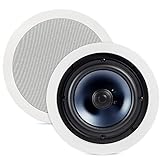
The best in wall speakers for home theater disappear into your walls and ceiling while still delivering clear dialogue and convincing Dolby Atmos height effects. Our top pick is the Polk RC80i, an 8-inch in-ceiling speaker that has become the default choice for Atmos height channels and hidden surrounds because it combines real bass output, paintable grilles and moisture resistance at a modest price.
This guide covers both in-wall and in-ceiling speakers, for anyone building a dedicated room, finishing a basement or adding height channels to an existing system. We explain where ceiling speakers should go for Atmos, with the angles worked out for real ceiling heights, and when on-wall speakers make more sense.
Our top picks at a glance



Quick answer
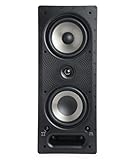
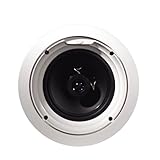
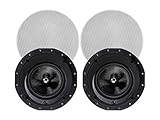
The best in-wall speakers for home theater for most rooms are the Polk RC80i in-ceiling speakers, thanks to their 8-inch woofers, paintable grilles and low price. If you want to aim the sound at your seats for Atmos, the Klipsch CDT-5650-C II has aimable drivers. For hidden front left, center and right speakers, the 3-way Polk 265-RT in-wall is the best choice.
On this page
- 1. In-Wall, In-Ceiling or On-Wall
- 2. The Best In-Wall and In-Ceiling Speakers
- 3. In-Wall Speakers for Home Theater Side by Side
- 4. How We Chose the Best In-Wall Speakers for Home Theater
- 5. Dolby Atmos Ceiling Speaker Placement
- 6. In-Wall Front Speakers and Surrounds
- 7. Back Boxes, Insulation and Bass
- 8. Wiring and Installation
- 9. Who Should Buy In-Wall Speakers and Who Should Skip Them
- 10. Common Mistakes to Avoid
- 11. Frequently Asked Questions
1. In-Wall, In-Ceiling or On-Wall
There are three ways to mount speakers on or in your walls, and each suits a different job.
- In-wall speakers mount flush in the wall cavity, usually in a rectangular frame. They are best for front left, center and right speakers and side surrounds, where sound should come from ear level.
- In-ceiling speakers mount flush in the ceiling, usually in a round frame. They are best for Dolby Atmos height channels, and acceptable for surrounds when wall positions are not available.
- On-wall speakers are freestanding speakers on brackets, or slim speakers designed to hang on the wall. They need no cutting, so they suit renters and finished rooms.
For on-wall use, pick sealed or front-ported speakers, because rear-ported speakers pushed against a wall produce boomy bass. Compact satellites designed for wall mounting, such as the SVS Prime Satellites (sold as a pair), are ideal, and up-firing modules like the Klipsch R-41SA are a no-cut alternative for Atmos.
The key specs are the same as for any speaker: woofer size, sensitivity and impedance. Two features matter specifically for in-ceiling speakers: pivoting or aimable tweeters, which let you direct treble toward the seats, and paintable grilles, which let the speakers vanish into the ceiling.
2. The Best In-Wall and In-Ceiling Speakers

1. Polk RC80i In-Ceiling Speakers
$100–$180 per pair · Best for: Affordable Atmos height channels and whole-home audio
- Type
- 2-way in-ceiling, round
- Drivers
- 1-inch tweeter; 8-inch Dynamic Balance woofer
- Impedance
- 8 ohms
- Sold as
- Pair
The Polk RC80i is the in-ceiling speaker most installers and DIY builders reach for first, and for good reason. It pairs an 8-inch polymer woofer with a 1-inch silk dome tweeter in a round frame with paintable grilles, and Polk designs it to be moisture resistant, so it also works in kitchens, bathrooms and covered patios.
The 8-inch woofer is what makes it special at this price. Most budget ceiling speakers use 6.5-inch drivers, and the larger cone moves more air, which gives height and surround channels more body and makes the speaker easier to blend with full-size front speakers. With an 80 Hz crossover to the subwoofer, an RC80i has more than enough range for Atmos effects and surround ambience.
For Atmos, place a pair slightly in front of your main seat, in line with or just inside your front left and right speakers (see the angle maths below). Polk's smooth, warm voicing also blends well with Polk floor-standers such as the Signature Elite ES60.
The trade-off is that the tweeter fires straight down, so in rooms where the speaker is well off-axis from the seats, treble softens. If your ceiling positions are compromised, the aimable Klipsch below is the better choice.
Pros
- 8-inch woofer gives more output than 6.5-inch rivals
- Moisture-resistant for bathrooms and patios
- Paintable grille blends into the ceiling
- Strong value per pair
Cons
- Open-back design means bass depends on the cavity
- Basic tweeter compared with premium in-ceilings
- Needs careful placement for Atmos

2. Klipsch CDT-5650-C II In-Ceiling Speaker
$180–$300 each · Best for: Atmos height channels in Klipsch-based systems
- Type
- 2-way in-ceiling, round, Controlled Dispersion Technology
- Drivers
- 6.5-inch woofer with tweeter
- Impedance
- 8 ohms
- Sold as
- Each
Ceiling speakers rarely end up exactly where Dolby recommends. Joists, lights and ducts get in the way. The Klipsch CDT-5650-C II solves that with Controlled Directivity Technology, which lets you aim the drivers toward the listening area instead of straight down at the floor.
That matters for both Atmos and surround use. A ceiling speaker pointed at the seats delivers more direct treble and clearer imaging, so height effects sound like they come from a specific point overhead rather than a vague wash. It also reduces reflections from the floor and side walls. The CDT-5650-C II uses a 6.5-inch woofer, and Klipsch voicing makes it a natural partner for Klipsch front speakers such as the RP-8000F II or Reference towers.
Klipsch speakers are also efficient, which helps when you are powering seven, nine or eleven channels from one receiver, as many Atmos systems do.
The trade-off compared with the Polk RC80i is bass: the smaller 6.5-inch woofer gives up some low-end weight, which matters less for height channels than for surrounds. It also costs more per pair. If your ceiling positions are ideal, the RC80i is the better value; if they are compromised, the aimable Klipsch is worth the premium.
Pros
- Controlled dispersion directs sound toward seats
- Matches Klipsch front speakers' voicing
- Solid build quality
- Easy 8-ohm load
Cons
- Sold individually, so four cost a lot
- Open-back bass depends on the cavity
- Overkill for background music

3. Polk 265-RT In-Wall Speaker
$150–$250 each · Best for: Hidden front left, center and right channels
- Type
- In-wall, rectangular
- Drivers
- Dual 6.5-inch Dynamic Balance woofers with tweeter
- Mounting
- In-wall
- Sold as
- Each
For hidden front left, center and right speakers, you need an in-wall speaker built for the job, and the Polk 265-RT is it. It is a 3-way in-wall design with dual 6.5-inch woofers, a dedicated midrange and a tweeter, in a tall rectangular frame.
That 3-way layout is the key. Front speakers carry dialogue and most of the soundtrack, and a dedicated midrange keeps voices on one driver rather than splitting them between tweeter and woofer. Dual woofers give enough output to match the dynamics of the soundtrack in a medium or large room, which single-woofer ceiling speakers cannot do.
Use three 265-RTs as a matched in-wall LCR, beside and below the TV or behind an acoustically transparent projection screen.
The trade-off is installation. A larger rectangular speaker needs more wall cavity space, and getting the best bass means adding insulation or a back box, as covered below. Pair it with Polk RC80i or RC60i ceiling speakers for surrounds and Atmos, and you have a fully hidden Polk system.
Pros
- Dual 6.5-inch woofers for more output than single-woofer in-walls
- Works for left, center or right
- Disappears into the wall
- Matches Polk voicing
Cons
- Open-back bass varies with the stud bay
- Sold individually
- Installation takes planning

4. Klipsch R-5650-W II In-Wall Speaker
$150–$250 each · Best for: Hidden front or surround channels in Klipsch-based systems
- Type
- 2-way in-wall, rectangular
- Drivers
- 6.5-inch woofer with tweeter
- Impedance
- 8 ohms
- Sold as
- Each
The Klipsch R-5650-W II is a compact in-wall speaker that works well for side surrounds and as a front left and right for smaller rooms. It uses a 6.5-inch woofer and a horn-loaded pivoting tweeter, so you can angle treble toward the seats even when the speaker is mounted on a side wall well off-axis.
Side surrounds are the main use case. In a 7.1 or 5.1 layout, surrounds sit roughly beside the listening position at 1 to 2 feet above ear height, which puts them at a sharp angle to the seats. A pivoting tweeter lets you aim the treble so effects stay clear for everyone rather than just the closest seat.
If your front speakers are Klipsch Reference or RP models, the horn-loaded tweeter keeps timbre consistent from front to side, which matters when fly-bys pan around the room. Klipsch efficiency is a bonus in large, many-channel systems.
The trade-off is that a single 6.5-inch woofer has limited bass output, so set these to Small with an 80 Hz crossover. For front LCR use in medium and large rooms, a dual-woofer design like the Polk 265-RT above has more headroom. Compared with ceiling speakers for surround duty, in-wall side surrounds give better localization at ear level.
Pros
- Disappears into the wall
- Works as front, center or surround
- Matches Klipsch Reference voicing
- Easy 8-ohm load
Cons
- Open-back bass varies with the stud bay
- Sold individually
- Installation takes planning

5. Klipsch R-1650-C In-Ceiling Speaker
$70–$130 each · Best for: Budget Atmos heights or background music with Klipsch voicing
- Type
- 2-way in-ceiling, round
- Drivers
- 6.5-inch woofer with tweeter
- Impedance
- 8 ohms
- Sold as
- Each
The Klipsch R-1650-C is the affordable way to add ceiling speakers that match a Klipsch front stage. It is a round 6.5-inch in-ceiling speaker from Klipsch's Reference in-ceiling line, designed to keep the lively, efficient character of the brand's freestanding speakers.
For Atmos height channels behind Klipsch Reference towers like the R-625FA, this matters. Height effects should sound like a continuation of the front stage, not a different speaker brand entirely, and matched voicing helps objects move smoothly from front to overhead.
Use a pair as top-middle speakers for a 5.1.2 or 7.1.2 system, or four for a 5.1.4 layout. Like other Klipsch speakers, it is efficient, which helps when a receiver is powering many channels at once.
The trade-off compared with the CDT-5650-C II is aiming: without Controlled Directivity, you get less control over where the sound goes if your ceiling positions are not ideal. Compared with the Polk RC80i, it gives up some bass from the smaller woofer. For a Klipsch system with well-placed ceiling positions, it is the value pick; for anything else, look at the RC80i.
Pros
- Low price for a Klipsch in-ceiling
- Easy 8-ohm load
- Works for heights or background music
- Simple installation
Cons
- Sold individually
- Basic build and refinement
- Open-back bass depends on the cavity

6. Polk RC60i In-Ceiling Speakers
$80–$130 per pair · Best for: Atmos height channels in small and medium rooms
- Type
- 2-way in-ceiling, round
- Drivers
- 1-inch tweeter; 6.5-inch Dynamic Balance woofer
- Impedance
- 8 ohms
- Sold as
- Pair
The Polk RC60i is the smaller sibling of our top pick, with a 6.5-inch woofer and a 1-inch tweeter in a round, paintable frame, and the same moisture-resistant design. It is a good choice for bedrooms, small media rooms and any space where an 8-inch speaker is more than you need.
In a small room, the smaller woofer gives up very little. Distances are short, the receiver crossover hands bass to the subwoofer at 80 Hz, and a 6.5-inch speaker is more than capable of delivering height and surround effects at sensible volume. The smaller cut-out also helps when joist spacing or ceiling fixtures leave limited space.
Because it shares Polk's voicing with the RC80i, you can mix the two in one system, for example RC80i for surrounds and RC60i for height channels, without timbre problems. It also blends well with Polk freestanding speakers such as the Monitor XT60.
The trade-off is output: in a large room or a dedicated theater played at reference level, the RC80i or the Klipsch picks have more headroom. Like the RC80i, the tweeter fires downward, so place it close to Dolby's recommended positions rather than relying on aiming.
Pros
- Cheaper than the RC80i with the same build
- Plenty of headroom above a 100 Hz crossover
- Moisture-resistant
- Smaller cutout fits tight spaces
Cons
- Less output than the 8-inch RC80i
- Open-back bass depends on the cavity
- Basic tweeter

7. Micca M-8C In-Ceiling Speakers
$80–$130 per pair · Best for: Budget height channels and multi-room music
- Type
- 2-way in-ceiling, round
- Drivers
- 8-inch woofer with coaxially mounted tweeter
- Mounting
- In-ceiling
- Sold as
- Pair
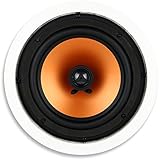
The Micca M-8C is the best budget in-ceiling speaker for adding Atmos height channels or hidden surrounds without spending much. It uses an 8-inch woofer and a 1-inch silk dome tweeter on a pivot, so you can aim treble toward the seats, a feature usually reserved for pricier speakers.
At this price, the M-8C gives you what matters most: a large woofer for body, an aimable tweeter for clarity, and a simple install with paintable grilles. For Atmos height channels, which carry effects rather than dialogue, it delivers most of the experience of far more expensive speakers.
The trade-off is refinement and build. Compared with the Polk RC80i, owners report that the Micca's treble is less polished and its frame and mounting hardware feel less robust. For height channels and surrounds in a budget build, that matters little; for main front speakers, it matters more. Compared with the Monoprice Alpha below, it is similarly priced, and either is a sound budget choice. See our budget home theater speakers guide for more low-cost picks.
Pros
- 8-inch woofer for good output at a low price
- Coaxial layout for even coverage
- Sold as a pair
- Well regarded by owners for the money
Cons
- Basic frames and grilles
- No matching front speakers in our catalog
- Open-back bass depends on the cavity

8. Monoprice Alpha In-Ceiling Speakers
$80–$140 per pair · Best for: Budget Atmos heights and whole-home music
- Type
- 2-way in-ceiling, round
- Drivers
- 8-inch aramid-fiber woofer with coaxially mounted tweeter
- Mounting
- In-ceiling
- Sold as
- Pair
The Monoprice Alpha in-ceiling speaker is the other strong budget option, with an 8-inch woofer and a pivoting tweeter in a round, paintable frame. It offers much the same recipe as the Micca M-8C: a large woofer for body and an aimable tweeter for clarity.
Monoprice's strength is value: if you need four ceiling speakers for a 5.1.4 Atmos layout plus ceiling surrounds, the Alpha keeps costs under control.
For Atmos height channels and surrounds, an 8-inch woofer and an aimable tweeter is a great combination at this price. Set the speakers to Small with an 80 Hz crossover and let the subwoofer handle bass, then use the receiver's room correction to balance levels against the front speakers.
The trade-off is that budget in-ceiling speakers vary more in build quality and long-term consistency than the Polk and Klipsch picks, based on owner reports. Buy from a seller with a straightforward return policy and check both speakers in a pair before you cut holes. Compared with the Micca, choose whichever is easier to buy in the quantity you need.
Pros
- 8-inch aramid-fiber woofer at a budget price
- Coaxial layout for even coverage
- Sold as a pair
- Good value for multi-room setups
Cons
- Basic build
- No matching front speakers in our catalog
- Open-back bass depends on the cavity
3. In-Wall Speakers for Home Theater Side by Side
| Product | Score | Price | Type | Drivers | Mounting | Impedance | Buy |
|---|---|---|---|---|---|---|---|
| Polk RC80i In-Ceiling Speakers Best Overall | 78 | $100–$180 per pair | 2-way in-ceiling, round | 1-inch tweeter; 8-inch Dynamic Balance woofer | In-ceiling, moisture-resistant, paintable grille | 8 ohms | Amazon → |
| Klipsch CDT-5650-C II In-Ceiling Speaker Best Aimable Ceiling Speaker for Atmos | 83 | $180–$300 each | 2-way in-ceiling, round, Controlled Dispersion Technology | 6.5-inch woofer with tweeter | In-ceiling | 8 ohms | Amazon → |
| Polk 265-RT In-Wall Speaker Best In-Wall Front Speakers (LCR) | 80 | $150–$250 each | In-wall, rectangular | Dual 6.5-inch Dynamic Balance woofers with tweeter | In-wall | — | Amazon → |
| Klipsch R-5650-W II In-Wall Speaker Best In-Wall Surrounds | 78 | $150–$250 each | 2-way in-wall, rectangular | 6.5-inch woofer with tweeter | In-wall | 8 ohms | Amazon → |
| Klipsch R-1650-C In-Ceiling Speaker Best Klipsch-Matched Ceiling Value | 70 | $70–$130 each | 2-way in-ceiling, round | 6.5-inch woofer with tweeter | In-ceiling | 8 ohms | Amazon → |
| Polk RC60i In-Ceiling Speakers Best for Small Rooms | 74 | $80–$130 per pair | 2-way in-ceiling, round | 1-inch tweeter; 6.5-inch Dynamic Balance woofer | In-ceiling, moisture-resistant, paintable grille | 8 ohms | Amazon → |
| Micca M-8C In-Ceiling Speakers Best Budget Ceiling Speaker | 72 | $80–$130 per pair | 2-way in-ceiling, round | 8-inch woofer with coaxially mounted tweeter | In-ceiling | — | Amazon → |
| Monoprice Alpha In-Ceiling Speakers Best Value Eight-Inch Alternative | 74 | $80–$140 per pair | 2-way in-ceiling, round | 8-inch aramid-fiber woofer with coaxially mounted tweeter | In-ceiling | — | Amazon → |
4. How We Chose the Best In-Wall Speakers for Home Theater
These rankings come from manufacturer specs, room maths and owner-reported reliability, not lab measurements. We weighted:
- Role fit: whether a speaker suits LCR, surround or Atmos height duty.
- Woofer size and output for blending with freestanding front speakers.
- Aiming: pivoting tweeters or aimable drivers for off-axis positions.
- Timbre matching with popular front speaker families from Polk and Klipsch.
- Installation and durability: frame quality, mounting hardware and moisture resistance.
The Polk RC80i wins because it does the most jobs well at the lowest cost.
5. Dolby Atmos Ceiling Speaker Placement
Dolby's home guidelines place ceiling speakers by elevation angle from the main seat, not by fixed distance. The recommended ranges are:
| Position | Elevation angle | Ideal |
|---|---|---|
| Top front | 30 to 55 degrees | 45 degrees |
| Top middle | 65 to 100 degrees | 80 degrees |
| Top rear | 125 to 150 degrees | 135 degrees |
Side to side, ceiling speakers should line up with your front left and right speakers or sit slightly inside them.
The maths for a real room. Say your ceiling is 9 feet and your seated ear height is about 3.3 feet. The vertical distance from ears to ceiling is 5.7 feet.
- For a 5.1.2 or 7.1.2 system (top middle at about 80 degrees), the speakers go 5.7 ÷ tan(80°) ≈ 1 foot in front of your seat. In practice, slightly in front of the listening position.
- For a 5.1.4 or 7.1.4 system, the top front pair at 45 degrees goes 5.7 feet in front of your seat, and the top rear pair at 135 degrees goes 5.7 feet behind it.
With an 8-foot ceiling (4.7 feet above your ears), those distances shrink to about 0.8 feet for top middle and 4.7 feet for top front and rear. Lower ceilings mean speakers sit closer to the seat, which makes aimable tweeters more useful. Use the 4.7- or 5.7-foot figures as a starting point, then shift positions to clear joists and lights while staying inside Dolby's ranges. See our Dolby Atmos glossary entry and our Atmos system guide.
6. In-Wall Front Speakers and Surrounds
Front speakers (LCR). For a fully hidden system, use three identical in-wall speakers for left, center and right. Place the left and right speakers so that they form about a 22 to 30 degree angle either side of the center line from the main seat, and put the center directly below or above the screen, or behind it if you use an acoustically transparent screen. A 3-way in-wall with dual woofers, like the Polk 265-RT, has the output and midrange clarity that front channels need.
Side surrounds. In-wall speakers on the side walls, about 1 to 2 feet above seated ear height and roughly in line with or slightly behind the seats, give better localization than ceiling-mounted surrounds. Pivoting tweeters help aim treble at the seats.
Rear surrounds. For 7.1, add a pair on the rear wall or rear ceiling, at roughly 135 to 150 degrees from the center line.
Subwoofer. In-wall subwoofers exist, but a freestanding sub is easier to place for even bass and usually gives more output for the money. See our subwoofer guide.
7. Back Boxes, Insulation and Bass
An in-wall speaker uses the wall cavity as its enclosure, and that cavity is unpredictable. It may be open to the floor above, filled with insulation or shared with a ducting run. That affects bass and can carry sound into other rooms.
Three ways to improve results:
- Add insulation to the cavity around the speaker. It damps cavity resonances and reduces sound transfer to neighboring rooms.
- Use a back box or enclosure where the manufacturer offers one. It gives the speaker a consistent volume, which tightens bass and isolates sound.
- Seal around the frame so air does not leak through gaps, which can cause rattles.
A back box matters most for in-wall front speakers, which carry dialogue and more of the bass.
8. Wiring and Installation
In-wall speakers need in-wall rated speaker wire, marked CL2 or CL3, to meet building codes in most US jurisdictions. For most runs, 14 AWG wire is plenty; for long runs over about 50 feet or low-impedance speakers, use 12 AWG. See our speaker wire guide for picks.
Before cutting, check:
- Joist direction and spacing with a stud finder.
- Hidden obstacles such as pipes, ducts and electrical cables.
- Ceiling insulation and vapor barriers, especially in top-floor rooms.
Most speakers in this guide include paintable grilles. Remove the grille, paint it with a light coat so the perforations stay open, and reinstall. For complete room planning, see our home theater room design guide.
9. Who Should Buy In-Wall Speakers and Who Should Skip Them
Buy in-wall or in-ceiling speakers if:
- You want a clean, hidden look with no speaker stands or boxes.
- You are adding Dolby Atmos height channels and can cut into the ceiling.
- You are building or renovating a dedicated room or basement.
Skip them if:
- You rent, or cannot cut into walls. Use on-wall brackets or up-firing modules instead.
- You want the best possible imaging for music; well-placed freestanding speakers still win.
- Your walls are masonry or full of obstacles. Installation cost can exceed the speakers' price.
For freestanding options, see our best home theater speakers guide.
10. Common Mistakes to Avoid
Putting Atmos speakers directly overhead
For a two-speaker Atmos setup, place height speakers slightly in front of your seat, not directly above or behind it. Use Dolby's elevation angles and the ceiling height maths, then adjust to clear joists.
Using ordinary speaker wire inside walls
Most building codes require CL2 or CL3 rated wire inside walls. It costs little more and avoids problems with inspections, insurance and fire safety.
Mixing brands across the front stage
If your front speakers are in-wall, use three identical models for left, center and right. Mixing a different center model breaks timbre matching, which is just as audible in-wall as with freestanding speakers.
Ignoring the wall cavity
An open, uninsulated cavity can cause boomy bass and leak sound into other rooms. Add insulation or a back box, especially for front speakers.
Cutting holes before checking joists and obstacles
Use a stud finder and check for pipes, ducts and cables before cutting. Moving a speaker a few inches is easy on paper and expensive in drywall.
11. Frequently Asked Questions
What are the best in-wall speakers for home theater?
The best in-wall speakers for home theater for most rooms are the Polk RC80i in-ceiling speakers, which offer 8-inch woofers, paintable grilles and moisture resistance at a low price. For aimable Atmos speakers, choose the Klipsch CDT-5650-C II. For hidden front speakers, the 3-way Polk 265-RT in-wall is the best choice.
Are in-ceiling speakers good for home theater?
Yes, in-ceiling speakers are the best option for Dolby Atmos height channels, because sound genuinely comes from above. They are acceptable for surrounds when wall positions are not available, but in-wall or freestanding speakers at ear level give better localization for surround channels.
Where should ceiling speakers go for Dolby Atmos?
For a 5.1.2 system, place two ceiling speakers slightly in front of your main seat, at about 80 degrees elevation, in line with your front left and right speakers. For 5.1.4, place one pair about 45 degrees in front and one pair about 135 degrees behind. With a 9-foot ceiling, that is roughly 5.7 feet in front and behind.
Do in-wall speakers sound as good as bookshelf speakers?
Good in-wall speakers can sound very close to bookshelf speakers, especially with insulation or a back box. Freestanding speakers still win for imaging and bass, because you can position them freely and their enclosures are controlled. For height channels and surrounds, the difference is small.
What size in-ceiling speakers do I need for home theater?
For most rooms, 8-inch in-ceiling speakers are the best choice, giving more body and better blending with full-size front speakers. 6.5-inch speakers are fine for small rooms and height channels with an 80 Hz crossover to the subwoofer. Larger is not always better if it means compromising placement.
Do in-wall speakers need a back box?
No, but a back box helps. It gives the speaker a consistent enclosure, tightening bass and reducing sound leaking into other rooms. It matters most for in-wall front speakers that carry dialogue and bass, and least for height channels crossed over to a subwoofer at 80 Hz.
What gauge wire should I use for in-wall speakers?
Use 14 AWG CL2 or CL3 rated speaker wire for most in-wall runs. Choose 12 AWG for runs longer than about 50 feet or for low-impedance speakers. The CL rating matters for building codes; the gauge matters for long runs.
Related Guides
Home Theater Systems
Best Dolby Atmos Home Theater System
The best Dolby Atmos home theater system for 2026, from 5.1.2 speaker packages to 11.1.4 soundbar kits. Seven picks ranked by real height channels, not hype.
Speaker Wire & Cables
Best Speaker Wire for Home Theater
The best speaker wire for home theater, with a gauge vs run length chart, CCA vs OFC copper explained, CL2/CL3 in-wall ratings and banana plug advice.
Guides
Best Home Theater Room Design
Best home theater room design guide: room size and screen size maths, the best carpet, wall colors and paint, acoustic panels, lighting and blackout curtains.
The Bottom Line
The best in-wall speakers for home theater for most rooms are the Polk RC80i: 8-inch in-ceiling speakers that handle Atmos height channels and hidden surrounds at a modest price. Choose the Klipsch CDT-5650-C II when your ceiling positions need aiming, the 3-way Polk 265-RT for hidden front speakers, the Klipsch R-5650-W II for in-wall surrounds, the Klipsch R-1650-C to match a Klipsch front stage, and the Polk RC60i for small rooms. On a tight budget, the Micca M-8C and Monoprice Alpha both pair 8-inch woofers with pivoting tweeters. Place height speakers using Dolby's angles, use CL2 or CL3 wire and insulate the cavity.