
Polk Audio · Bookshelf Speakers
Polk Signature Elite ES20
Quick answer
A smooth, balanced 6.5-inch bookshelf with Polk's Power Port, best on a receiver with some real power because its 86 dB sensitivity asks for more watts than horn rivals.
Polk Signature Elite ES20 Specs
| Type | 2-way bookshelf |
|---|---|
| Drivers | 1-inch Terylene dome tweeter; 6.5-inch Dynamic Balance woofer |
| Frequency response | 38 Hz–40 kHz (no tolerance stated) |
| Sensitivity | 86 dB |
| Impedance | 8 ohms |
| Bass loading | Rear Power Port |
| Sold as | Pair |
BHTR Score: 84/100
Our score weighs the spec sheet, the price band and what owners report over time. See how we score.
Our Verdict
The ES20 is the bookshelf model in Polk's Signature Elite line: a 1-inch Terylene dome tweeter, a 6.5-inch Dynamic Balance woofer and Polk's rear Power Port, which is shaped to reduce port turbulence so bass stays clean as volume rises. Polk rates it at 38 Hz–40 kHz without stating a tolerance, so treat the low figure as reach rather than flat output.
Show the maths. At 86 dB sensitivity, the ES20 is 10 dB less efficient than the Klipsch RP-600M II. Ten dB is ten times the power. At 3 m (10 ft), 1 W gives about 76.5 dB at the seat, so 95 dB peaks need about 70 W and 100 dB peaks about 225 W. In practice, a midrange AVR is fine at normal movie volumes, but if you like it near reference, a receiver that actually delivers its rating (or an external amplifier) earns its keep (sensitivity explained).
What you get for those extra watts is a smoother tweeter than most horn designs, which suits long movie nights and mixed music listening. Owners consistently describe the ES20 as balanced and easy to live with.
Build a matched front stage with the ES35 center and ES60 towers, which share the same Terylene tweeter design. Compare it with its rivals in our best bookshelf speakers for home theater.
Pros
- Smooth, balanced voicing that's easy to listen to for hours
- 6.5-inch woofer and Power Port give solid midbass
- Hi-Res certified tweeter extends to 40 kHz on paper
- Matches the ES35 center and ES60 towers
Cons
- 86 dB sensitivity needs roughly 10x the power of a 96 dB Klipsch
- Low-frequency rating has no stated tolerance
- Rear port wants space from the wall
Alternatives to the Polk Signature Elite ES20
Cheaper options


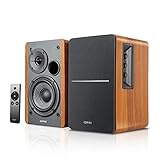
Higher-scoring options
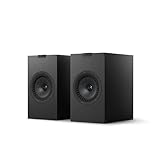


Compare the Polk Signature Elite ES20
Polk Signature Elite ES20 FAQ
Does the Polk ES20 need a powerful amplifier?
It needs more than horn-loaded rivals. At 86 dB, reaching 95 dB peaks at 10 ft takes about 70 W per channel, and 100 dB peaks about 225 W. A decent midrange receiver handles normal movie levels; add an external amp if you listen loud in a big room.
What center channel matches the Polk ES20?
The Signature Elite ES35 center. It shares the same Terylene tweeter design, so voices keep the same tone as they pan from the left speaker to the center and right. Mixing in a center from another brand makes timbre shifts more likely.
Is the Polk Signature Elite ES20 worth it?
A smooth, balanced 6.5-inch bookshelf with Polk's Power Port, best on a receiver with some real power because its 86 dB sensitivity asks for more watts than horn rivals. It scores 84/100 on our BHTR Score, ranking #3 of the 13 bookshelf speakers we track. It is best for movie-and-music rooms where you want a smooth, non-fatiguing sound; skip it if your receiver is low-powered and you like to listen near reference level.
What is a cheaper alternative to the Polk Signature Elite ES20?
The Sony SS-CS5 Bookshelf Speakers ($100–$150 per pair) scores 74/100. A budget 3-way bookshelf with a super tweeter and an 88 dB rating, a reliable value pick that pairs with Sony's matching center and towers.
Featured In
- Best Bookshelf Speakers for Home Theater (Best Warm-Sounding Fronts)
