
KEF · Center Channel Speakers
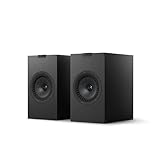
KEF Q6 Meta Center Channel Speaker
Quick answer
A Uni-Q center with MAT that keeps dialogue tonally consistent across a wide sofa, the best center here for anyone with KEF Q Meta fronts.
KEF Q6 Meta Center Channel Speaker Specs
| Type | Center channel, coaxial |
|---|---|
| Drivers | Uni-Q with MAT (1-inch vented aluminum dome tweeter in aluminum midrange); aluminum bass drivers |
| Impedance | 8 ohms |
| Sold as | Each |
BHTR Score: 88/100
Our score weighs the spec sheet, the price band and what owners report over time. See how we score.
Our Verdict
The Q6 Meta puts KEF's 12th-generation Uni-Q driver at the center of the cabinet: a 1-inch vented aluminum dome tweeter in the middle of an aluminum midrange cone, with MAT behind the tweeter, flanked by aluminum bass drivers. It's rated at 8 ohms and matches the Q3 Meta and Q7 Meta.
Show the maths. The usual problem with centers is horizontal layout. Two woofers side by side, about 20 cm apart, cancel at an off-axis seat where their path difference equals half a wavelength: at 30 degrees off-axis that's near 1.7 kHz (343 ÷ 0.2), right in the vocal range.
The Q6 Meta avoids it. Voices come from the Uni-Q driver, a single point source that radiates the vocal range evenly in every direction, while the outer drivers handle bass where wavelengths are long enough that their spacing doesn't matter. At 200 Hz the wavelength is about 1.7 m, so a 20 cm spacing is irrelevant.
The second benefit is timbre. With the same Uni-Q driver in the left, center and right speakers, a voice panning across the screen keeps exactly the same tonal balance.
Plan for a receiver with decent power, as dome-tweeter designs are less efficient than Klipsch horns (sensitivity explained). Set an 80 Hz crossover.
The trade-off is price: it costs more than most fronts in our budget picks. See where it ranks in our best center channel speaker for home theater.
Pros
- Uni-Q point source avoids the dual-woofer off-axis dip
- Identical tonal balance with Q Meta fronts
- MAT absorber for clean treble
- Easy 8-ohm load
Cons
- Costs more than most budget fronts
- Less efficient than horn-loaded centers
- Wide cabinet for some stands
Alternatives to the KEF Q6 Meta Center Channel Speaker
Cheaper options



KEF Q6 Meta Center Channel Speaker FAQ
Why is the KEF Q6 Meta good for wide seating?
Its vocal range comes from a single Uni-Q point source, so it doesn't suffer the off-axis cancellation that side-by-side woofers cause in most centers. People at the ends of the sofa hear dialogue with nearly the same tone as the center seat.
Does the KEF Q6 Meta match the older KEF Q150?
Reasonably well, since both use Uni-Q drivers with aluminum tweeters, but the Q6 Meta adds MAT and a newer Uni-Q generation. For a perfect match, pair it with Q Meta speakers like the Q3 Meta or Q7 Meta.
Is the KEF Q6 Meta Center Channel Speaker worth it?
A Uni-Q center with MAT that keeps dialogue tonally consistent across a wide sofa, the best center here for anyone with KEF Q Meta fronts. It scores 88/100 on our BHTR Score, ranking #1 of the 8 center channel speakers we track. It is best for kEF Q Meta systems and wide seating rows; skip it if your fronts aren't KEF or your budget is tight.
What is a cheaper alternative to the KEF Q6 Meta Center Channel Speaker?
The Polk Signature Elite ES35 Center Channel Speaker ($250–$400 each) scores 82/100. A smooth, full-sounding center that matches Polk's Signature Elite fronts, great for natural dialogue but happiest on a receiver with real power.
Featured In
- Best Center Channel Speaker for Home Theater (Best for Wide Seating)
- Best Home Theater Speakers (Best Center Channel)
