SVS · Center Channel Speakers
SVS Prime Center Speaker
Quick answer
A 3-way center with a dedicated midrange that avoids the off-axis dialogue dip of typical dual-woofer centers, and matches SVS Prime fronts.
SVS Prime Center Speaker Specs
| Type | 3-way center channel |
|---|---|
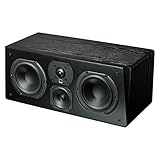
| Drivers | 1-inch aluminum dome tweeter; 4.5-inch polypropylene midrange; dual 5.25-inch polypropylene woofers |
| Impedance | 8 ohms |
| Sold as | Each |
BHTR Score: 85/100
Our score weighs the spec sheet, the price band and what owners report over time. See how we score.
Our Verdict
The Prime Center is a 3-way design: a 1-inch aluminum dome tweeter, a 4.5-inch polypropylene midrange and two 5.25-inch polypropylene woofers, rated at 8 ohms. It uses the same tweeter family as the Prime Bookshelf and Prime Tower.
Show the maths. The dedicated midrange is the point. In a typical horizontal two-woofer center, both woofers play the vocal range. With woofers roughly 20 cm apart, a seat 30 degrees off-axis hears one about 10 cm later than the other, which is half a wavelength at about 1.7 kHz (343 ÷ 0.2). The two cancel there, right in the range that carries vocal clarity.
In a 3-way center, the midrange takes over the voice band from the woofers, so the off-axis cancellation shifts below the range where intelligibility lives. That's why 3-way centers sound more consistent across a wide sofa.
The second reason is timbre. Matching the fronts' aluminum dome tweeter means voices keep the same character as they pan from left to center to right.
Plan for power: SVS's Prime family is rated in the high 80s for sensitivity, so a 3 dB-louder peak needs double the watts (sensitivity explained). A midrange AVR handles normal levels. Set an 80 Hz crossover so voice fundamentals (from about 85 Hz) stay in the center.
The trade-off is cost and a neutral, slightly lean balance in bright rooms. See how it ranks in our best center channel speaker for home theater.
Pros
- Dedicated 4.5-inch midrange avoids the dual-woofer dialogue dip
- Matches Prime Bookshelf and Tower tweeters
- Neutral, clear voices
- Easy 8-ohm load
Cons
- Pricier than 2-way centers
- Needs decent power for loud peaks
- Lean balance in bright rooms
Alternatives to the SVS Prime Center Speaker
Cheaper options


Higher-scoring options


SVS Prime Center Speaker FAQ
Why is a 3-way center better for dialogue?
In a 2-way center, two side-by-side woofers both play the vocal range and partly cancel at off-axis seats. A 3-way center hands the vocal band to a dedicated midrange, so dialogue stays clearer for people sitting at the ends of the sofa.
Does the SVS Prime Center match other brands?
It matches best with SVS Prime speakers, which share its aluminum dome tweeter. With other brands, it still works well, but voices may change tone slightly as they pan if the fronts use a very different tweeter type, such as a horn.
Is the SVS Prime Center Speaker worth it?
A 3-way center with a dedicated midrange that avoids the off-axis dialogue dip of typical dual-woofer centers, and matches SVS Prime fronts. It scores 85/100 on our BHTR Score, ranking #3 of the 8 center channel speakers we track. It is best for wide seating rows and SVS Prime systems; skip it if you need maximum volume from a low-powered receiver.
What is a cheaper alternative to the SVS Prime Center Speaker?
The Polk Signature Elite ES35 Center Channel Speaker ($250–$400 each) scores 82/100. A smooth, full-sounding center that matches Polk's Signature Elite fronts, great for natural dialogue but happiest on a receiver with real power.
Featured In
- Best Center Channel Speaker for Home Theater (Best Overall)