SVS · Tower Speakers
SVS Prime Tower
Quick answer
A neutral 3-way tower with a dedicated 4.5-inch midrange and a genuine ±3 dB rating to 35 Hz, designed to blend seamlessly with SVS subwoofers.
SVS Prime Tower Specs
| Type | 3-way floorstanding |
|---|---|
| Drivers | 1-inch aluminum dome tweeter; 4.5-inch polypropylene midrange; dual 6.5-inch polypropylene woofers |
| Frequency response | 35 Hz–25 kHz ±3 dB |
| Sensitivity | 87 dB |
| Impedance | 8 ohms |
| Bass loading | Rear ported |
BHTR Score: 85/100
Our score weighs the spec sheet, the price band and what owners report over time. See how we score.
Our Verdict
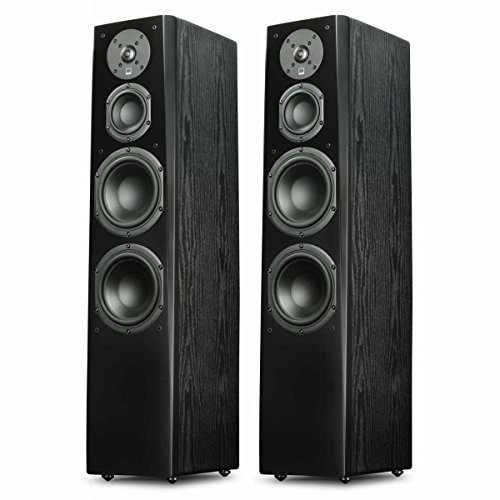
The Prime Tower is a proper 3-way design: a 1-inch aluminum dome tweeter, a 4.5-inch polypropylene midrange and two 6.5-inch polypropylene woofers. SVS rates it at 35 Hz–25 kHz ±3 dB, 87 dB and 8 ohms.
The ±3 dB tolerance matters. It tells you output is still near full strength at 35 Hz, not just audible. That's deep for a tower at this price, and it makes the crossover to a subwoofer seamless (crossover explained).
Show the maths. At 87 dB, 1 W gives about 77.5 dB at a seat 3 m (10 ft) away. Peaks of 95 dB need roughly 56 W, which most receivers can supply. Reference-level 105 dB peaks would need about 560 W, which no AVR delivers per channel, so if you want near-reference volume in a large room, an external amplifier for the fronts makes sense. By comparison, a 98 dB Klipsch RP-8000F II needs about 45 W for the same peaks (sensitivity explained).
What the Prime Tower gives back is accuracy. A dedicated midrange keeps voices out of the woofers, and the voicing is neutral, which suits a well-treated room and anyone who values dialogue clarity over punch.
The trade-off is efficiency and a lean balance in bright, bare rooms.
Pair it with the Prime Center for a matched front stage and an SVS sub from our best subwoofer for home theater guide.
Pros
- True 3-way with dedicated 4.5-inch midrange
- 35 Hz rated with a real ±3 dB tolerance
- Neutral voicing for clear dialogue
- Matches the Prime Center and Prime Bookshelf
Cons
- 87 dB sensitivity needs real power for reference peaks
- Can sound lean in bright, hard rooms
- Pricier than budget towers
Alternatives to the SVS Prime Tower
Cheaper options


Higher-scoring options


Compare the SVS Prime Tower
SVS Prime Tower FAQ
Do the SVS Prime Towers need a subwoofer?
Not for music in most rooms, since they're rated to 35 Hz (±3 dB). For movies, a subwoofer handles the LFE channel and lets you set the towers to a 60–80 Hz crossover, which frees up amplifier power and keeps them cleaner at volume.
What amplifier do the SVS Prime Towers need?
A decent AV receiver is enough for normal listening: about 56 W per channel gives 95 dB peaks at 10 ft. For near-reference levels in a large room, an external amplifier for the front pair is a worthwhile upgrade.
Is the SVS Prime Tower worth it?
A neutral 3-way tower with a dedicated 4.5-inch midrange and a genuine ±3 dB rating to 35 Hz, designed to blend seamlessly with SVS subwoofers. It scores 85/100 on our BHTR Score, ranking #3 of the 10 tower speakers we track. It is best for accurate, balanced systems built around a quality subwoofer; skip it if you want maximum volume from a modest receiver.
What is a cheaper alternative to the SVS Prime Tower?
The Klipsch R-600F Floorstanding Speaker ($250–$400 each) scores 78/100. An affordable horn-loaded tower with dual 6.5-inch woofers that plays loud on modest receivers, with the bright, forward character Klipsch is known for.
Featured In
- Best Home Theater Speakers (Best Tower Speakers)
- Best Tower Speakers for Home Theater (Best Overall)
