AV Receivers
Best Budget Home Theater Receiver
We research every product against its spec sheet and independent measurements. When you buy through our links we may earn a commission, at no cost to you. How we score · Disclosure
The best budget home theater receiver for most people is the Denon AVR-S770H: it is the least expensive receiver here that ticks all four boxes that matter in 2026, namely seven channels for 5.1.2 Dolby Atmos, 4K/120-capable HDMI, automatic room calibration and Wi-Fi streaming. This page is for buyers who want a real surround system without paying for features they won't use.
Cheap receivers cut corners in predictable places: fewer channels, simpler room EQ, older HDMI, inflated power ratings. We rank each pick by what you give up, not just what it costs. If you only need 5.1, the Yamaha RX-V4A is the smarter buy, and the Sony STR-DH590 is the cheapest sensible receiver for a basic setup.
Our top picks at a glance


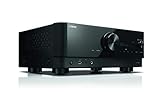
Quick answer
The Denon AVR-S770H is the best budget home theater receiver: 7.2 channels for 5.1.2 Atmos, HDMI 2.1 with 4K/120, Audyssey calibration and HEOS streaming. For a 5.1 system, the Yamaha RX-V4A adds 4K/120 gaming support for less. The Sony STR-DH590 is the cheapest worthwhile option, but it has no Atmos or Wi-Fi.
On this page
- 1. What a Budget Receiver Should Still Have
- 2. Budget Power Ratings: Spotting the Inflated Number
- 3. The best budget AV receivers
- 4. Budget Home Theater Receiver Side by Side
- 5. How We Picked the Best Budget Home Theater Receiver
- 6. What Each Price Tier Gets You
- 7. Five Channels or Seven on a Budget?
- 8. Setting Up a Cheap Receiver to Sound Expensive
- 9. Who Should Buy a Budget Receiver, and Who Should Spend More
- 10. Common Mistakes to Avoid
- 11. Frequently Asked Questions
1. What a Budget Receiver Should Still Have
A cheap receiver is a good receiver if it keeps the four features that age worst when they're missing:
- HDMI 2.1 with eARC. eARC lets your TV send lossless Atmos from built-in apps to the receiver. HDMI 2.1 inputs let a PS5 or Xbox Series X run 4K/120 through it. See HDMI 2.1 and eARC.
- Automatic room calibration. Audyssey, YPAO, AccuEQ or Dirac. Even basic room correction fixes speaker levels, distances and the worst bass peaks.
- Two subwoofer outputs. Even if you start with one sub, two outputs let you add a second later, the most effective bass upgrade there is.
- Seven channels if you want Atmos. Five channels can't drive height speakers. Seven gets you 5.1.2 Dolby Atmos.
What you can safely give up on a budget: 11-channel processing, pre-outs for every channel, phono inputs, premium DACs and second-zone video. Those matter in a dedicated theater, not a first system.
2. Budget Power Ratings: Spotting the Inflated Number
Budget receivers are where power ratings get creative. Compare two ways of rating the same amp:
| Rating style | Load | Bandwidth | Distortion | Channels driven |
|---|---|---|---|---|
| Full-bandwidth (FTC) | 8 ohms | 20 Hz–20 kHz | 0.05–0.1% | 2 |
| Headline / "max" | 6 ohms | 1 kHz | Up to 10% | 1 |
The Onkyo TX-NR6100 is rated at 100 W the first way and 210 W the second. Neither number is a lie, but only the first is comparable across brands.
Does a cheap receiver have enough power? Usually, yes. A speaker with 87 dB sensitivity at a 3-meter seat gives about 77.5 dB from 1 W. At 75 W (the Denon AVR-S770H), add 18.8 dB for roughly 96 dB per speaker. Five speakers plus a subwoofer at that level is louder than most people ever listen. The gap from 75 W to 100 W is only 1.25 dB.
Where budget receivers struggle is with 4-ohm or very low-sensitivity speakers in big rooms. Check your speakers' impedance before you buy.
3. The best budget AV receivers

1. Denon AVR-S770H
$550–$700 · Best for: First Atmos system with efficient speakers in a small or medium room
- Channels
- 7.2
- Power (rated)
- 75 W/ch (8 Ω, 20 Hz–20 kHz, 0.08% THD, 2 ch driven)
- Room correction
- Audyssey MultEQ
- 8K/4K120 HDMI
- Yes (8K/60, 4K/120 pass-through)
The AVR-S770H is Denon's entry-level 7.2 receiver, and it's the cheapest model here that doesn't force a hard compromise. Denon rates it at 75 W per channel (8 ohms, 20 Hz–20 kHz, two channels driven), it has seven amplified channels and two subwoofer outputs, and it decodes Dolby Atmos and DTS:X for a 5.1.2 layout.
You get six HDMI inputs with HDMI 2.1 support for 4K/120 gaming, plus eARC so your TV's streaming apps can send lossless Atmos to the receiver. Streaming is covered by HEOS, AirPlay 2 and Bluetooth, and calibration is Audyssey MultEQ with the included mic.
The trade-off: basic MultEQ uses lower-resolution filters than the MultEQ XT in the Denon AVR-X1800H, so bass correction is less precise, and the X1800H's extra 5 W per channel is meaningless by comparison (0.3 dB). If you have a single subwoofer in an average living room, the S770H's correction is fine. If you have two subs or a boomy room, stretch to the X1800H.
Who it suits: anyone building a first Atmos system with bookshelf or tower speakers and two up-firing modules, such as the Klipsch R-41SA. It's the best budget AV receiver for home theater because nothing cheaper gets you 5.1.2 and modern HDMI together.
Pros
- Seven channels run a full 5.1.2 Dolby Atmos layout
- 8K/60 and 4K/120 pass-through for current consoles and TVs
- HEOS, AirPlay 2 and Bluetooth built in
- Denon's guided setup is easy for first-timers
Cons
- Basic Audyssey MultEQ has less filter resolution than XT or XT32
- No main-channel pre-outs, so no path to 5.1.4 later
- 75 W/ch rating needs efficient speakers for big rooms

2. Yamaha RX-V4A
$450–$600 · Best for: Small living rooms that will stay 5.1
- Channels
- 5.2
- Power (rated)
- 80 W/ch (6 Ω, 20 Hz–20 kHz, 2 ch driven)
- Room correction
- YPAO
- Atmos/DTS:X
- Decodes Dolby Atmos and DTS:X; virtual height only
If your room only has space for five speakers and a sub, the RX-V4A is the better value than any 7.2 model. It has five amplified channels, two subwoofer outputs and four HDMI 2.1 inputs that support 8K/60 and 4K/120, which is unusual at this level and means your console can run 120 Hz through the receiver.
Yamaha rates it at 80 W per channel, measured into 6 ohms (20 Hz–20 kHz, 0.06% THD, two channels driven). That 6-ohm test load is easy to miss; into 8-ohm speakers, output will be somewhat lower. Pair it with speakers of 87 dB sensitivity or better, such as the Polk Monitor XT20, and you'll have plenty of level for a living room.
YPAO calibration, MusicCast multiroom, AirPlay 2 and Bluetooth make it a capable music receiver too. The trade-off is that five channels mean no height speakers: it decodes Atmos but plays it on ear-level speakers only. If overhead sound matters to you, the Denon AVR-S770H is the minimum.
Compared with the Sony STR-DH590 below it, the RX-V4A adds HDMI 2.1, eARC, Wi-Fi and better room EQ. It's the best budget 5.1 home theater receiver for gamers.
Pros
- MusicCast, AirPlay 2 and Spotify Connect built in
- YPAO auto calibration
- 8K/60 and 4K/120 HDMI pass-through
- Simple setup for first-time buyers
Cons
- Only five channels: no physical height speakers
- Only four HDMI inputs
- Early 2020 units had a 4K/120 HDMI chipset issue that Yamaha addressed with a free upgrade

3. Sony STR-DH590
$250–$350 · Best for: Tight budgets building a first 5.1 system
- Channels
- 5.2
- Power (rated)
- 145 W/ch (6 Ω, 1 kHz, 10% THD, 1 ch driven)
- 8K/4K120 HDMI
- No (4K HDR pass-through)
- Atmos/DTS:X
- No
The STR-DH590 is a no-frills 5.2-channel receiver for people who want to connect five speakers and a sub to a TV and be done. It has four HDMI inputs with 4K HDR passthrough, Bluetooth for phone streaming, two subwoofer outputs and Sony's auto-calibration with the included mic.
It's also the best example on this page of why power ratings need reading carefully. Sony often quotes power for its budget receivers at 6 ohms and 1 kHz, a less demanding test that produces a bigger number than the full-bandwidth, two-channel, 8-ohm ratings Denon and Yamaha publish. Treat it as a modest amplifier suited to a small or medium room with reasonably efficient speakers.
The trade-offs are significant: no Dolby Atmos or DTS:X decoding, no Wi-Fi streaming, no 4K/120 passthrough and ARC rather than eARC on the HDMI output. Connect your console directly to the TV and send audio back to the receiver; you'll still get Dolby Digital and DTS 5.1, which is what most streaming and broadcast content uses anyway.
Who it suits: a bedroom or den system, a first surround setup on the tightest budget, or someone pairing it with a speaker package like the Klipsch Reference Theater Pack. If you can stretch, the Yamaha RX-V4A is a far more future-proof cheap home theater receiver.
Pros
- Very low cost for a real 5.1 receiver
- Two subwoofer outputs
- 4K HDR pass-through and Bluetooth
- D.C.A.C. auto calibration
Cons
- No Dolby Atmos or DTS:X
- No 4K/120 or 8K pass-through
- Power rated at 6 Ω, 1 kHz, 10% THD, one channel driven
- No Wi-Fi streaming

4. Onkyo TX-NR6100
$700–$900 · Best for: 5.1.2 rooms around 2,000 cubic feet
- Channels
- 7.2
- Power (rated)
- 100 W/ch (8 Ω, 20 Hz–20 kHz, 0.08% THD, 2 ch driven)
- Room correction
- AccuEQ with AccuReflex
- 8K/4K120 HDMI
- Yes (8K/60, 4K/120 pass-through)
The TX-NR6100 brings Dirac Live room correction (added via firmware) and THX Certified Select status to a mid-priced 7.2 receiver. Onkyo rates it at 100 W per channel (8 ohms, 20 Hz–20 kHz, 0.08% THD, two channels driven) and also quotes 210 W at 6 ohms, 1 kHz, 10% THD with one channel driven, a perfect illustration of how the same amp can carry two very different numbers.
Seven channels give you 5.1.2 Atmos or 7.1, with HDMI 2.1 inputs for 4K/120 gaming and eARC on the output. Out of the box it uses Onkyo's AccuEQ calibration; Dirac Live is the reason to choose it, because it lets you set your own target curve and corrects timing as well as frequency response. Check the current Dirac licence terms when you buy, as bandwidth options and pricing have changed over time.
The trade-off: the Onkyo app and menus are less polished than Denon's or Yamaha's, and the brand's ownership changes in recent years make some buyers wary about long-term firmware support. Against the Denon AVR-X1800H, you get better potential room correction and 20 W more per channel (about 1 dB); the Denon wins on ease of use. For tinkerers with tricky rooms, this is the best affordable home theater receiver.
Pros
- THX Certified Select for rooms around 2,000 cu ft
- 100 W/ch rating
- Chromecast built-in and AirPlay 2
- 8K/60 and 4K/120 HDMI pass-through
Cons
- AccuEQ is basic next to Audyssey XT or Dirac Live
- Seven channels only: no 5.1.4
- Onkyo's app and setup are less polished than Denon's

5. Denon AVR-X1800H
$700–$900 · Best for: Most living rooms building a 5.1.2 Atmos system
- Channels
- 7.2
- Power (rated)
- 80 W/ch (8 Ω, 20 Hz–20 kHz, 0.08% THD, 2 ch driven)
- Room correction
- Audyssey MultEQ XT
- 8K/4K120 HDMI
- Yes (8K/60, 4K/120 pass-through)
The AVR-X1800H is what the Denon AVR-S770H becomes when you spend a bit more, and the upgrade is mostly about calibration. You get Audyssey MultEQ XT instead of basic MultEQ, which uses higher-resolution correction filters and up to eight mic positions, plus a slightly bigger amp rated at 80 W per channel (8 ohms, 20 Hz–20 kHz, 0.08% THD, two channels driven).
Everything else that matters is here: seven channels for 5.1.2 Atmos, two independent subwoofer outputs, HDMI inputs that pass 8K/60 and 4K/120, eARC, HEOS, AirPlay 2 and a second zone. It's the receiver we'd point most people toward if their budget sits near the top of the affordable range.
The trade-off: like the S770H, it's a 7.2 processor, so it can never run 5.1.4 even with an external amp. If you have any ambition beyond 5.1.2, the jump to the Denon AVR-X3800H in our main receiver guide is the better long-term buy.
Compared with the Onkyo TX-NR6100, the X1800H is easier to set up and has more polished streaming; the Onkyo has more power and Dirac. Both are strong picks for the best home theater receiver under $1,000 category.
Pros
- Audyssey MultEQ XT is a clear step up from basic MultEQ
- Full 5.1.2 Dolby Atmos or 7.1 from seven amplified channels
- 8K/60 and 4K/120 HDMI pass-through
- HEOS, AirPlay 2 and Bluetooth streaming
Cons
- Only one HDMI output
- No path to 5.1.4 or 7.1.4
- Power gain over the S770H is negligible

6. Yamaha RX-V6A
$600–$800 · Best for: 5.1.2 Atmos systems with lots of HDMI sources
- Channels
- 7.2
- Power (rated)
- 100 W/ch (8 Ω, 20 Hz–20 kHz, 0.06% THD, 2 ch driven)
- HDMI inputs
- 7 in / 1 out
- Room correction
- YPAO
The RX-V6A is Yamaha's 7.2-channel model and the pick for buyers who split time between movies and music. Yamaha rates it at 100 W per channel (8 ohms, 20 Hz–20 kHz, 0.06% THD, two channels driven), and it has seven HDMI inputs with HDMI 2.1 features including 4K/120 support (check which inputs carry it before plugging in a console).
MusicCast is the standout. It turns the receiver into part of a whole-home system with other Yamaha speakers and soundbars, with AirPlay 2, Spotify Connect and Bluetooth on top. YPAO calibration is straightforward and dependable, and Yamaha's on-screen setup is the friendliest of any budget receiver.
The trade-off: YPAO offers less control than Audyssey MultEQ XT or Dirac, and the RX-V6A is a 2020 design. Some early units of Yamaha's 2020 HDMI 2.1 receivers had a 4K/120 issue with the Xbox Series X that Yamaha addressed, so buy current stock and update firmware.
Against the Denon AVR-X1800H, the Yamaha has more rated power (about 1 dB) and better multiroom music; the Denon has better calibration. Read our Yamaha home theater review for how it fits the wider lineup.
Pros
- Seven channels for real 5.1.2 Atmos
- 100 W/ch rating is strong for the price
- Seven HDMI inputs
- MusicCast, AirPlay 2 and Spotify Connect
Cons
- YPAO is less capable than Audyssey MultEQ XT
- Early units needed an HDMI fix for 4K/120 with some consoles
- No path beyond 5.1.2
4. Budget Home Theater Receiver Side by Side
| Product | Score | Price | Channels | Power (rated) | HDMI inputs | 8K/4K120 HDMI | Room correction | Buy |
|---|---|---|---|---|---|---|---|---|
| Denon AVR-S770H Best Budget Receiver Overall | 80 | $550–$700 | 7.2 | 75 W/ch (8 Ω, 20 Hz–20 kHz, 0.08% THD, 2 ch driven) | 6 in / 1 out | Yes (8K/60, 4K/120 pass-through) | Audyssey MultEQ | Amazon → |
| Yamaha RX-V4A Best Budget 5.1 Receiver | 73 | $450–$600 | 5.2 | 80 W/ch (6 Ω, 20 Hz–20 kHz, 2 ch driven) | 4 in / 1 out | Yes (8K/60, 4K/120 pass-through) | YPAO | Amazon → |
| Sony STR-DH590 Cheapest Worthwhile Receiver | 66 | $250–$350 | 5.2 | 145 W/ch (6 Ω, 1 kHz, 10% THD, 1 ch driven) | 4 in / 1 out | No (4K HDR pass-through) | D.C.A.C. auto calibration | Amazon → |
| Onkyo TX-NR6100 Best Budget Receiver With Dirac Live | 81 | $700–$900 | 7.2 | 100 W/ch (8 Ω, 20 Hz–20 kHz, 0.08% THD, 2 ch driven) | — | Yes (8K/60, 4K/120 pass-through) | AccuEQ with AccuReflex | Amazon → |
| Denon AVR-X1800H Best Step-Up Receiver | 84 | $700–$900 | 7.2 | 80 W/ch (8 Ω, 20 Hz–20 kHz, 0.08% THD, 2 ch driven) | 6 in / 1 out | Yes (8K/60, 4K/120 pass-through) | Audyssey MultEQ XT | Amazon → |
| Yamaha RX-V6A Best Budget Receiver for Music | 80 | $600–$800 | 7.2 | 100 W/ch (8 Ω, 20 Hz–20 kHz, 0.06% THD, 2 ch driven) | 7 in / 1 out | Yes (8K/60, 4K/120 pass-through) | YPAO | Amazon → |
5. How We Picked the Best Budget Home Theater Receiver
These rankings come from spec-sheet research, room maths and owner-reported reliability, not lab measurements. For budget models we weighted the criteria differently from our main receiver guide, because the question is what you lose by spending less:
- Must-have coverage. Does it have HDMI 2.1, eARC, room calibration and streaming? The Denon AVR-S770H won because it's the cheapest with all four plus Atmos heights.
- Channel count for the money. Seven channels at a small premium over five ranks higher than five channels with extras you won't use.
- Room correction tier. Dirac Live and MultEQ XT beat YPAO and basic MultEQ, which beat simpler auto-setup systems.
- Honest power. Only full-bandwidth, two-channel ratings were compared.
- Support and reliability. Firmware history, HDMI handshake complaints and how long the model has been supported.
A receiver that lacks Atmos and Wi-Fi (the Sony STR-DH590) can still earn a place if it's significantly cheaper and does the basics well.
6. What Each Price Tier Gets You
Street prices move constantly, so think in tiers rather than exact numbers:
The cheapest tier (well under $500). Expect 5.1 or 5.2, 4K/60 passthrough, Bluetooth and basic auto-setup. The Sony STR-DH590 lives here. Fine for a TV and a speaker package; no Atmos heights.
Around the $500 line. This is where HDMI 2.1 and Wi-Fi appear. The Yamaha RX-V4A (5.2) and, on sale, the Denon AVR-S770H (7.2) are the models to watch. If you see one discounted, it's usually the best budget buy that week.
Up to $1,000. You get better room correction (MultEQ XT, Dirac Live), more power and more inputs. The Denon AVR-X1800H, Onkyo TX-NR6100 and Yamaha RX-V6A are the best home theater receivers under $1,000.
Up to $1,500–$2,000. Nine amp channels and 11-channel processing arrive, which is where our main guide's top pick, the Denon AVR-X3800H, sits. It's only worth stretching if you plan on 5.1.4.
Under $200–$300. New receivers at this level usually lack HDMI entirely or are old stock. A discounted current model or a manufacturer-refurbished unit is a better bet than an unknown brand.
7. Five Channels or Seven on a Budget?
The practical question is whether height speakers will happen in your room.
Choose a 5.2 receiver if: your seating is against the back wall, your ceiling is vaulted or very low, or you're spending most of the budget on speakers and a subwoofer. A good 5.1 system beats a mediocre 5.1.2 system every time.
Choose a 7.2 receiver if: you want Atmos now or later, or you have a deep room where rear surrounds make sense. The price gap between the RX-V4A and the S770H is small next to the cost of the speakers, and two up-firing modules on your front speakers are the cheapest way to add height effects.
One more option: if you're buying a TV at the same time, a 7.2 receiver running 5.1.2 typically outperforms a soundbar at the same total budget once you include a proper sub. Our budget home theater system guide covers full packages.
8. Setting Up a Cheap Receiver to Sound Expensive
Most of the difference between a cheap and an expensive system comes from setup, not hardware. Five steps that cost nothing:
- Set speakers to "Small" and the crossover to 80 Hz. Let the subwoofer handle deep bass. It's the THX default and suits almost every bookshelf and many tower speakers.
- Calibrate properly. Mic on a tripod at ear height, every position within the seating area, room quiet, sub gain at roughly the midpoint.
- Place the sub with the "crawl." Put the sub at your seat, play bass-heavy content and crawl around the room; the spot with the smoothest bass is where the sub goes.
- Connect the TV via the eARC port and turn on HDMI-CEC so one remote controls volume.
- Update firmware before calibrating; HDMI and streaming fixes arrive this way.
Our home theater setup guide walks through speaker placement for 5.1 and 5.1.2 in detail.
9. Who Should Buy a Budget Receiver, and Who Should Spend More
A budget receiver is right if: you're building your first surround system, your room is small to medium, your speakers are 6–8 ohms with average or better sensitivity, and 5.1 or 5.1.2 is your ceiling.
Spend more if: you have a dedicated room, want 5.1.4 or 7.1.4, plan to run two or more subwoofers with serious EQ, or have power-hungry 4-ohm speakers. The Denon AVR-X3800H or adding a power amplifier is the better route.
Skip receivers altogether if you can't run speaker wire to the back of the room. A soundbar with wireless surrounds is the simpler alternative.
10. Common Mistakes to Avoid
Buying an old 4K/60 receiver for a new console
A very cheap older receiver will block 4K/120 and VRR if the console runs through it. Either buy HDMI 2.1 or plan to connect the console to the TV and use eARC.
Choosing five channels when you want Atmos
A 5.2 receiver decodes Atmos but has no outputs for height speakers. If overhead sound is the goal, seven channels is the minimum.
Trusting the biggest number on the box
Budget receivers often headline 1 kHz, 6-ohm, one-channel figures. Compare only the full-bandwidth, two-channel, 8-ohm rating.
Pairing a budget receiver with 4-ohm speakers
Many cheap AVRs are rated for 6–8 ohm loads. Hard-to-drive 4-ohm towers can make them run hot or shut down at high volume.
Spending the subwoofer budget on the receiver
In a budget system, a better sub makes a bigger audible difference than a better receiver. Keep money back for bass.
11. Frequently Asked Questions
What is the best budget home theater receiver?
The Denon AVR-S770H is the best budget home theater receiver for most people because it combines 7.2 channels for 5.1.2 Atmos, HDMI 2.1 with 4K/120, eARC, Audyssey calibration and HEOS streaming. If you only need 5.1, the Yamaha RX-V4A is cheaper and also supports 4K/120.
Is a cheap AV receiver good enough?
Yes, for most living rooms. A current budget receiver with 75–100 W per channel (full-bandwidth, two channels driven), room calibration and HDMI 2.1 drives typical 6–8 ohm speakers to well over 90 dB at the seat. What you give up is expandability, advanced room correction and power for large rooms.
What is the best home theater receiver under $500?
Around the $500 mark, the Yamaha RX-V4A is the best 5.1 choice with 4K/120 HDMI and YPAO, and the Denon AVR-S770H is the one to watch for 5.1.2 Atmos when it's discounted. Below that, the Sony STR-DH590 covers basic 5.1 without Atmos or Wi-Fi.
What is the best home theater receiver under $1,000?
The Denon AVR-X1800H is the best home theater receiver under $1,000 for ease of use and Audyssey MultEQ XT, the Onkyo TX-NR6100 for Dirac Live and THX certification, and the Yamaha RX-V6A for multiroom music. All three are 7.2 receivers that run 5.1.2 Dolby Atmos.
How many watts do I need for a home theater receiver?
Most living rooms need 50–100 W per channel measured full-bandwidth into 8 ohms with two channels driven. With 87 dB speakers at a 3 m seat, 75 W gives about 96 dB per speaker, which is loud. Big rooms, 4-ohm or low-sensitivity speakers call for more power or an external amp.
Is Denon or Yamaha better for a budget receiver?
Denon is better if you want Atmos heights at the lowest price, since the AVR-S770H is a 7.2 receiver, and its Audyssey calibration has more tiers to upgrade into. Yamaha is better for a 5.1 system and for music, thanks to the RX-V4A's 4K/120 HDMI, simple YPAO setup and MusicCast multiroom.
Should I buy a refurbished receiver?
A manufacturer-refurbished receiver from Denon, Marantz, Yamaha or Onkyo is a good way to get a step-up model on a budget, usually with a warranty. Avoid unknown sellers, check the HDMI version, and update the firmware immediately. Amplifier sections are durable; HDMI boards are the usual weak point.
Related Guides
AV Receivers
Best Home Theater Receiver
The best home theater receiver for 5.1, 7.2 and Dolby Atmos rooms, ranked on real channel counts, rated power, 4K/120 HDMI and room correction.
Bookshelf Speakers
Best Budget Home Theater Speakers
The best budget home theater speakers for 2026: 7 cheap packages and pairs, with a spend plan for 5.1 setups and the maths to match them to a budget AVR.
Subwoofers
Best Budget Subwoofer for Home Theater
The best budget subwoofer for home theater at every price tier, ranked by honest RMS power and ±3 dB extension, with placement tips for cheap subs.
The Bottom Line
The Denon AVR-S770H is the best budget home theater receiver because it's the cheapest way to get 5.1.2 Atmos, HDMI 2.1, room calibration and streaming in one box. The Yamaha RX-V4A is the smarter buy for a 5.1 system with a console, and the Sony STR-DH590 is the cheapest worthwhile receiver if you can live without Atmos and Wi-Fi. Spend a little more for the Onkyo TX-NR6100 (Dirac Live), the Denon AVR-X1800H (Audyssey MultEQ XT) or the Yamaha RX-V6A (music and multiroom).