Home Theater Systems
Best Home Theater System for Your Lifestyle
The best home theater system for renters, new parents and beginners is rarely the biggest one. It is the system that fits how you actually live: no holes in a rented wall, clear dialogue at low volume while a baby sleeps, one cable for a first-time buyer, or accurate sound for someone who makes music or art. Our top pick for most of these situations is the Polk MagniFi Max AX SR: bar, 10-inch wireless sub and wireless rears in one box, connected to your TV with a single HDMI eARC cable.
This guide is for anyone whose room, schedule or household rules out a big receiver and five speakers on wire. Each pick below is matched to one situation, with the spec-sheet reason it fits and the one trade-off that matters. If you just want the best system regardless of lifestyle, start with our best home theater system rankings instead.
Our Picks at a Glance
The Short Answer
Polk MagniFi Max AX SR (Best for Beginners). A complete Polk Atmos system with bar, 10-inch wireless sub and wireless rear speakers, decoding Atmos and DTS:X with Polk's VoiceAdjust for clear dialogue.
- 1
 View
Best for Beginners
Polk MagniFi Max AX SRLiving rooms that want bar, sub and real rears in one box for a mid-range price
82/100 $900–$1,200
- 2
 View
Best for Renters
Enclave Audio CineHome Pro 5.1Renters and finished rooms where running speaker wire to the back isn't an option
76/100 $1,000–$1,500
- 3
 View
Best for New Parents
Sonos Beam (Gen 2)Small living rooms and bedrooms with 40–55-inch TVs
79/100 $400–$500
- 4
 View
Best for Commuters and Busy Schedules
Samsung HW-Q800FSamsung TV owners who want a mid-priced Atmos bar with a sub included
80/100 $700–$1,000
- 5
 View
Best for Artists and Music Lovers
KEF LS50 Wireless IIAudiophiles who want top-tier stereo for music and TV from one system
88/100 $2,300–$2,800
- 6
 View
Best for Clear Dialogue
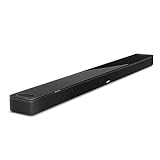
Bose Smart Ultra SoundbarViewers who struggle with dialogue and want a premium, easy-to-use Atmos bar
83/100 $700–$900
- 7
 View
Best Slim, Low-Profile System
Sony Bravia Theater QuadDesign-led living rooms that want Atmos surround without a bar or speaker cable runs
83/100 $2,000–$2,500
- 8
 View
Best Portable, Flexible Setup
JBL Bar 1000Living rooms that want real rear surround without permanent rear speakers
85/100 $800–$1,000
Quick answer
The best home theater system for beginners is the Polk MagniFi Max AX SR, a complete 7.1.4 bar, sub and rear kit with one HDMI connection. Renters should look at the Enclave CineHome Pro, a wireless 5.1 system with no speaker wire to run. New parents get the most from the compact Sonos Beam (Gen 2) with Night Sound and Speech Enhancement, and artists and music lovers should choose the KEF LS50 Wireless II.
1. The Best Home Theater Systems by Lifestyle

Best for Beginners1. Polk MagniFi Max AX SR
$900–$1,200 · Best for: Living rooms that want bar, sub and real rears in one box for a mid-range price
- Channels
- 7.1.4 (with included rears)
- Atmos/DTS:X
- Dolby Atmos, DTS:X and IMAX Enhanced
- Subwoofer
- 10-inch wireless subwoofer included
- Inputs
- HDMI eARC, optical, Bluetooth
Skip it if: You want the most polished app and multiroom ecosystem
If this is your first real home theater, the MagniFi Max AX SR removes almost every decision. The box holds the bar with up-firing drivers, a 10-inch wireless subwoofer and a pair of wireless rear speakers, and Polk rates the whole package as 7.1.4. It decodes Dolby Atmos, DTS:X and IMAX Enhanced, so every disc and streaming format you are likely to meet plays as intended.
Why it suits a first-timer. Setup is one HDMI cable from the TV's eARC port to the bar, then power for the sub and rears. There is no receiver to choose, no speaker wire to strip, and no channel count to work out. Polk's VoiceAdjust lifts dialogue when actors mumble, and Chromecast and AirPlay 2 cover music.
The maths on value. Building the same layout from Sonos parts (an Arc Ultra, a Sub 4 and two Era 300s) costs well over twice the Polk's $900–$1,200 band. You give up Sonos's app polish and Trueplay tuning, but you get rear speakers on day one, and real rears do more for movies than any amount of virtual processing.
The trade-off. It takes more space than a single bar, and the rears still need power outlets. If your budget tops out lower, the VIZIO Elevate SE is the cheaper entry point, covered under Notable Mentions.
Pros
- Complete system: bar, 10-inch sub and wireless rears
- Decodes Dolby Atmos, DTS:X and IMAX Enhanced
- VoiceAdjust for clearer dialogue
- Chromecast and AirPlay 2 streaming
Cons
- App less polished than Sonos
- Takes up more space than a single bar
- Rears still need power outlets
Best for Renters2. Enclave Audio CineHome Pro 5.1
$1,000–$1,500 · Best for: Renters and finished rooms where running speaker wire to the back isn't an option
- Channels
- 5.1
- Wireless
- WiSA (uncompressed 24-bit/48 kHz)
- Subwoofer
- Wireless powered subwoofer included
- Inputs
- HDMI ARC/eARC, optical, Bluetooth
Skip it if: You can run speaker cable and want the most performance for the money
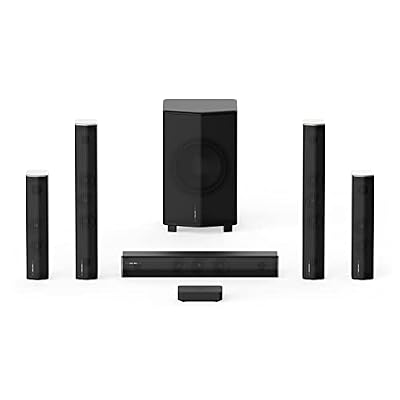
Renting usually means no running cable through walls, no ceiling speakers and a deposit you want back. The Enclave CineHome Pro is built for exactly that: a wireless 5.1 system on the WiSA standard, where a center-channel hub connects to your TV and streams to the front, surround and subwoofer speakers. No receiver, no speaker wire across the floor, and nothing to drill.
Count the outlets first. Wireless means no speaker cable, not no cables. Every speaker has its own amplifier, so a 5.1 layout needs six power outlets including the hub. In many rentals the outlets behind the sofa decide where the surrounds go, so map them before you buy.
Why WiSA matters. It sends uncompressed 24-bit/48 kHz audio with low latency, so you avoid the lip-sync drift and compression of Bluetooth. Connect the hub to the TV's eARC or ARC port and Dolby Digital and DTS soundtracks play as true discrete 5.1, with each speaker where it belongs rather than processed out of one bar.
The trade-off. There are no height channels, so no Atmos overhead effects, and output per dollar is lower than a wired system. That is the price of a setup that leaves the walls untouched and packs into a few boxes when your lease ends. If you would rather have rears you can put away between movies, see the JBL Bar 1000 below.
Pros
- True discrete 5.1 with no speaker wire
- WiSA streams uncompressed audio with low latency
- No receiver needed; connects to the TV
- Fast, simple setup
Cons
- Every speaker needs a power outlet
- No Atmos height channels
- Less output per dollar than wired systems

Best for New Parents3. Sonos Beam (Gen 2)
$400–$500 · Best for: Small living rooms and bedrooms with 40–55-inch TVs
- Channels
- 5 drivers (virtual surround and height)
- Atmos/DTS:X
- Dolby Atmos (virtualized; no DTS:X)
- Subwoofer
- Optional Sonos Sub 4 or Sub Mini
- Inputs
- HDMI eARC (optical via adapter)
Skip it if: You want true overhead Atmos or have a large, open room
New parents watch most of their TV late at night, at low volume, with a sleeping baby down the hall. The Sonos Beam (Gen 2) is the bar we'd pick for that life. It is about 26 inches wide, so it sits under a 40- to 55-inch TV or mounts on the wall out of reach of small hands, and it connects with one HDMI eARC cable.
The two settings that matter. In the Sonos app, Night Sound reduces the gap between loud effects and quiet passages, so an explosion doesn't wake the nursery when you have the volume set for whispered dialogue. Speech Enhancement lifts voices in the mix. Together they let you follow a show at a level that would leave a basic TV speaker mumbling.
Fewer things to trip over. There is no subwoofer box on the floor to start with and no rear speaker wires for a crawling baby to pull. Your TV remote controls the volume over HDMI-CEC, so there is one fewer remote to lose. When the kids are older, add a Sonos Sub 4 and Era 100 rears wirelessly.
The trade-off. Height effects are virtual (there are no up-firing drivers), there is no Bluetooth, and it runs out of output in rooms much over about 250 sq ft. For a bigger living room, the Sonos Arc Ultra offers the same night features with far more scale.
Pros
- Compact size suits smaller TVs
- HDMI eARC with Dolby Atmos decoding
- Excellent app and Trueplay tuning
- Expands to 5.1 with Sonos sub and rears
Cons
- Virtual height only, no up-firing drivers
- No Bluetooth
- Limited output in larger rooms

Best for Commuters and Busy Schedules4. Samsung HW-Q800F
$700–$1,000 · Best for: Samsung TV owners who want a mid-priced Atmos bar with a sub included
- Channels
- 5.1.2
- Atmos/DTS:X
- Dolby Atmos and DTS:X
- Subwoofer
- Wireless subwoofer included
- Inputs
- HDMI eARC, optical, Bluetooth
Skip it if: You want rear speakers in the box; the Q990F includes them
If you get home late and have an hour to watch something, you want sound that is right the moment the TV comes on, with no menus. The Samsung HW-Q800F is a 5.1.2 bar with up-firing drivers and a wireless subwoofer in the box, and it decodes both Dolby Atmos and DTS:X.
Set it once, then forget it. SpaceFit Sound Pro uses a built-in microphone to adapt the EQ to your room automatically, a simple form of room correction, so there is no calibration session to schedule. Over HDMI eARC it powers on and off with the TV and follows the TV remote. With a compatible Samsung TV, wireless Dolby Atmos removes the HDMI cable from the bar and Q-Symphony lets the TV's speakers join in.
Good for the rest of the day too. Wi-Fi, AirPlay 2 and Spotify Connect mean the same bar plays podcasts and playlists while you cook or get ready in the morning, without pairing a phone over Bluetooth every time.
The trade-off. Rear speakers cost extra, and the height effect is less convincing than on larger systems. The best features also lean on a Samsung TV. Paired with a different brand, the Polk above gives you more for similar money. If you later want the complete package, the Samsung HW-Q990F includes rears and is our top pick in the main best home theater system guide.
Pros
- Wireless sub included
- Decodes Dolby Atmos and DTS:X
- SpaceFit Sound Pro room tuning
- Q-Symphony and wireless Atmos with Samsung TVs
Cons
- Rear speakers cost extra
- Height effects less convincing than bigger systems
- Best features tied to Samsung TVs

Best for Artists and Music Lovers5. KEF LS50 Wireless II
$2,300–$2,800 · Best for: Audiophiles who want top-tier stereo for music and TV from one system
- Drivers
- 5.25-inch Uni-Q (1-inch vented aluminum dome tweeter in magnesium-aluminum cone) with MAT
- Amplification
- 380 W per speaker (100 W tweeter, 280 W woofer)
- Frequency response
- 45 Hz–28 kHz ±3 dB
- Inputs
- HDMI eARC, optical, coaxial, analog, Ethernet, Bluetooth, sub out
Skip it if: You want surround sound or have a limited budget
Artists, musicians and anyone who spends more time with music than movies usually want accuracy first: sound that is faithful to the recording, with a stable stereo image. The KEF LS50 Wireless II is that system, with a TV connection added. Each speaker uses KEF's 5.25-inch Uni-Q driver (the tweeter sits in the center of the woofer) and gets 380 W of built-in amplification, 100 W for the tweeter and 280 W for the woofer. KEF rates response at 45 Hz–28 kHz ±3 dB.
Why a stereo pair beats a soundbar here. The coaxial Uni-Q design gives a wide, consistent sweet spot, so dialogue stays anchored to the screen even from the side of the sofa, and music has real left-right separation that no single bar can reproduce. HDMI eARC lets the TV remote control volume, and AirPlay 2, Chromecast, Spotify Connect, Tidal Connect and Roon Ready cover a studio or home office.
Show the maths on bass. 45 Hz at ±3 dB is excellent for a 5.25-inch woofer, but movie LFE effects go well below that. Use the sub output and cross the speakers over at about 80 Hz (crossover explained) so the woofers stop working on deep bass they can't reproduce.
The trade-off. At $2,300–$2,800 it is expensive, and it is stereo only, with no surround decoding. If you want similar streaming and HDMI convenience for well under half that, the Klipsch The Fives II is the alternative.
Pros
- Uni-Q drivers give a wide, stable sweet spot
- 380 W per speaker with excellent measured performance
- HDMI eARC plus every major streaming service
- Sub output with app-based crossover
Cons
- Expensive
- Stereo only, no surround decoding
- Deep movie bass still needs a sub

Best for Clear Dialogue6. Bose Smart Ultra Soundbar
$700–$900 · Best for: Viewers who struggle with dialogue and want a premium, easy-to-use Atmos bar
- Channels
- 9 drivers (incl. 2 up-firing dipole)
- Atmos/DTS:X
- Dolby Atmos (no DTS:X)
- Subwoofer
- Optional Bose Bass Module 500 or 700
- Inputs
- HDMI eARC, optical, Bluetooth
Skip it if: You want DTS:X or a full sub-and-rear system in one box for the money
If you keep turning the volume up for dialogue and down again for the action, the Bose Smart Ultra Soundbar is the fix. Its headline feature is A.I. Dialogue Mode, which separates voices from the rest of the soundtrack and lifts them, so you can watch at a moderate level and still catch every line. That also makes it a strong choice for older viewers and anyone with mild hearing loss.
What else is inside. The bar uses nine drivers, including two up-firing dipole transducers for Dolby Atmos height. ADAPTiQ measures several listening positions with a headset microphone and tunes the EQ to your room. Streaming covers Chromecast built-in, AirPlay 2, Spotify Connect and Alexa, and it connects to the TV over HDMI eARC or optical.
How it compares on dialogue. Polk's VoiceAdjust (on our beginner pick) and Sonos's Speech Enhancement (on the Beam and Arc Ultra) do a similar job, but Bose's processing is the most aggressive about isolating voices. If dialogue is your main complaint, this is the one to buy. A receiver system can match it only with a good center channel speaker and careful level setting.
The trade-off. No DTS:X, no HDMI inputs for sources, and the matching Bass Module 700 and Surround Speakers 700 together cost about as much as the bar.
Pros
- A.I. Dialogue Mode makes voices clearer
- ADAPTiQ room tuning
- Up-firing dipole drivers for Atmos height
- Wide streaming support including Chromecast and AirPlay 2
Cons
- No DTS:X
- Bass module and rears are costly add-ons
- No HDMI inputs for sources

Best Slim, Low-Profile System7. Sony Bravia Theater Quad
$2,000–$2,500 · Best for: Design-led living rooms that want Atmos surround without a bar or speaker cable runs
- Channels
- Four wireless speakers with virtual surround and height
- Atmos/DTS:X
- Dolby Atmos, DTS:X and IMAX Enhanced
- Subwoofer
- Optional (Sony SA-SW3 or SA-SW5)
- Inputs
- HDMI eARC on control box
Skip it if: You want deep bass included, or a dedicated center channel for dialogue
For the thinnest-looking setup, skip the soundbar entirely. The Sony Bravia Theater Quad uses four slim wireless speakers (two front, two rear) that stand or mount on the wall, plus a small control box that connects to the TV over HDMI eARC. Nothing sits under the screen and there is no bulky center channel, which suits wall-mounted TVs and minimalist rooms.
How it creates surround from four boxes. Sony's 360 Spatial Sound Mapping combines the four speakers to place "phantom" speakers around and above you, and Sound Field Optimization measures the room to position them. It decodes Dolby Atmos, DTS:X and IMAX Enhanced, and streams over Chromecast, AirPlay and Spotify Connect.
Placement is the whole game. With no physical center speaker, dialogue is a phantom image between the front pair. Put those either side of the screen at about ear height and it locks to the picture. Spread them far apart and sit well off-axis, and voices drift.
The trade-off. At $2,000–$2,500 it is expensive for its output, and no subwoofer is included. Sony's optional SA-SW3 or SA-SW5 is close to essential for movies, so budget for one. If slimness matters less than price, the Polk MagniFi Max AX SR delivers a sub and rears for around half.
Pros
- No soundbar under the screen; slim, wall-mountable speakers
- Room calibration places virtual speakers around you
- Decodes Dolby Atmos, DTS:X and IMAX Enhanced
- Good Wi-Fi streaming support
Cons
- No subwoofer included, and it really needs one
- Phantom center relies on careful front placement
- Expensive for the output you get

Best Portable, Flexible Setup8. JBL Bar 1000
$800–$1,000 · Best for: Living rooms that want real rear surround without permanent rear speakers
- Channels
- 7.1.4
- Atmos/DTS:X
- Dolby Atmos and DTS:X
- Subwoofer
- 10-inch wireless subwoofer included
- Inputs
- 3x HDMI in (4K Dolby Vision pass-through), HDMI eARC, optical, Bluetooth
Skip it if: You don't want to manage battery charging for the rear speakers
People searching for a foldable or portable home theater system usually want one thing: surround sound when they want it, and a tidy room when they don't. The JBL Bar 1000 does that better than anything else here. Its two end caps detach and run on battery as rear surrounds, then clip back onto the bar to recharge. Add the 10-inch wireless subwoofer and up-firing drivers and you have a 7.1.4 system that decodes Dolby Atmos and DTS:X.
Why it suits small and shared spaces. In a studio apartment, dorm or shared living room, permanent rear speakers on stands get in the way. Here the rears come out for movie night and go back on the bar afterwards, with no wires or outlets behind the sofa. That also makes it the easiest full surround system to pack up when you move.
More connections than most bars. Three HDMI inputs with 4K Dolby Vision pass-through plus an HDMI eARC output mean a console and a streaming box can plug straight into the bar, sidestepping TVs with flaky eARC.
The trade-off. The rears need regular recharging, the bar is bulky with them docked, and JBL's 880 W is a system total, not a per-channel rating. For a fully wire-free 5.1 that stays put, the Enclave CineHome Pro above is the alternative.
Pros
- Detachable battery rears give real surround on demand
- 10-inch wireless sub included
- Three HDMI inputs plus eARC
- Decodes Dolby Atmos and DTS:X
Cons
- Rear speakers need regular recharging
- 880 W figure is a system total, not per channel
- Bulky bar when the rears are docked
2. Spec Sheets Side by Side
| Product | Score | Price | Atmos/DTS:X | Subwoofer | Surrounds | Inputs | Wireless | Buy |
|---|---|---|---|---|---|---|---|---|
| Polk MagniFi Max AX SR Best for Beginners | 82 | $900–$1,200 | Dolby Atmos, DTS:X and IMAX Enhanced | 10-inch wireless subwoofer included | Wireless rear speakers included | HDMI eARC, optical, Bluetooth | Wireless sub and rears | Amazon → |
| Enclave Audio CineHome Pro 5.1 Best for Renters | 76 | $1,000–$1,500 | No height channels (Dolby Digital and DTS 5.1) | Wireless powered subwoofer included | Included (wireless) | HDMI ARC/eARC, optical, Bluetooth | WiSA (uncompressed 24-bit/48 kHz) | Amazon → |
| Sonos Beam (Gen 2) Best for New Parents | 79 | $400–$500 | Dolby Atmos (virtualized; no DTS:X) | Optional Sonos Sub 4 or Sub Mini | Optional (pair of Era 100 or Era 300) | HDMI eARC (optical via adapter) | Wireless sub and rear expansion | Amazon → |
| Samsung HW-Q800F Best for Commuters and Busy Schedules | 80 | $700–$1,000 | Dolby Atmos and DTS:X | Wireless subwoofer included | Optional Samsung wireless rear kit | HDMI eARC, optical, Bluetooth | Wireless sub; wireless Atmos with Samsung TVs | Amazon → |
| KEF LS50 Wireless II Best for Artists and Music Lovers | 88 | $2,300–$2,800 | — | — | — | HDMI eARC, optical, coaxial, analog, Ethernet, Bluetooth, sub out | — | Amazon → |
| Bose Smart Ultra Soundbar Best for Clear Dialogue | 83 | $700–$900 | Dolby Atmos (no DTS:X) | Optional Bose Bass Module 500 or 700 | Optional Bose Surround Speakers or Surround Speakers 700 | HDMI eARC, optical, Bluetooth | Wireless bass module and surround expansion | Amazon → |
| Sony Bravia Theater Quad Best Slim, Low-Profile System | 83 | $2,000–$2,500 | Dolby Atmos, DTS:X and IMAX Enhanced | Optional (Sony SA-SW3 or SA-SW5) | Included (rear pair) | HDMI eARC on control box | Wireless speakers (each needs power) | Amazon → |
| JBL Bar 1000 Best Portable, Flexible Setup | 85 | $800–$1,000 | Dolby Atmos and DTS:X | 10-inch wireless subwoofer included | Detachable battery-powered rears | 3x HDMI in (4K Dolby Vision pass-through), HDMI eARC, optical, Bluetooth | Wireless sub and detachable wireless rears | Amazon → |
3. How We Matched Systems to Each Lifestyle
Every product on this page is also ranked against its category in our main guides, so each one already earns its place on sound and value. For this guide we started from the situation instead of the speaker, and asked what each household can't compromise on:
- Renters: no drilling or in-wall wiring, a setup that packs up when the lease ends, and bass that won't start a dispute with the neighbors.
- New parents: clear dialogue at low volume, dynamic-range control for night viewing, and nothing on the floor for small children to pull.
- Beginners: one box, one connection to the TV, and no receiver or speaker-wire decisions.
- Commuters and busy households: automatic room tuning, power-on with the TV, and good everyday streaming.
- Artists and music lovers: accurate stereo first, then TV convenience.
- Slim or portable setups: the lowest visual footprint, or surround you can put away.
We then checked each candidate's spec sheet for the features that serve that need (HDMI eARC, night or dialogue modes, room correction, wireless rears, battery rears), weighed owner reports on reliability and setup, and picked the best fit in each case. Scores, specs and price bands come from our product database, and we never accept payment for placement. See how we score.
We track 12 models in our Soundbars database; 5 of them made this list. How the BHTR Score works.
4. Notable Mentions
Good models that just missed the list, and the situations where one of them is the better buy.
-

VIZIO 5.1.2 Elevate SE Soundbar (SL512X-08)
76/100 $350–$450
The VIZIO Elevate SE is the budget alternative to the Polk MagniFi Max AX SR for beginners. It costs about a third as much, includes a wireless sub, and its height speakers rotate upward automatically for Atmos and DTS:X. You lose Wi-Fi streaming and the Polk's 7.1.4 scale, so choose it when the budget is under $500.
-

Klipsch Reference R-625FA 5.1.2 Dolby Atmos System
84/100 $1,200–$1,400
For a basement or dedicated room where you can run wire, the Klipsch Reference R-625FA 5.1.2 package outperforms every all-in-one pick here, including the Polk MagniFi Max AX SR. Its towers have built-in Atmos elevation drivers and a 10-inch, 300 W sub is included. It needs a 7-channel AV receiver, sold separately.
-

Bose Smart Soundbar
78/100 $350–$400
The Bose Smart Soundbar brings the same A.I. Dialogue Mode as the Bose Smart Ultra Soundbar to a smaller, cheaper bar. It suits bedrooms, nurseries-turned-TV-rooms and small apartments where dialogue clarity matters more than scale, and it is a good alternative to the Sonos Beam (Gen 2) if you also want Bluetooth.
5. Best Home Theater Audio for Renters
Renters have three constraints that owners don't: no permanent wiring, a deposit to protect, and neighbors on the other side of the wall or floor.
Skip in-wall and ceiling speakers. Wireless systems like the Enclave CineHome Pro or a soundbar system with wireless rears give you surround without a single hole. If you want a wall-mounted bar or TV, most leases allow a few small screw holes that you fill when you move out, but check yours first.
Bass is what travels. Low frequencies pass through floors and shared walls far more easily than dialogue does. In an apartment, keep the subwoofer off the floor if you can, out of the corner (corners boost bass by several dB), and turn its level down a few steps after calibration. A night or dynamic-range mode helps after 10 pm. If bass is a recurring problem, a bar with a strong built-in woofer, like the Sonos Arc Ultra, may be friendlier to neighbors than a separate 10-inch sub.
Plan for moving. All-in-one systems pack into a couple of boxes and work in any room shape. A passive speaker system with a receiver can follow you too, but needs re-wiring and re-calibrating every time.
6. Best Home Theater System for New Parents and Light Sleepers
Babies change how you watch TV: quieter, later, and often in short bursts. Three features make the biggest difference.
- Night mode (dynamic-range compression). It narrows the gap between whispers and explosions, so you can set a low volume and leave it. Sonos calls it Night Sound; most brands have an equivalent.
- Dialogue enhancement. Sonos Speech Enhancement, Bose A.I. Dialogue Mode and Polk VoiceAdjust all lift voices without raising effects.
- HDMI eARC with CEC. One remote (the TV's) controls everything, which matters when you are holding a baby.
Safety and clutter. Wall-mount the bar if you can, and avoid floor-standing speakers and long cables at crawling height. Wireless rears still need power cords, so route those behind furniture. A compact bar like the Sonos Beam (Gen 2) or the Bose Smart Soundbar covers most living rooms during these years, and both expand later.
7. Best Home Theater System for Beginners
If you are new to home theater, the jargon is the hardest part. Three rules cut through it:
- Buy a complete system, not parts. A soundbar system with its sub and rears included, like the Polk MagniFi Max AX SR, avoids every compatibility question.
- Rear speakers matter more than height speakers. A system with real rears puts sound behind you; virtual processing can't fully fake that. Check our surround channels explainer for what 5.1, 7.1 and 5.1.2 mean.
- Connect to the TV's eARC port. It carries every format your streaming apps use, and lets the TV remote control the volume (eARC explained).
When you are ready for more, our soundbar vs home theater guide explains when a receiver and passive speakers are worth the extra effort, and our home theater setup guide walks through placement and calibration.
8. Best Home Theater System for Commuters and Busy Households
When time at home is short, the best system is the one you never have to think about. Look for:
- Automatic room correction that runs from a built-in microphone (Samsung SpaceFit Sound Pro, Sonos Trueplay quick tune), so the system adapts to your room without a setup session (room correction explained).
- HDMI eARC with CEC, so the bar wakes and sleeps with the TV.
- Wi-Fi streaming (AirPlay 2, Chromecast, Spotify Connect) for podcasts and music in the morning, without re-pairing Bluetooth.
The Samsung HW-Q800F checks every box, especially with a Samsung TV. For an even simpler, smaller setup, the Sonos Beam (Gen 2) does the same in a compact bar.
9. Best Home Theater System for Artists, Musicians and Creators
If you make or care deeply about music, a pair of good stereo speakers will satisfy you more than any soundbar. Stereo gives a real left-right image and a phantom center, which matters for mixing, listening critically, and for music-heavy films.
The KEF LS50 Wireless II is our pick for its wide sweet spot and 380 W per speaker. The Klipsch The Fives II gives similar HDMI and streaming convenience for less, with a livelier, more forward sound. Either way, add a subwoofer for movies and set the crossover around 80 Hz.
If you would rather use passive speakers and an amplifier you already own, our best bookshelf speakers and best home theater speakers guides rank models by sensitivity and how easy they are to drive.
10. The Thinnest and Most Discreet Home Theater Systems
"Thin" can mean two different things, so decide which you need.
- Nothing under the TV: the Sony Bravia Theater Quad replaces the bar with four slim speakers that can hang on the wall.
- A low-profile bar: a compact bar like the Sonos Beam (Gen 2) keeps a small footprint under the screen, and the Sonos Arc Ultra gets deeper bass than most slim bars from its Sound Motion woofer.
If you want the speakers to disappear entirely and you own the walls, in-wall and in-ceiling speakers are the most discreet option of all. See our best in-wall speakers guide.
11. Portable and Foldable Home Theater Options
There is no true folding home theater system, but there are setups that pack away or travel easily:
- Detachable surrounds: the JBL Bar 1000 and its bigger sibling, the JBL Bar 1300MK2, have battery rears that dock onto the bar.
- Portable projectors: the Nebula Cosmos 4K SE has a carry handle and Google TV, and the tiny Dangbei N2 Mini suits bedrooms and dorms. Pair either with a pull-up or tripod screen that folds into a case.
For a full portable projector setup, our best budget home theater projector guide and projector throw calculator help you match the image size to the room.
If you searched for a North Face home theater system, it doesn't exist: The North Face makes outdoor clothing and camping gear, not audio equipment. The portable picks above are the real alternatives for outdoor or on-the-go movie nights.
12. Basements and Dedicated Rooms
If you have a basement or spare room that is yours to wire, the all-in-one systems above are no longer the best value. A passive speaker package and an AV receiver will play louder, go deeper and grow into Atmos with real height speakers. The Klipsch R-625FA 5.1.2 package with a 7-channel receiver such as the Denon AVR-X1800H is a strong start.
Basements are often large, with concrete walls that reflect bass, so budget for a capable subwoofer. Our best subwoofer for home theater guide matches subs to room volume, and our room design guide covers carpet, panels and lighting.
13. Upgrading From a Soundbar to a More Powerful System
If you already own a soundbar (a Sony, Samsung, Bose or Sonos) and want more power, you have two routes.
- Expand the bar you have. Most current bars accept the same brand's wireless sub and rear speakers. It is the cheapest upgrade, but you stay limited by the bar's front channels.
- Move to a receiver system. A receiver and passive speakers give you a real center channel, more headroom and room to grow to 7.1.4. Our best home theater receiver and best home theater speakers guides cover both halves.
For Bravia owners, our Sony home theater review covers both routes within Sony's own lineup, from the Bravia Theater Bar 9 to the STR-AN1000 receiver.
Before You Buy
Also Needed for This Setup
14. Frequently Asked Questions
What is the best home theater system for renters?
The best home theater system for renters is the Enclave CineHome Pro, a wireless 5.1 system that needs no speaker wire, no receiver and no drilling. Each speaker needs a power outlet. If you prefer rear speakers you can put away, the JBL Bar 1000's detachable battery surrounds are the alternative.
What is the best home theater system for new parents?
The Sonos Beam (Gen 2) is the best home theater system for new parents. Night Sound keeps explosions from waking the baby, Speech Enhancement keeps dialogue clear at low volume, and the compact bar can be wall-mounted out of reach. Add a Sonos sub and rears later.
What is the best home theater system for beginners?
The Polk MagniFi Max AX SR is the best home theater system for beginners: a bar, 10-inch wireless sub and wireless rears in one box, connected to the TV with a single HDMI eARC cable. On a budget under $500, the VIZIO Elevate SE is the easier starting point.
What is the thinnest home theater system?
For the slimmest look, the Sony Bravia Theater Quad uses four thin wireless speakers that can be wall-mounted, with no soundbar under the TV. It needs a separate subwoofer for movies. For a compact bar instead, the Sonos Beam (Gen 2) is about 26 inches wide.
Is there a foldable or portable home theater system?
There is no true folding surround system, but the JBL Bar 1000 comes closest: its rear speakers detach, run on battery and dock back onto the bar. For a portable picture, pair a projector like the Nebula Cosmos 4K SE with a folding tripod or pull-up screen.
Is there a North Face home theater system?
No. The North Face is an outdoor clothing and equipment brand, and it does not sell a home theater system, soundbar or speakers, so there is no North Face home theater system to review. If you want something rugged and portable for movie nights, the JBL Bar 1000's detachable battery rear speakers and the Nebula Cosmos 4K SE portable projector are the closest real options.
Which home theater brand is best for dialogue clarity?
Bose leads for dialogue clarity with A.I. Dialogue Mode on its Smart Ultra Soundbar and Smart Soundbar. Sonos Speech Enhancement and Polk VoiceAdjust are close behind. In a receiver system, a good 3-way center speaker, such as the SVS Prime Center, makes the biggest difference.
What is the best home theater system for artists and musicians?
Artists and musicians should choose a stereo pair over a soundbar. The KEF LS50 Wireless II offers accurate Uni-Q drivers, 380 W per speaker and HDMI eARC for the TV. The Klipsch The Fives II offers similar convenience for less. Add a subwoofer for movies.
Can I use a home theater system in an apartment without bothering neighbors?
Yes. Use a night or dynamic-range mode, keep the subwoofer out of corners and off the floor if possible, and lower its level after calibration. Bass travels through walls and floors far more than dialogue, so a bar with a built-in woofer can be the more neighbor-friendly choice.
15. Common Mistakes to Avoid
Assuming wireless means no cables
Wireless speakers still need power. Count the outlets near each speaker position before you buy, especially behind the sofa.
Putting the subwoofer in a corner in an apartment
Corners boost bass by several decibels, which is exactly what travels through shared walls and floors. Start along a wall and turn the sub level down.
Buying for the room you might have one day
A big receiver system is wasted in a rental you will leave in a year. Buy for the room and household you have now, and choose a system that can expand.
Ignoring night and dialogue modes
For parents and late-night viewers, Night Sound, Speech Enhancement or A.I. Dialogue Mode matter more than an extra pair of height speakers. Check that the system has them.
Using the TV's regular HDMI port
Connect the bar or hub to the TV's eARC (or ARC) port. Any other HDMI port won't carry the TV's audio to the system, and CEC control may not work.
16. Sources and Recent Updates
Recent updates
- :New guide: home theater system picks matched to renters, new parents, beginners, commuters, artists, slim setups and portable setups, plus advice on dialogue clarity and apartment bass.
What this page is based on
- Spec sheets. Every figure comes from the manufacturer's published specifications, kept in one record per model: Polk MagniFi Max AX SR, Enclave Audio CineHome Pro 5.1, Sonos Beam (Gen 2), Samsung HW-Q800F, KEF LS50 Wireless II, Bose Smart Ultra Soundbar, Sony Bravia Theater Quad, JBL Bar 1000.
- Independent measurements. Where we quote a measured result, it is one that is widely published by independent reviewers.
- Room maths. Screen size, throw distance, channel counts and power needs are worked out from the specs and stated room sizes, with the calculation shown in the text.
- Owner reports. Reliability and long-term notes summarize recurring patterns in owner reviews, not single anecdotes.
- How we score and our editorial policy explain how picks are chosen and when a page is revised.
17. All Soundbars We Track
Our picks above are what we would buy for most people. If you'd rather choose yourself, here is every model in our Soundbars database, ranked by BHTR Score.
| # | Model | Score | Price | Best for |
|---|---|---|---|---|
| 1 | Sonos Arc Ultra | 88 | $900–$1,000 | Living rooms that want a premium single-bar Atmos setup with room to grow |
| 2 | JBL Bar 1300MK2 | 87 | $1,400–$1,800 | Large or open-plan living rooms that want the most from a soundbar-style system |
| 3 | Sony Bravia Theater Bar 9 | 85 | $1,000–$1,400 | Larger living rooms and 4K Blu-ray fans who want Atmos and DTS:X from one bar |
| 4 | JBL Bar 1000 On this list | 85 | $800–$1,000 | Living rooms that want real rear surround without permanent rear speakers |
| 5 | Bose Smart Ultra Soundbar On this list | 83 | $700–$900 | Viewers who struggle with dialogue and want a premium, easy-to-use Atmos bar |
| 6 | Polk MagniFi Max AX SR On this list | 82 | $900–$1,200 | Living rooms that want bar, sub and real rears in one box for a mid-range price |
| 7 | Sony Bravia Theater Bar 8 | 81 | $800–$1,000 | Mid-size rooms and 55–65-inch TVs that want Atmos and DTS:X from a compact bar |
| 8 | Samsung HW-Q800F On this list | 80 | $700–$1,000 | Samsung TV owners who want a mid-priced Atmos bar with a sub included |
| 9 | Sonos Beam (Gen 2) On this list | 79 | $400–$500 | Small living rooms and bedrooms with 40–55-inch TVs |
| 10 | Bose Smart Soundbar | 78 | $350–$400 | Bedrooms and small living rooms where dialogue clarity matters most |
| 11 | Hisense AX5120G 5.1.2 Soundbar | 72 | $300–$350 | Budget buyers who want Atmos, DTS:X and a wireless sub from one simple bar |
| 12 | VIZIO All-in-One Soundbar SE (SV210Y-08) | 65 | $90–$120 | Bedrooms, dorms and second TVs on a tight budget |
Everything Else About Home Theater Systems
Home Theater Systems
Best Budget Home Theater System
We compared 25 products on spec sheets, room size and real-world price to find the best budget home theater systems. Only 6 made the cut.
Home Theater Systems
Best Dolby Atmos Home Theater System
We compared 25 products on spec sheets, room size and real-world price to find the best Dolby Atmos home theater systems. Only 7 made the cut.
Related Home Theater System Guides
Home Theater Systems
Best Home Theater Systems
We compared 25 products on spec sheets, room size and real-world price to find the best home theater systems. Only 8 made the cut.
Home Theater Systems
Best Wireless Home Theater System
We compared 25 products on spec sheets, room size and real-world price to find the best wireless home theater systems. Only 6 made the cut.
Soundbars
Best Soundbar for Home Theater
We compared 25 products on spec sheets, room size and real-world price to find the best soundbars for home theater. Only 8 made the cut.
The Bottom Line
The best home theater system depends on how you live. Beginners should start with the complete Polk MagniFi Max AX SR. Renters get true wire-free 5.1 from the Enclave CineHome Pro, and new parents get late-night clarity from the Sonos Beam (Gen 2). Busy households will like the set-and-forget Samsung HW-Q800F, artists and music lovers the KEF LS50 Wireless II, and anyone struggling with dialogue the Bose Smart Ultra Soundbar. For the slimmest look choose the Sony Bravia Theater Quad, and for surround you can put away, the JBL Bar 1000.
When you buy through our links we may earn a commission, at no cost to you. How we score · Disclosure.